Tech Earnings & KOSPI Surge: Global Markets Shake Off Geopolitical Static as USD Hits 177,600
جهش تکنولوژی و بورس کره در سایه تنشهای ژئوپلیتیک؛ دلار به ۱۷۷,۶۰۰ تومان رسید
While Wall Street eyes earnings from Applied Materials and Cisco, South Korea’s KOSPI has quietly outperformed the Nasdaq. Meanwhile, the EU blocks airline fuel surcharges and Taiwan approves a massive $25 billion arms deal.
At time of publishing
USD
177,600
Toman
Gold 18K
20.32M
Toman / gram
Bitcoin
$79,735
US Dollar
Tether
17,931.2
Toman
Tech Giants and the Korean ‘Stealth’ Rally
As the trading week winds down, the spotlight on Wall Street has shifted toward a select group of tech heavyweights. Applied Materials and Cisco Systems are leading a pack of seven stocks expected to provide a significant post-earnings jolt to the S&P 500. Investors are increasingly bullish, betting that the infrastructure requirements for the ongoing AI revolution will insulate these firms from broader macroeconomic volatility. This optimism comes despite a backdrop of rising oil prices and persistent Middle Eastern tensions, suggesting that the 'AI trade' remains the primary driver of institutional capital in the West.
However, the real surprise of 2026 isn't happening in Silicon Valley, but in Seoul. While the Nasdaq has been the traditional home for tech investors, South Korea’s KOSPI index has delivered a staggering 75% gain since January. This ‘stealth rally’ is driven by a massive re-rating of Korean semiconductor and battery manufacturers, which are now seen as essential alternatives to Chinese suppliers. For Iranian investors, this shift underscores a critical lesson: global liquidity is moving toward manufacturing hubs that can bridge the gap between Western demand and Eastern production capacity.
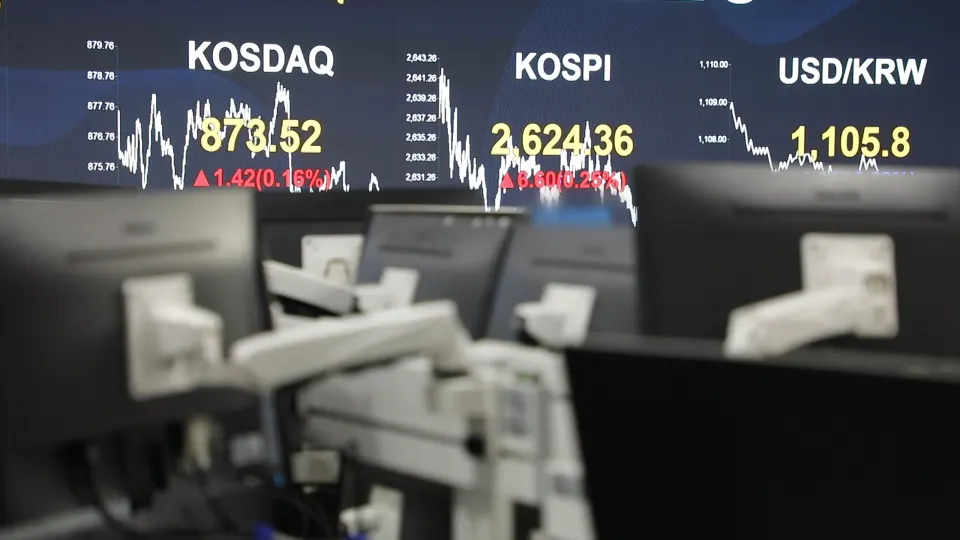
bada.kbs.co.kr, KOGL Type 1]
In the local market, this global risk-on sentiment has not fully quelled domestic hedging. The USD moved from 176,700 to 177,600 (+0.5%) over the last 24 hours, while 18k gold rose from 20,163,442 to 20,319,266 (+0.8%). The stability of the Emami coin at 195,000,000 Toman suggests a temporary equilibrium, but the slight rise in the dollar reflects a cautious stance as regional geopolitical friction continues to simmer behind the scenes of the global tech boom.
NATO Friction and the Battle Over Airline Fees
Geopolitical tensions are creating visible cracks in Western alliances, particularly regarding the ongoing conflict involving Iran. US Secretary of State Marco Rubio recently highlighted a growing ‘problem’ following meetings with Italian leadership: certain NATO allies are reportedly hesitant to grant the US permission to use European bases for operations related to the Middle East. This strategic divergence points to a deepening rift between Washington’s hawkish stance and Europe’s desire to contain the economic fallout of the regional war, which has already disrupted Mediterranean trade routes and energy pricing.
On the consumer front, the European Commission is taking a hard line against the aviation industry’s attempts to pass war-related costs onto travelers. EU officials have explicitly warned airlines that they cannot legally add fuel surcharges to tickets that have already been purchased. As jet fuel prices fluctuate due to the conflict, airlines have attempted to retroactively adjust pricing, but Brussels is insisting on strict consumer protection. For the Iranian diaspora and business travelers, this means a temporary reprieve from escalating travel costs, though base fares are likely to remain elevated as carriers reroute flights to avoid contested airspace.
Strategic Rearmament and the Energy Security Pivot
In a major shift in the Pacific, Taiwan has broken a long-standing political deadlock to approve a massive $25 billion arms purchase from the United States. Lawmakers in Taipei moved with unprecedented speed, fearing that shifting political winds in Washington or a sudden escalation in regional tensions could close their window of opportunity. This deal is not just about hardware; it represents a deepening of the security architecture that links the security of the South China Sea with the stability of global semiconductor supply chains—the very same chains that are currently fueling the KOSPI’s record-breaking run.

Simultaneously, the energy map of Europe is being redrawn under the pressure of the ‘Iran War’ and the ongoing conflict in Ukraine. Norway, now the EU’s largest gas supplier, has announced the reopening of three mothballed gas fields in the North Sea and proposed 70 new offshore locations for exploration. While environmental groups are outraged, the Norwegian government is framing the move as a necessary pivot toward energy security. This surge in non-OPEC production is a direct response to the volatility in the Persian Gulf, and it signals a long-term strategy by Western powers to reduce their sensitivity to supply shocks emanating from the Strait of Hormuz.
Frequently Asked Questions
Why is the South Korean KOSPI outperforming the Nasdaq in 2026?
Can airlines charge extra for fuel after I have already bought my ticket?
What does Taiwan's $25 billion arms deal mean for global markets?
Understanding Exchange Rate Regimes and Currency Devaluation
An exchange rate is the value of one country's currency in relation to another's. It's a fundamental concept in international finance, determining how much you pay for imported goods, how competitive a country's exports are, and the purchasing power of its citizens abroad. When a headline mentions the US Dollar hitting a specific high value against a local currency, such as the Iranian Rial (IRR), it immediately signals significant economic dynamics at play, often related to the country's exchange rate regime and the potential for currency devaluation.
Countries adopt different exchange rate regimes. A "fixed" regime pegs a currency's value to another currency or a basket of currencies, while a "floating" regime allows market forces of supply and demand to determine its value. Many nations employ a "managed float," where the central bank intervenes periodically to influence the rate. However, economies facing severe economic pressures, such as high inflation, sanctions, or political instability, often grapple with more complex scenarios, including the emergence of multiple exchange rates – an official rate set by the government and a significantly different, often much higher, rate on the black or unofficial market.
A very high exchange rate, where a single unit of a foreign currency (like the USD) buys hundreds of thousands or even millions of units of the local currency (like the IRR), is a clear indicator of substantial currency devaluation. This means the local currency has lost a significant portion of its purchasing power over time. Such devaluation can be driven by persistent high inflation, a large trade deficit, capital flight, or, critically, international sanctions that restrict access to foreign currency and create severe supply-demand imbalances. In such contexts, local populations might even adopt unofficial units, like the Toman in Iran (equal to 10 Rials), to simplify transactions involving large nominal sums.
The implications of severe currency devaluation are far-reaching. It makes imports incredibly expensive, fueling domestic inflation further, and eroding the real wages and savings of ordinary citizens. While it can theoretically make exports cheaper and more competitive, the underlying economic instability often hinders this benefit. Furthermore, a large disparity between official and unofficial exchange rates can lead to corruption, arbitrage opportunities, and a lack of transparency, making it challenging for businesses to plan and for foreign investors to engage with the economy.
Topics
Related Articles