
Low-Ambition Summit: Trump and Xi Grapple with Iran War Fallout as Global Inflation Surges
نشست کمرمق ترامپ و شی زیر سایه جنگ ایران؛ جهش تورم جهانی و تغییر موازنه در خلیج فارس
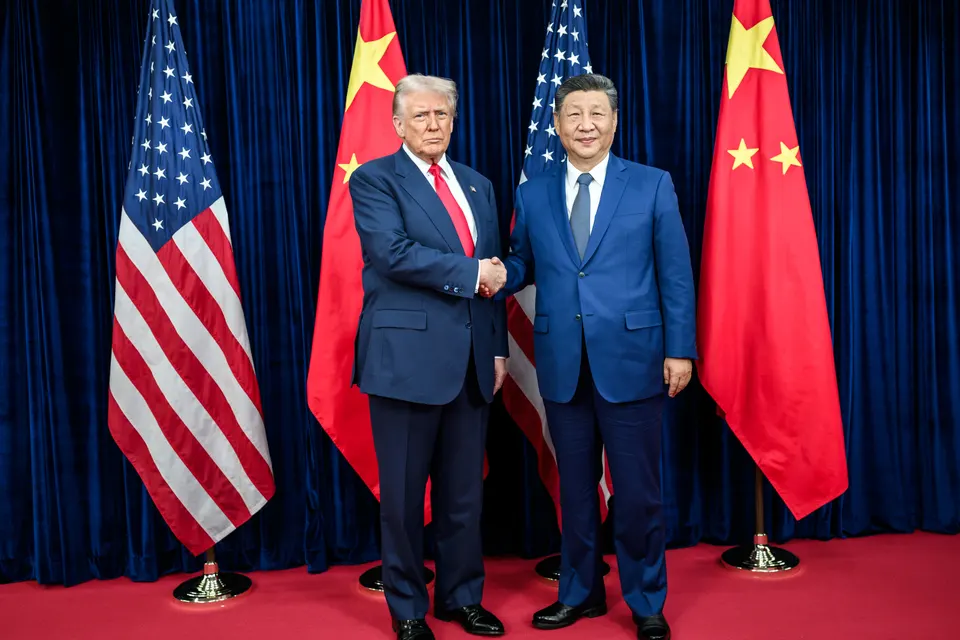
As Donald Trump heads to China for a high-stakes summit with Xi Jinping, the ongoing conflict in Iran has forced both leaders to scale back their diplomatic goals. Meanwhile, soaring energy costs have pushed US inflation higher, impacting everything from airfares to social security projections.
At time of publishing
USD
181,200
Toman
Gold 18K
20.48M
Toman / gram
Bitcoin
$80,478
US Dollar
Tether
18,125.6
Toman
The Diminished Superpower Summit: Trump and Xi in Beijing
As President Donald Trump prepares for his high-stakes trip to China to meet with Xi Jinping, the atmosphere is markedly different from the grand expectations of early 2026. The ongoing war in Iran has become a geopolitical black hole, consuming the attention and resources of both superpowers. Instead of negotiating a definitive resolution to the trade war or establishing a new framework for AI governance, the two leaders are entering a summit of "reduced ambitions." The conflict in the Middle East has created a shadow of uncertainty that makes long-term commitments difficult, as both Washington and Beijing are forced to react to the daily volatility of energy markets and shipping disruptions.
Adding to the sense of domestic distraction, President Trump unleashed a late-night social media spree just hours before his departure. Posting more than 50 times in a three-hour window, he targeted political rivals and predecessors, including Barack Obama, with a series of aggressive accusations and doctored images. This internal political turbulence suggests a presidency more focused on domestic consolidation than on achieving a historic breakthrough with China. For global observers and Iranian markets, this signals that while the summit is happening, it is unlikely to produce a decisive shift in the current geopolitical stalemate, leaving the regional crisis to simmer without a clear diplomatic exit ramp.
The Hidden Cost of War: Inflation Hits the Skies and the Streets
The economic consequences of the Iran conflict are becoming painfully clear in the latest US economic data. Consumer prices spiked in April, driven largely by a nearly 30% surge in energy and petrol prices over the past year. This inflationary pressure is rippling through the global economy, manifesting in a staggering 21% increase in international airfares as airlines struggle with rising jet-fuel costs and the necessity of cutting less profitable routes. Even the most fundamental social safety nets are feeling the heat; forecasts for Social Security’s cost-of-living adjustment (COLA) in 2027 have been revised upward to 4.2% to keep pace with the rising cost of groceries and fuel.
For investors and everyday consumers, this environment of "war-driven inflation" is creating a unique set of challenges. Traditional forecasting models, including advanced generative AI, have struggled to accurately predict these shifts, with older, low-tech tools from the Cleveland Fed proving to be significantly more reliable. The real damage to the stock market, however, is not just the rising prices but the crushing weight of uncertainty. When companies cannot predict their energy costs or shipping timelines through the Strait of Hormuz, they pull back on capital investment, leading to the "buyer exhaustion" currently seen in the tech and semiconductor sectors, particularly affecting giants like Intel.

A New Defense Architecture in the Gulf
In a significant escalation of regional military cooperation, Israel has reportedly sent Iron Dome anti-missile batteries and specialized personnel to the United Arab Emirates. This move, confirmed by US envoy Mike Huckabee, represents a formalizing of the anti-Iran defense alliance that has been brewing for years. Huckabee’s rhetoric has been pointed, calling on Gulf states to "pick a side" in the escalating conflict between Israel and Iran. This deployment is not just a tactical military move; it is a clear signal to Tehran that the strategic depth of its adversaries is expanding, and the cost of any potential missile or drone strike is rising exponentially.
For the Iranian economy, this regional shift adds a layer of psychological pressure on the currency and gold markets. While the USD/IRR exchange rate in Tehran saw a minor correction today—dropping from 181,800 to 181,200 Toman (-0.3%)—the underlying tension remains high. Gold and coin prices also retreated slightly, with Emami coins falling from 200 million to 197 million Toman (-1.5%), but these fluctuations are viewed by analysts as a temporary "breather" rather than a trend reversal. As the UAE integrates Israeli defense technology, the risk of a miscalculation in the Persian Gulf remains the primary driver of market volatility, keeping traders on high alert despite the short-term dip in prices.

Frequently Asked Questions
Why is the Trump-Xi summit described as having 'reduced ambitions'?
How is the Iran war directly affecting global travel costs?
Why did the USD/IRR and Gold prices drop in Tehran today despite the tension?
What is the significance of Israel sending Iron Dome batteries to the UAE?
Understanding Supply Shocks and Cost-Push Inflation in a Geopolitical Context
The news headline touches upon a critical economic concept: supply shocks and their role in driving cost-push inflation, especially when linked to geopolitical instability and vital energy routes. A supply shock occurs when there is a sudden and unexpected disruption to the supply of a commodity or service, leading to an abrupt change in its price. In the context of the Middle East and global energy, events like a war in Iran or a potential blockade of the Strait of Hormuz represent severe supply shocks to the global oil market.
The Strait of Hormuz is a narrow waterway between Iran and Oman, through which a significant portion of the world's seaborne oil passes daily. Any disruption or threat to this critical chokepoint can immediately send oil prices soaring. When the cost of a key input like oil increases dramatically, businesses face higher production costs. These increased costs are then often passed on to consumers in the form of higher prices for goods and services, a phenomenon known as cost-push inflation.
This type of inflation differs from demand-pull inflation, which is caused by excessive consumer demand. With cost-push inflation, the economy experiences higher prices even as demand may remain stable or even weaken. The ripple effect is profound: higher energy costs impact transportation, manufacturing, and nearly every sector of the economy, leading to a broad increase in the Consumer Price Index (CPI) and eroding purchasing power globally.
Central banks often find themselves in a difficult position during periods of cost-push inflation stemming from supply shocks. Raising interest rates to curb inflation might further slow an economy already struggling with higher costs, potentially leading to stagflation—a period of high inflation combined with stagnant economic growth and high unemployment. Understanding these dynamics is crucial for grasping why geopolitical tensions in energy-rich regions have such far-reaching economic consequences.
Topics
Related Articles