Glossip Freed After 30 Years as Boeing Slumps on 'Weak' China Deal; Toman Nears 180,400
آزادی گلاسیپ پس از ۳۰ سال حبس و سقوط سهام بوئینگ؛ دلار در یک قدمی ۱۸۰,۴۰۰ تومان
Richard Glossip walks free on bond after three decades on death row, marking a historic shift in US justice, while Boeing's stock reels from a disappointing trade deal in Beijing. In Tehran, the Toman continues its climb as market volatility reflects shifting global trade dynamics.
At time of publishing
USD
180,400
Toman
Gold 18K
20.46M
Toman / gram
Bitcoin
$81,838
US Dollar
Tether
17,894.5
Toman
Justice Delayed: Richard Glossip Freed After 30 Years
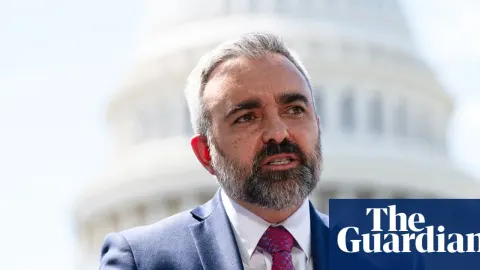
In a development that has sent shockwaves through the American legal system, Richard Glossip has been released on a $500,000 bond after spending nearly three decades on death row. Glossip, now 63, was convicted for a 1997 murder, but his case has been a flashpoint for human rights activists and celebrities like Kim Kardashian, who have long maintained his innocence. The release follows a landmark US Supreme Court decision last year that threw out his conviction, setting the stage for a retrial that could finally clear his name. For three decades, Glossip faced the execution chamber three separate times, only to be granted last-minute stays, making his exit from prison a symbolic victory for proponents of judicial reform.
For Iranian observers, high-profile US justice stories like this often serve as a barometer for the internal social and political stability of the United States. While seemingly distant, the focus on due process and the potential for a massive legal reversal highlights the ongoing domestic pressures within the US government. Such events can influence global sentiment regarding American institutional reliability, which indirectly affects risk appetite in international markets. When the US legal system undergoes such high-profile scrutiny, it often coincides with periods of intense political debate that can distract from foreign policy objectives, potentially impacting the speed of sanctions reviews or diplomatic engagements.

Boeing’s Beijing Blunder: Markets React to Trump’s Trade Deal
President Donald Trump’s visit to Beijing has produced a deal that markets have found surprisingly lackluster. Boeing’s stock experienced its sharpest decline in six months on Thursday after it was revealed that China would purchase only 200 jets. This figure significantly disappointed investors and analysts who had priced in a deal for more than double that amount. Despite Trump’s conciliatory rhetoric toward Xi Jinping during the trip, the actual economic output of the summit is being viewed as a sign that the "trade war" tensions are far from over. Interestingly, disclosure filings showed that Trump himself had recently purchased over $1 million in Boeing and Nvidia shares, suggesting he expected a much more positive market reaction than what materialized.
This disappointment in the aerospace sector is a clear signal for the Iranian market that the "Trump effect" on global trade remains unpredictable. As Boeing’s stock fell, it dragged down broader indices, reflecting a cautious stance among global investors regarding US-China relations. For those holding USD or gold in Tehran, this volatility is a double-edged sword. On one hand, a weaker US stock market can sometimes lead to a temporary softening of the dollar; on the other, the failure to secure a massive trade deal suggests that global supply chains will remain stressed, keeping inflation high and supporting the long-term value of hard assets like gold, which currently sits at $4,674.70 per ounce.
The Powell Legacy and the Toman’s Upward Creep
As Jerome Powell continues to steer the Federal Reserve through a landscape of political pressure and post-pandemic economic shifts, his legacy is being reassessed. Trump’s historical push for aggressive interest rate cuts has created a complex environment for the Fed, which must balance political demands with the reality of persistent inflation. This tug-of-war is the primary driver behind the current strength of the US Dollar globally. In the last 24 hours, the USD/IRR exchange rate in the open market moved from 179,550 to 180,400, a 0.5% increase. This steady climb reflects the market's anticipation that the US will maintain a "higher for longer" interest rate environment to combat the very inflation that trade tensions are fueling.

In Tehran, the impact is immediate. The 18k gold price rose 0.4% today, moving from 20,379,518 to 20,459,855 Toman per gram, while the Emami coin saw a 0.5% jump to 197,000,000 Toman. These movements are not just local fluctuations but are deeply tied to the global perception of the US economy under Powell and Trump. When the Fed remains hawkish, the dollar stays strong, making imports more expensive for Iran and driving up the cost of living. For the average Iranian investor, the message is clear: as long as US political and monetary policies remain in a state of friction, the Toman will likely remain under pressure, making gold and hard currency the preferred hedges against local devaluation.
Transparency and Turmoil: From Bristol to Brexit
Geopolitical integrity is also under the microscope in the UK, where Nigel Farage is defending a £5 million gift as a "reward" for his Brexit campaigning while facing a parliamentary standards probe. Simultaneously, a judge in Bristol has banned reporting on a high-stakes trial involving six men accused of sexual assault, citing transparency concerns. These stories of internal European and British friction contribute to a general sense of global instability. While they may not move the Toman directly, they weaken the Euro and Pound relative to the Dollar, further cementing the USD as the global safe haven. As the GBP sell rate hits 243,150 Toman, the divergence between Western political stability and market performance continues to widen, leaving investors to navigate a world where news of legal battles and political rewards are as influential as economic data.
Frequently Asked Questions
Why did Boeing stock drop if they signed a deal with China?
What is the significance of Richard Glossip's release for international observers?
How does Jerome Powell's Fed policy affect the Toman price?
Why is gold rising alongside the US Dollar in Iran?
Understanding Hyperinflation and Currency Depreciation
Hyperinflation is an economic phenomenon characterized by extremely rapid and out-of-control price increases, often exceeding 50% per month. This drastic surge in the general price level means that the purchasing power of a country's currency plummets at an alarming rate. As goods and services become exponentially more expensive, the national currency loses its ability to function as a reliable store of value, medium of exchange, or unit of account. This erosion of trust in the currency can lead to a vicious cycle where people spend money as quickly as possible, fearing further depreciation, which only exacerbates inflation.
In environments plagued by hyperinflation, individuals and businesses desperately seek ways to preserve their wealth. They often turn to more stable foreign currencies, such as the US dollar, which they perceive as a safer store of value. This flight to foreign currency further weakens the national currency, driving up exchange rates dramatically. Alongside foreign currency, tangible assets like gold, silver, real estate, or even valuable collectible items (like specific coins) become highly sought after. These assets are seen as hedges against inflation, as their intrinsic value tends to hold up or even increase when fiat currency is rapidly losing its worth.
The keywords mentioning "USD to IRR 180400" and "Gold price Iran May 2026, Emami coin price 197 million" strongly illustrate these dynamics. A dramatically high exchange rate for the US dollar against the Iranian Rial indicates severe currency depreciation, where a vast quantity of local currency is needed to acquire even a single unit of a stable foreign currency. Simultaneously, the soaring prices of gold and "Emami coins" reflect how people are channeling their wealth into tangible assets to protect it from the relentless erosion caused by hyperinflation. This scenario is often a consequence of deep economic instability, sometimes fueled by sanctions, fiscal mismanagement, or political turmoil.
Topics
Related Articles