
Australian Political Shocks Meet a Global Defense Surge: The New Economic Frontier
شوک سیاسی در استرالیا و جهش بودجههای دفاعی جهان: مرزهای جدید اقتصاد و امنیت
Political defections in Australia spark a heated debate over inflation and tax policy, while global automotive giants JLR and GM pivot toward a £900m military contract. Meanwhile, the persistent Hormuz crisis is forcing a radical shift in global energy exploration toward South America.
At time of publishing
USD
180,100
Toman
Gold 18K
19.80M
Toman / gram
Bitcoin
$78,045
US Dollar
Tether
18,016
Toman
Political Fragmentation and the Inflationary Tug-of-War
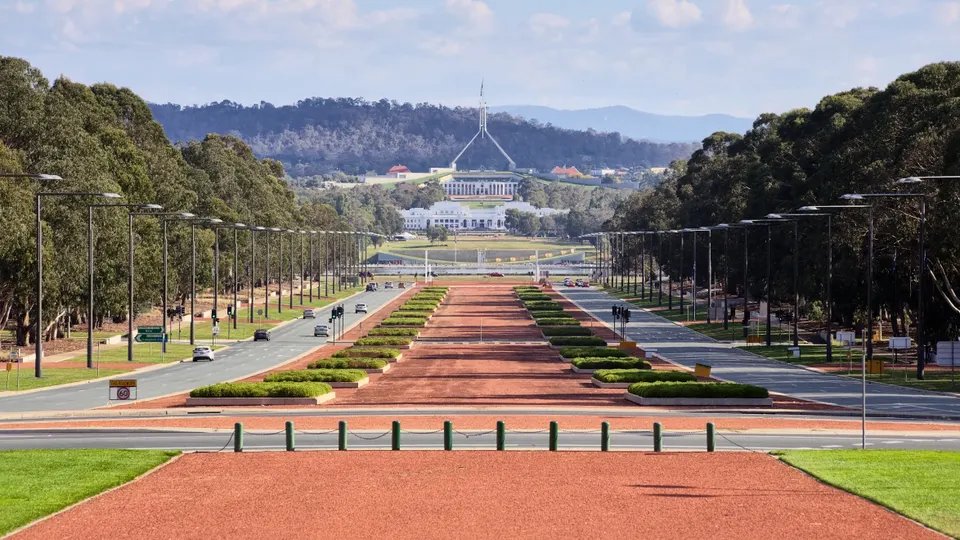
The political landscape in Australia has been rocked by the high-profile defection of two Liberal members to the One Nation party, a move that has sent ripples through the nation's economic planning. Treasurer Jim Chalmers has seized on this moment to launch a scathing critique of the opposition's fiscal policies, specifically the proposal to index tax brackets. Chalmers argues that such a move would cost the national budget nearly a quarter of a trillion dollars over the next decade, potentially saddling the country with tens of billions in extra debt interest.
This isn't just a local political spat; it represents a broader struggle between populist tax relief and fiscal responsibility in an era of persistent inflation. While Angus Taylor of the Liberal party frames the government’s stance as a "betrayal" of taxpayers through bracket creep, the market is watching closely. For investors, the concern is that pumping excessive liquidity into the economy while inflation remains at historic highs could destabilize the Australian dollar and set a precedent for other Western economies facing similar demographic and political pressures.
---
The Military-Industrial Pivot: From SUVs to Stealth
In a significant shift for the global automotive industry, Jaguar Land Rover (JLR) and General Motors are reportedly vying for a massive £900 million contract to build a new generation of military trucks for the UK. This move comes as NATO countries race to rearm and modernize their aging fleets, many of which have been out of production for nearly a decade. The transition of these consumer-facing giants into the defense sector highlights a "security-first" economic era where industrial capacity is being redirected from civilian luxury to tactical survival.
Simultaneously, the technical nature of warfare is evolving rapidly. British jets are now being equipped with advanced anti-drone missile systems designed specifically to counter low-cost threats like the Shahed drones frequently seen in Middle Eastern theaters. This development underscores a new reality for defense contractors: the need for cost-effective interception. As traditional military hardware becomes prohibitively expensive, the ability to neutralize cheap, mass-produced drones has become a multi-billion dollar priority for Western air forces.

---
Energy Realignment Amidst the Hormuz Deadlock
The ongoing crisis in the Strait of Hormuz, exacerbated by what analysts call "Beijing’s strategic silence," is fundamentally altering the map of global energy production. With the primary maritime artery for oil remains under threat, major energy firms are no longer waiting for a diplomatic resolution. Instead, there is a frantic rush into Argentina’s Vaca Muerta shale basin. What was once a localized South American project has now become a global priority for U.S. and international giants seeking to de-risk their supply chains away from the volatile Middle East.
This shift is not without its geopolitical irony. While the Xi-Trump summit in Beijing was intended to project an aura of global stability, the lack of a concrete breakthrough regarding the Hormuz blockade has signaled to the markets that the era of "Great Power" policing of trade routes may be over. For the Iranian economy, this means a dual pressure: increased regional military tension and the potential long-term loss of market share as global capital flows toward the "safe haven" shale fields of the Americas.
---
Market Snapshot: USD and Gold Stability
Despite the geopolitical turbulence, the domestic Iranian market is showing a rare moment of localized stability this hour. The US Dollar (USD) is currently trading at a sell rate of 180,100 Toman, remaining unchanged (0.0%) over the last 24-hour period. This plateau suggests that the market has temporarily priced in current regional risks, though the underlying tension remains high. Gold 18k is also holding steady at 19,795,696 Toman per gram (+0.0%), reflecting a cautious wait-and-see approach among local investors.
In the cryptocurrency sector, Bitcoin (BTC) continues to hover around the $78,045 mark. Michael Saylor, a key figure in the space, recently suggested that the "never sell" mantra might need to evolve to avoid impairing the asset's utility, a statement that has sparked intense debate among institutional holders. As the US CLARITY Act advances in the Senate, the industry is bracing for a new regulatory framework that could either stifle or supercharge domestic innovation in the digital asset space.
Frequently Asked Questions
Why are major carmakers like JLR and GM entering the defense sector?
How is the Hormuz crisis impacting global oil exploration?
What does the Australian political defection mean for inflation?
Exchange‑Rate Pass‑Through: How Currency Movements Shape Inflation During Oil and Defense Shocks
Exchange‑rate pass‑through (ERPT) measures how much a change in the nominal exchange rate is reflected in domestic prices. When a country’s currency depreciates, imported goods become more expensive, and the extent to which retailers and producers raise their own prices determines the inflationary impact. Economists express ERPT as a percentage: a 10 % depreciation that leads to a 3 % rise in consumer prices implies a 30 % pass‑through.
In commodity‑importing economies such as Australia, ERPT is especially important during oil price spikes. A crisis in the Strait of Hormuz can push world oil prices higher, raising the cost of imported fuel and transport services. Because fuel is a key input for many sectors, a strong pass‑through can quickly lift headline inflation, prompting policymakers like Treasury Secretary Jim Chalmers to consider tighter monetary policy.
The degree of pass‑through is not fixed; it varies with the credibility of inflation targeting, the openness of the economy, and the share of imported inputs in production. Countries with well‑anchored inflation expectations—often achieved through transparent central‑bank communication—tend to experience lower ERPT. Conversely, when large defense contracts (e.g., the JLR military procurement) are priced in foreign currencies, a weaker domestic currency can amplify spending on equipment, further feeding price pressures.
For resource‑rich nations like Argentina, the story reverses. A surge in Vaca Muerta shale output can strengthen the peso by increasing export earnings, reducing the pass‑through from foreign price shocks. However, if the global market shifts—say, due to a Bitcoin price rally that draws capital away from traditional commodities—the net effect on the exchange rate and inflation can become more complex.
Understanding ERPT helps investors and policymakers anticipate how external shocks—oil crises, defense spending booms, or cryptocurrency volatility—translate into domestic inflation. By monitoring exchange‑rate movements alongside import composition, they can design more nuanced responses, from adjusting interest rates to deploying targeted subsidies.
Topics
Related Articles