Musk vs. Altman: The Battle for AI’s Soul Begins as Trump Unveils Controversial $1.7bn ‘Ally Fund’
نبرد ایلان ماسک و سم آلتمن بر سر آینده هوش مصنوعی؛ رونمایی ترامپ از صندوق ۱.۷ میلیارد دلاری برای متحدان
A high-stakes legal battle between Elon Musk and Sam Altman kicks off to determine the future of OpenAI, while Donald Trump creates a massive $1.7bn fund to compensate political allies. Meanwhile, the Iranian market sees a 1.8% drop in Emami coin prices despite escalating regional rhetoric.
At time of publishing
USD
180,350
Toman
Gold 18K
19.83M
Toman / gram
Bitcoin
$76,332
US Dollar
Tether
17,875
Toman
The Trial of the Century: Musk vs. Altman and the Future of AI
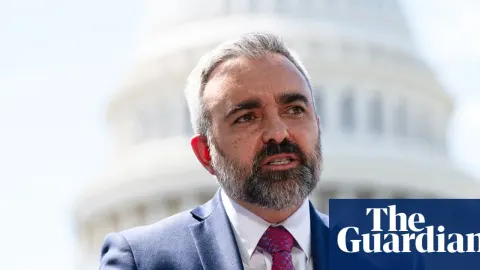
The legal showdown between Elon Musk and Sam Altman has officially reached a critical juncture, with live updates from the courtroom signaling a fundamental rift in the tech world. Musk’s lawsuit alleges that OpenAI has strayed from its original non-profit mission—to develop artificial intelligence for the benefit of humanity—and has instead transformed into a closed-source subsidiary of Microsoft focused on maximizing profits. This battle is not just about corporate governance; it is about who controls the most powerful technology of the 21st century. If Musk succeeds, it could force OpenAI to open-source its models, potentially democratizing access but also raising significant safety and commercial concerns.
For Iranian developers and tech enthusiasts, the outcome of this trial is of immense importance. Currently, many Iranian startups rely on API wrappers or localized versions of ChatGPT to power their services. A shift in OpenAI’s legal status or its commitment to "openness" could directly impact the availability of these tools in sanctioned or restricted markets. The trial highlights a growing tension between the idealistic roots of Silicon Valley and the brutal reality of the AI arms race, where billions of dollars in compute power are required to stay competitive. As Altman defends his pivot toward a for-profit structure, the tech world watches to see if the "open" in OpenAI will remain a reality or become a historical footnote.

Trump’s $1.7bn ‘Anti-Weaponization’ Fund Rattles Washington
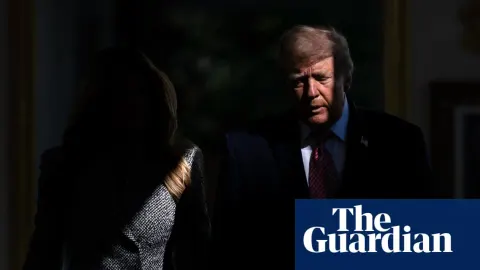
In a move that has sent shockwaves through the U.S. political and financial landscape, Donald Trump has moved to dismiss a $10 billion lawsuit against the IRS in exchange for the creation of a $1.776 billion "anti-weaponization" fund. This fund is designed to compensate political allies who the president claims were wrongfully targeted by government agencies. Critics, led by Senate Finance Committee Democrat Ron Wyden, have slammed the move as a "brazen act of corruption," describing it as a slush fund for political subversion. The fund will be overseen by five commissioners, most of whom are directly appointed by the attorney general and removable by the president, ensuring tight executive control over the disbursements.
This unprecedented maneuver has significant implications for market stability and the perceived integrity of U.S. institutions. Investors are closely monitoring how this development affects the broader political risk profile of the United States. In the currency markets, the USD/IRR remained stable at 180,350 (0.0% change over 24h), but the underlying volatility in Washington often translates into long-term pressure on the dollar's global standing. The creation of such a fund suggests a shift toward more personalized executive power, which could lead to further polarization and potential market shocks if institutional checks and balances are perceived to be weakening.
Iran’s Defense Rhetoric vs. Market Realities
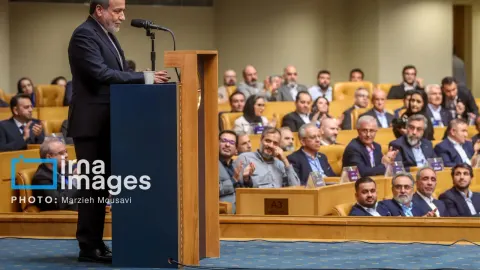
On the regional front, Iran’s defense ministry has officially rejected Donald Trump’s assertions that the country’s defensive capabilities have been significantly degraded. A spokesperson for the ministry emphasized that a substantial portion of Iran’s military capacity remains unused and that the "axis of resistance" is more resilient than ever. This rhetorical escalation comes at a time when Pakistan is attempting to mediate between Tehran and Washington, though military tensions continue to shadow these diplomatic efforts. President Masoud Pezeshkian also took a moment to pivot to national culture, hailing the polymath Omar Khayyam as a bridge between global science and Persian literature, perhaps attempting to project a sense of internal stability and cultural pride amidst the geopolitical storm.
Despite the fiery words from defense officials, the Iranian gold and coin markets have shown a surprising degree of cooling. The Emami coin price dropped from 194,500,000 to 191,000,000 Toman, representing a -1.8% decrease in just 24 hours. Similarly, 18k gold saw a slight dip of -0.1% to 19,826,630 Toman per gram. This suggests that local traders may be pricing in a temporary de-escalation or are simply exhausted by the constant cycle of threats. While the USD/IRR rate holds steady at 180,350, the drop in coin prices indicates that the immediate "war premium" might be fading, as market participants wait for more concrete developments in the ongoing standoff.

Global Energy Tipping Point: Oil at $150?
Wall Street legend Roger Altman of Evercore has warned that the oil market is reaching a dangerous "tipping point" that could trigger a second massive inflation shock this decade. With the Strait of Hormuz crisis remaining unresolved, Altman suggests that crude prices could climb toward $150 a barrel, destabilizing global stock markets and forcing central banks to rethink their interest rate strategies. While European airlines claim they have enough jet fuel supply for the summer by diversifying imports from the U.S. and Nigeria, the broader economic impact of sustained high energy prices cannot be ignored. For the Iranian economy, which is heavily reliant on energy exports and sensitive to global inflation, this "tipping point" could mean higher costs for imported goods, further straining the Toman’s purchasing power even if oil revenues increase.
Frequently Asked Questions
Why is Elon Musk suing Sam Altman and OpenAI?
What is Trump's 'anti-weaponization' fund?
Why did the Emami coin price drop despite regional tensions?
What is the potential impact of $150 oil on the Iranian economy?
Understanding Strategic Chokepoints in Global Energy Supply
Strategic chokepoints are narrow maritime passages or land routes that are critical for global trade, particularly for the transportation of energy resources like oil and natural gas. Their significance lies in the immense volume of goods that pass through them daily, often with limited or no viable alternative routes. A disruption, whether due to geopolitical tensions, conflict, piracy, or natural disaster, can have immediate and far-reaching consequences for global supply chains, energy prices, and economic stability. These vulnerable points represent a nexus where geography, economics, and international politics converge.
The Strait of Hormuz is arguably the most prominent and strategically vital chokepoint in the world, connecting the Persian Gulf to the open ocean. Bordered by Iran and Oman, it is the sole maritime passage for oil from major Middle Eastern producers like Saudi Arabia, Iran, UAE, Kuwait, and Iraq. Roughly one-fifth of the world's total petroleum liquids consumption and a significant portion of global liquefied natural gas (LNG) pass through this strait daily. Its closure or significant disruption, even for a short period, would have catastrophic implications, potentially sending global oil prices skyrocketing and triggering a severe worldwide economic crisis.
The geopolitical sensitivity surrounding the Strait of Hormuz is perpetually high. Tensions between nations in the region, particularly involving Iran, often lead to concerns about the strait's security. Any military confrontation or escalation of hostilities in this area could jeopardize the free flow of oil, impacting not just the directly involved parties but every nation reliant on global energy markets. The potential for a "Strait of Hormuz oil crisis," as alluded to in the keywords, highlights this ever-present risk and explains why global oil price predictions can jump to extreme levels like $150 per barrel in such scenarios.
Beyond the Strait of Hormuz, other critical chokepoints include the Suez Canal, the Panama Canal, the Strait of Malacca, and the Bab el-Mandeb Strait. Each presents its own unique set of geopolitical and logistical challenges. Understanding these strategic vulnerabilities is crucial for comprehending international relations, energy security policies, and the inherent volatility of global commodity markets. These narrow channels are not just lines on a map; they are arteries of the global economy, whose health is vital for prosperity worldwide.
Topics
Related Articles