Mandelson Files Leak & Hormuz Strikes: Toman Hits 176k as Global Tensions Mount
افشای اسناد جنجالی مندلسون و درگیری در هرمز؛ دلار به ۱۷۶ هزار تومان رسید
A massive leak of UK government documents and fresh military exchanges in the Persian Gulf have sent the Iranian Toman sliding 2.5% today. Meanwhile, Ethereum markets cool as major buyers slow their pace, despite a broader AI-driven software rally.
At time of publishing
USD
176,100
Toman
Gold 18K
19.04M
Toman / gram
Bitcoin
$71,728
US Dollar
Tether
175,232
Toman
The Mandelson Leak: A Crisis of Transparency in Downing Street
Downing Street is currently bracing for what sources describe as "excruciating" and "toe-curling" revelations as more than 1,000 pages of documents related to Lord Mandelson’s appointment are declassified. This unprecedented move by the UK government, framed as a step toward total transparency, has sent shockwaves through the British political establishment. The files, which include party political material and declassified security assessments, are expected to reveal deep-seated concerns regarding security protocols and internal lobbying that have long been whispered about in Westminster.
For the global observer, this isn't just a British tabloid story; it represents a deepening trust deficit in Western institutions. At a time when the UK is attempting to project stability amidst European economic stagnation, such a high-profile leak suggests internal fractures that could distract from foreign policy objectives, including the enforcement of sanctions and diplomatic negotiations in the Middle East. The sheer volume of documents—prepared by every government department—indicates that the fallout will be long-lasting, potentially shifting the UK’s political landscape just as it faces critical decisions on international trade and security alliances.

Market Turmoil: Toman Weakens as Hormuz Tensions Escalate
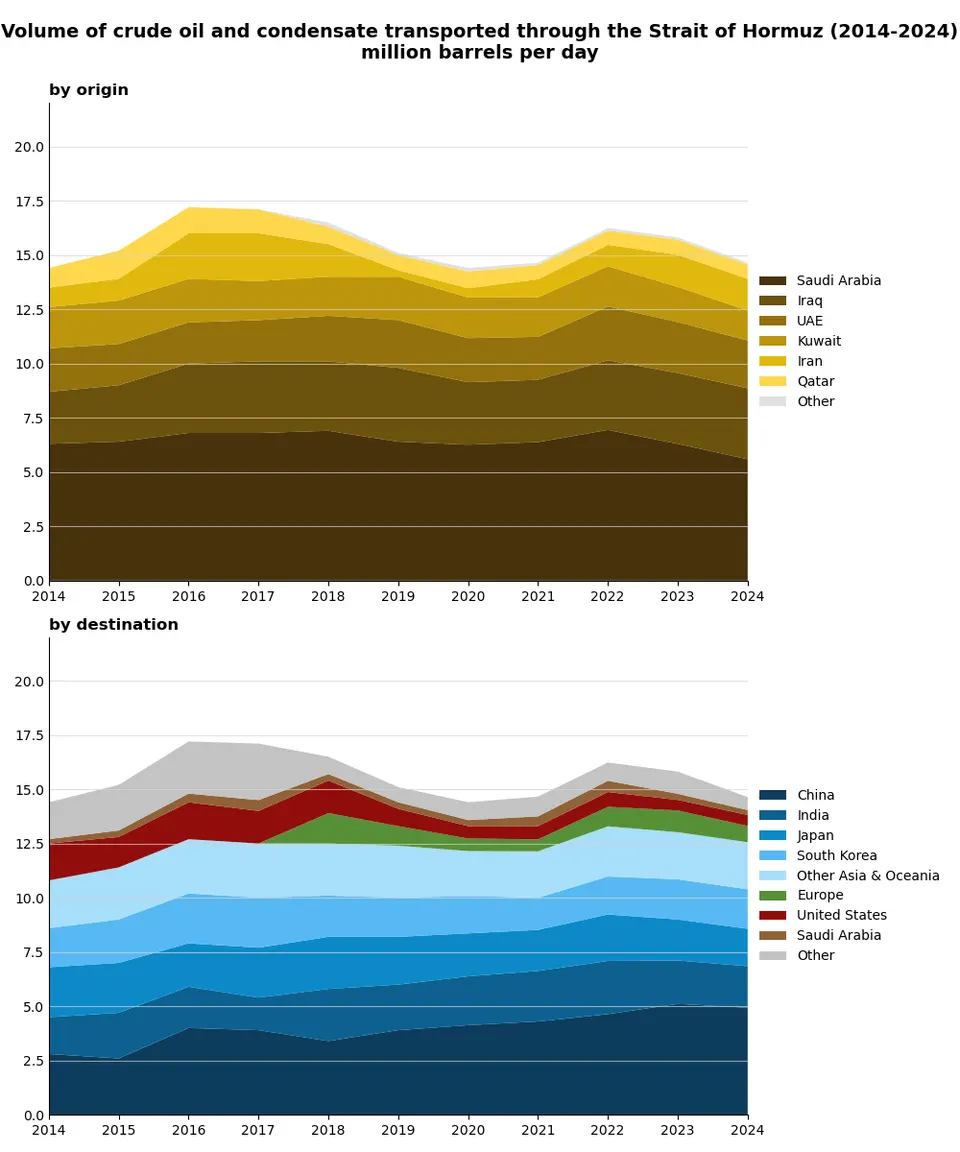
In the local markets, the Iranian Toman has faced significant downward pressure today, driven by a combination of regional military friction and global risk-off sentiment. The USD/IRR exchange rate moved from 171,800 to 176,100, representing a sharp 2.5% depreciation in a single day. This volatility is directly linked to reports of fresh strikes around the Strait of Hormuz. The US military confirmed it struck Iranian radar sites following what it described as Iranian-led attacks on American forces stationed in Kuwait. These escalations have effectively clouded any immediate hopes for a diplomatic breakthrough, prompting investors to seek safety in hard currency and gold.
Gold and coin markets have mirrored this anxiety. The price of 18k gold rose from 18,853,594 to 19,044,508 Toman per gram (+1.0%), while the Emami coin climbed from 182,000,000 to 184,500,000 Toman (+1.4%). When the Strait of Hormuz—the world's most vital oil artery—becomes a theater for active military exchanges, the "war premium" is immediately priced into the Rial. For the average Iranian consumer, this translates to heightened inflation expectations and a rush to preserve purchasing power before the next potential spike in the cost of imports.
Crypto and Tech: Bitmine Slows Down While AI Software Surges
In the digital asset space, the aggressive buying spree that characterized previous weeks appears to be cooling off. Bitmine, a major Ethereum treasury firm, has significantly slowed its pace, purchasing just $53 million worth of ETH last week—a 75% drop from its previous 112,000 ETH acquisition. This slowdown comes as Bitcoin struggles to maintain its footing near $72,000, plagued by ETF outflows and a lack of "whale" demand. Analysts suggest that macro uncertainty, fueled by the aforementioned geopolitical tensions, is forcing even the most bullish institutional players to adopt a wait-and-see approach.
Conversely, the traditional tech sector is finding a new second wind through artificial intelligence. Stocks like ServiceNow and Adobe have jumped following the launch of Nvidia’s newest AI chip, which has sparked a massive rally in enterprise software. The market is beginning to realize that AI agents will drive more demand for software platforms, not less. While the hardware side (chips) has dominated the narrative for the past year, the focus is now shifting to the companies that can actually implement these AI models into productive tools. This divergence shows a bifurcated market: while geopolitics weighs on currencies and commodities, the relentless march of AI continues to create pockets of immense value in the equity markets.
National Pride and Economic Reality
Amidst the economic and geopolitical turbulence, there was a brief moment of national celebration as President Masoud Pezeshkian congratulated the Iranian under-17 freestyle wrestling team for securing the Asian Champions title in Vietnam. Such sporting successes often serve as a temporary morale booster in Iran, providing a sense of collective achievement during periods of high economic stress. However, the reality of the 176,000 Toman dollar remains the primary concern for most households, as the cost of living continues to track the rising exchange rate.
What this means for the coming week is a likely period of consolidation. If the military exchanges in the Persian Gulf do not escalate into a full-scale blockade, we might see the Rial stabilize at these new, higher levels. However, with the Mandelson files creating political noise in the West and the US-Iran relationship remaining in a state of kinetic friction, the path of least resistance for the Toman appears to be further depreciation. Investors are advised to watch the $90 per barrel oil threshold closely, as any sustained move above that level will likely trigger further intervention from central banks globally.
Frequently Asked Questions
Why did the USD/IRR price jump by 2.5% today?
What are the 'Mandelson Files' and why do they matter?
Why is Bitmine slowing its Ethereum purchases?
How is Nvidia impacting the software market?
Understanding Iran's Dual Exchange Rate System Amid Sanctions
Iran’s foreign exchange market is famously split into two distinct rates: the official rate set by the Central Bank of Iran (CBI) and a much higher parallel market rate that reflects real supply‑and‑demand conditions. The official rate is used for essential imports, government transactions, and contracts that are sanctioned‑friendly, while the parallel (or free market) rate is where most Iranians and businesses actually buy and sell dollars and euros. This duality emerged as a response to decades of international sanctions that limited Iran’s access to foreign currency, forcing the CBI to allocate scarce dollars at a controlled price while a black‑market price floated freely.
The mechanics are simple but powerful. When sanctions tighten—such as after a leak like the "Mandelson files" or after a geopolitical flashpoint in the Strait of Hormuz—foreign investors pull back, and the supply of hard currency shrinks. The official rate can only be adjusted slowly because the CBI must balance fiscal needs, inflation, and political considerations. Meanwhile, the parallel rate spikes almost immediately, often reaching several times the official price. In June 2026, for example, the market rate for the Iranian rial (IRR) against the US dollar was reported around 176,000 IRR per USD, far above the official rate, illustrating how external shocks translate into domestic currency devaluation.
Why does this matter for ordinary Iranians? A dual system creates price distortions. Imported goods priced at the official rate become artificially cheap for those with access, while the majority who rely on the parallel market face soaring costs. It also fuels inflation, erodes savings, and incentivizes capital flight. Moreover, it complicates monetary policy: the CBI’s attempts to tighten liquidity may have limited effect if the parallel market continues to supply dollars at a higher price.
Policymakers have tried various fixes, from tightening the official rate to introducing a single “market‑determined” rate. However, each approach runs into the same obstacle: sanctions limit the inflow of foreign currency, and without a credible guarantee of stable access, market participants remain skeptical. Understanding the dual exchange rate system is therefore essential for anyone tracking Iran’s macro‑economy, the impact of geopolitical events on emerging markets, or the broader dynamics of sanctions‑driven financial engineering.
For a deeper dive, see the references below, which cover the structure of Iran’s exchange market, the role of sanctions, and recent developments in 2024‑2026.
Topics
Related Articles