UK Politics Roils, AI Extremism Flares, Armenia Votes Amidst Shifting Alliances
سیاست بریتانیا متلاطم، افراطگرایی هوش مصنوعی شعلهور، ارمنستان در میان اتحادهای متغیر رای میدهد
A UK political spat over remarks concerning a murder victim escalates, drawing in US figures and highlighting defense policy delays. Meanwhile, the burgeoning AI sector faces a disturbing rise in anti-tech extremism, and Armenia holds crucial elections that could redefine its geopolitical alignment.
At time of publishing
USD
177,250
Toman
Gold 18K
18.57M
Toman / gram
Bitcoin
$62,492
US Dollar
Tether
176,565
Toman
UK Politics and Defense Woes Spill Over
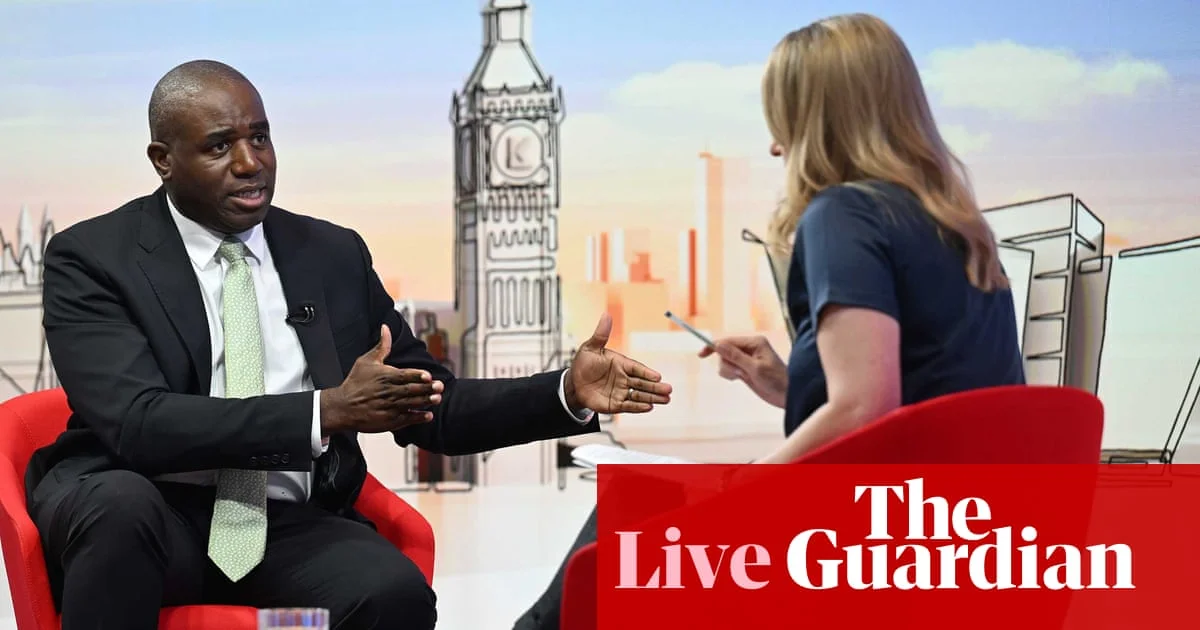
The chambers of the UK Parliament are abuzz with a political dispute that has transcended national borders, involving a senior Labour figure, David Lammy, confronting US Vice President JD Vance over remarks linking a murder to immigration. Lammy reportedly told Vance that the murder of Henry Nowak had "nothing to do with mass migration," a stance that underscores the sensitivity surrounding immigration discourse in both countries. This high-profile exchange occurs against a backdrop of significant delays in the UK's Defence Investment Plan (Dip). A parliamentary committee has sharply criticized these delays, stating they undermine credibility with allies and damage the defense industrial base. The chair of the committee, Geoffrey Clifton-Brown, expressed frustration, noting that excuses about "taking the time to get the details right" are insufficient when national security and international trust are at stake.
This political friction and the transparency issues surrounding defense policy have broader implications. For Iran, such internal political turbulence in a major Western power can signal shifts in international focus, potentially affecting diplomatic bandwidth and the perceived stability of alliances. While not directly tied to sanctions or currency markets, the discourse on immigration and national security in the UK and US can influence broader geopolitical sentiment. Furthermore, delays in defense planning by allies like the UK could subtly impact regional security perceptions, a factor that is always closely monitored in Tehran. The ongoing debate highlights how domestic political narratives can intersect with international relations, even in seemingly distant spheres.

The Dark Side of the AI Boom: Rising Extremism
The rapid advancement of artificial intelligence, hailed as a driver of progress, is also fostering a disturbing undercurrent of anti-tech extremism. Recent events, including an alleged arson attempt on OpenAI's headquarters and Sam Altman's home, along with an Italian influencer's arrest for plotting anti-tech attacks inspired by the Unabomber, paint a grim picture. Manifestos linked to these incidents cite concerns about "AI slop" and even political figures' ties to AI companies as motivations for violence. This escalation suggests that the techno-optimism surrounding AI development is increasingly clashing with deep-seated anxieties and radical ideologies.
The implications for the tech industry and global markets are significant. Increased extremism could lead to greater regulatory scrutiny, security crackdowns on tech infrastructure, and a chilling effect on innovation. For businesses and investors, this translates to heightened risk and uncertainty. In Iran, while the direct impact may seem distant, the global narrative around AI's societal impact, including fears of job displacement and existential threats, can influence local discourse on technology adoption and digital policy. It also serves as a reminder that technological progress is rarely linear and can be accompanied by unforeseen societal challenges that ripple across economies and influence international relations.

Armenia's Geopolitical Crossroads: Elections Amidst Russian Pressure
Armenia is at a critical juncture as it holds parliamentary elections, a vote widely seen as a referendum on the nation's future geopolitical orientation. Incumbent Prime Minister Nikol Pashinyan's party is favored, representing a push towards closer ties with the West, while opposition candidates advocate for maintaining or strengthening alliances with Russia. The election is taking place under significant pressure, with reports of Russia intensifying covert efforts to undermine Pashinyan's government, fearing a definitive realignment with Europe. The presence of a Russian-Armenian billionaire opposition candidate, campaigning under house arrest, further complicates the political landscape.
This election is not merely a domestic affair; it has considerable geopolitical weight. Armenia's strategic position and its historical ties to Russia make its alignment a key concern for both Moscow and Western powers. For Iran, Armenia's geopolitical leanings are of particular interest due to shared borders and regional security dynamics. A stronger pro-Western orientation in Yerevan could alter regional balances, potentially impacting trade routes, security cooperation, and the broader geopolitical calculus in the Caucasus. The outcome will signal whether Armenia can navigate increasing external pressures and assert its independence, a narrative that resonates in a region often subject to the influence of larger powers.

Market Snapshot: Toman Stabilizes Amidst Global Cues
The Iranian Toman has shown relative stability in the past 24 hours, with the USD selling at 177,250 Toman and buying at 176,201 Toman. This represents a slight increase of 1.4% for the dollar against the Toman, moving from 174,800 to 177,250. Gold prices have mirrored this trend, with 18k gold per gram rising by 1.4% to 18,574,264 Toman, and the Emami coin also seeing a 1.4% increase to 183,500,000 Toman. These movements suggest a cautious market sentiment, with investors perhaps seeking refuge in tangible assets amidst broader global uncertainties.
The stability in gold and the slight appreciation of the USD against the Toman can be interpreted in several ways. It might reflect ongoing global economic pressures, lingering effects of international sanctions, or a localized response to political developments discussed elsewhere. The parallel rise in gold and the dollar suggests that while there's a demand for foreign currency, there's also a concurrent move towards traditional safe-haven assets. For Iranian citizens and businesses, this means that the cost of imported goods remains elevated, and the purchasing power of the Toman continues to be eroded, necessitating careful financial planning and investment strategies in the face of persistent inflationary pressures and currency fluctuations.
Frequently Asked Questions
What is the current exchange rate for USD to IRR and how has it changed?
What is the significance of the Armenian parliamentary elections?
What is the connection between AI advancements and extremism?
How is the UK political dispute impacting defense policy?
What are the recent movements in Iran's gold and coin markets?
Currency Devaluation and the Flight to Hard Assets
Currency devaluation is a deliberate or market-driven reduction in the value of a country's currency relative to other currencies, often a result of high inflation, economic instability, or international sanctions. In nations like Iran, where the national currency (the Rial, often colloquially referred to as the Toman, which is ten Rials) has experienced significant depreciation against major foreign currencies like the US Dollar (USD/IRR), this phenomenon profoundly impacts daily life and economic stability. When a currency devalues rapidly, the cost of imported goods skyrockets, and the purchasing power of citizens diminishes, leading to a decline in living standards.
This erosion of purchasing power often compels individuals and businesses to seek ways to preserve their wealth. One common strategy in such high-inflation environments is a "flight to hard assets." These are tangible assets that are perceived to hold their value better than the depreciating national currency. Gold, for instance, has historically been considered a safe haven, and its price often surges in local currency terms during periods of economic uncertainty and currency weakness. Similarly, foreign currencies, particularly the US Dollar, are sought after as a more stable store of value.
In Iran, this phenomenon is clearly observed in the demand for assets like gold coins, such as the "Emami Coin." These coins become a popular alternative investment, allowing people to convert their rapidly depreciating Rials into something that is expected to retain its value or even appreciate in local currency terms. This increased demand for gold and foreign currency, while protecting individual wealth, can paradoxically further exacerbate the pressure on the national currency, contributing to a vicious cycle of devaluation and inflation, and creating parallel markets where the official exchange rate significantly differs from the street rate.
Understanding currency devaluation is crucial for comprehending the economic behaviors observed in many parts of the world. It highlights how economic instability can drive rational decisions by individuals to protect their savings, often leading to a complex interplay between official economic policies, market forces, and public trust in the national currency. It underscores the fundamental principle that money's value is not inherent but derived from confidence and stability.
Topics
Related Articles