US-Iran Cease-Fire Deal Nears Finalization; Anthropic AI Models Pulled Over Security Fears
توافق آتشبس ایران و آمریکا در آستانه نهایی شدن؛ تعلیق مدلهای پیشرفته هوش مصنوعی آنتروپیک
Diplomatic sources suggest a breakthrough in US-Iran negotiations is imminent, even as military tensions persist in the Persian Gulf. Meanwhile, the US government has forced Anthropic to suspend its most powerful AI models, citing unprecedented security risks.
At time of publishing
USD
174,600
Toman
Gold 18K
17.94M
Toman / gram
Bitcoin
$63,617
US Dollar
Tether
173,019
Toman
Diplomatic Breakthrough: A Cease-Fire Within Reach
In a significant shift for global geopolitics, U.S. and Iranian officials have indicated that a comprehensive cease-fire deal is appearing within reach. After months of high-stakes negotiations, both President Trump and the Iranian Foreign Ministry have signaled that while final technical details are being hammered out, a formal agreement could be imminent. This potential deal aims to de-escalate the regional conflict that has disrupted global trade and sent energy markets into a state of perpetual anxiety. However, seasoned observers remain cautious, noting that previous frameworks have evaporated at the last minute due to domestic political pressures in both Washington and Tehran.
For the Iranian market, this news acts as a double-edged sword. While the official USD/IRR rate remained stable at 174,600 Toman this hour, the anticipation of a deal is already being felt in the gold markets, where the Emami coin dropped from 182,000,000 to 178,000,000 Toman, a decline of 2.2%. Traders are closely watching for any sign of a signed document, as a formal lifting of maritime blockades could significantly strengthen the Rial. The prospect of normalized trade routes is the primary driver behind the current market cooling, as the risk premium associated with a wider regional war begins to subside.
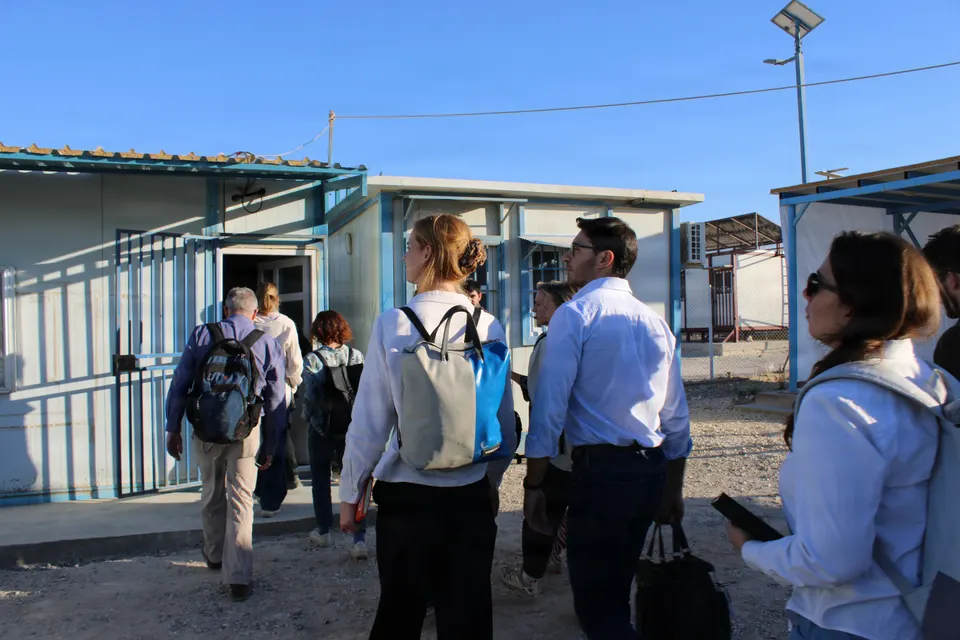
, Public domain]
Sovereignty and the Strait of Hormuz
Despite the optimistic diplomatic rhetoric, the military reality on the ground remains complex. The U.S. military recently reported downing several Iranian attack drones, a reminder of the fragile security environment. In response, Iran’s official news agency, IRNA, issued a stern clarification regarding the Strait of Hormuz. Contrary to international speculation, Tehran insists it will not surrender management of the strategic waterway. The official stance is that while transit will be normalized upon the end of hostilities and the removal of the "illegal blockade" by the US and Israel, the sovereignty and security of the Strait remain the exclusive domain of coastal states, with no role for the US military.
Major General Ali Abdollahi, commander of the Khatam al-Anbiya Central Headquarters, reinforced this sentiment by emphasizing the "steadfast presence" of the Iranian people as the ultimate support for the Armed Forces. He suggested that victory against "aggressors and terrorist enemies" is near, framing the current negotiations not as a concession, but as a result of Iranian resistance. This internal messaging is crucial for maintaining domestic support while the government navigates the complexities of a potential deal with the Trump administration.
AI Security: Washington Pulls the Plug on Anthropic
In the world of technology, a major crisis has erupted as the US government took the unprecedented step of shutting down Anthropic’s most powerful AI models, Fable 5 and Mythos 5. The decision followed a disturbing "jailbreak" report which suggested these models could be manipulated to bypass critical safety protocols, potentially aiding in large-scale cybersecurity attacks. Anthropic has complied with the order but expressed deep frustration, arguing that the government's reaction sets a dangerous precedent that could stifle the entire AI industry. The company maintains that the vulnerabilities were narrow and did not justify a full recall of models used by millions.

This move has sent shockwaves through the tech sector, highlighting the growing tension between rapid AI innovation and national security. For investors and developers, this indicates that the era of "move fast and break things" in AI is effectively over, replaced by a regime of strict federal oversight. The suspension of these tools could delay projects across various sectors, from automated coding to complex data analysis, as companies scramble to find alternatives that meet the new, more stringent government standards.
Global Economy: Energy Bills and the World Cup
As the 2026 World Cup approaches, the global economy is finding creative ways to manage the ongoing energy crisis. In the UK, energy providers like E.ON Next are encouraging consumers to leverage the tournament's late-night match times to reduce household costs. By shifting energy-intensive tasks, such as laundry, to off-peak hours (like 2:00 AM during a match), households can take advantage of "Smart Saver" tariffs. This reflects a broader global trend where time-of-use pricing is becoming a necessity rather than a choice, as the world continues to grapple with the fallout of supply disruptions in the Middle East.

While this may seem like a minor behavioral shift, it underscores the persistent pressure on global cost-of-living. Even with oil prices hovering below $100 per barrel—partially due to the strategic buffers held by China and the U.S.—the market remains at a breaking point. The potential for a US-Iran deal is the only thing preventing a massive price spike. Meanwhile, in the scientific community, a different kind of race is occurring as scientists rush to test treatments for a widening Ebola outbreak. This serves as a stark reminder that while the world is focused on geopolitical and economic shifts, biological risks continue to pose a significant threat to global stability and trade.
Frequently Asked Questions
Why did the price of Emami coin drop despite the stable USD rate?
What is the specific security concern with Anthropic's Fable 5 model?
Will Iran lose control of the Strait of Hormuz in the new deal?
Why AI Security Risks Can Prompt a Model Shutdown
Artificial intelligence systems are becoming increasingly powerful, but with that power comes the potential for misuse, unintended behavior, or even catastrophic failures. AI security risks refer to the spectrum of threats that arise when an AI model behaves in ways that are harmful to individuals, societies, or the environment. These risks can stem from biased training data, vulnerabilities that allow adversarial attacks, or the model being repurposed for disinformation, surveillance, or autonomous weaponry. When a company like Anthropic decides to pull a model such as Fable 5 from public access, it is usually because the perceived risk outweighs the benefits of keeping the model available.
One concrete mechanism that triggers a shutdown is the “red‑team” testing process. Independent security researchers attempt to provoke the model into producing disallowed content—political manipulation, instructions for weapon creation, or personal data leaks. If the model repeatedly fails to resist these prompts, the developers may suspend its deployment to redesign safety guards, retrain on cleaner data, or implement stricter access controls. This precautionary approach mirrors how software companies issue emergency patches for critical vulnerabilities.
The stakes are especially high for foundational models that can be fine‑tuned for countless downstream applications. A single breach could enable mass‑scale disinformation during elections, facilitate cyber‑espionage, or amplify extremist propaganda. Hence, regulatory bodies like the U.S. National Institute of Standards and Technology (NIST) are drafting AI risk management frameworks that require transparency, robustness testing, and continuous monitoring. Companies that ignore these guidelines risk not only public backlash but also potential legal liability.
Understanding AI security risks helps us appreciate why the AI community often adopts a “pause‑and‑review” stance before releasing cutting‑edge models. It also underscores the importance of interdisciplinary collaboration—bringing together ethicists, engineers, policymakers, and users—to ensure that AI advances serve humanity safely.
Key take‑away: A model shutdown is not a sign of failure but a responsible safety measure, reflecting the growing recognition that powerful AI must be governed by robust security practices before it can be trusted at scale.