Trump’s Sunday Deadline: Toman Rallies as Iran Peace Deal Hits Final Hurdle
ضربالاجل یکشنبه ترامپ: جهش ارزش تومان در حالی که توافق صلح به مرحله نهایی رسید
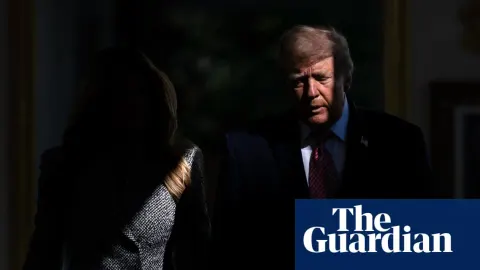
Donald Trump has set a Sunday deadline for a historic peace deal with Iran, causing the Toman to rally by 2.5%. While Tehran urges caution over the timeline, markets are already pricing in a major geopolitical shift.
At time of publishing
USD
170,300
Toman
Gold 18K
17.41M
Toman / gram
Bitcoin
$64,126
US Dollar
Tether
168,621
Toman
The Sunday Deadline: Diplomacy vs. Reality
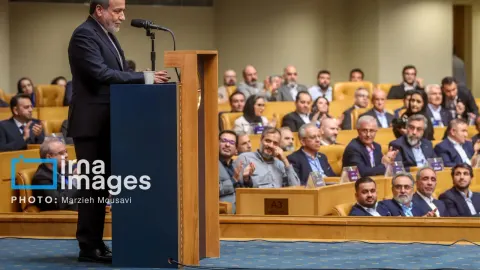
In a move that has sent shockwaves through global markets, Donald Trump announced on Saturday that a formal peace agreement between the United States and Iran is scheduled to be signed this coming Sunday. This announcement represents the potential culmination of weeks of intensive back-channel negotiations aimed at de-escalating regional tensions and ending the so-called '12-Day War' cycle. However, the optimism coming from Washington is met with a more measured tone from Tehran. Iranian foreign ministry officials, speaking to Al Jazeera and the New York Times, have indicated that while a deal is indeed close, the technical details may not be finalized in time for a Sunday ceremony. They suggested that an agreement is more likely to be 'inked in the coming days' rather than within the next 24 hours.
This discrepancy in the timeline highlights the high-stakes nature of the negotiations. For Trump, a Sunday signing offers a massive political victory and a chance to project strength as a dealmaker. For Tehran, the focus remains on the specific mechanisms of sanctions relief and the verified destruction of enriched uranium. Despite the conflicting reports on the exact hour of the signing, the underlying reality is clear: both sides are closer to a formal cessation of hostilities than they have been in decades. This diplomatic 'thaw' is already manifesting in the streets of Tehran and on trading screens across the globe, as the 'war premium' begins to evaporate from commodity and currency prices.

Market Reaction: Toman Rallies, Gold Retreats
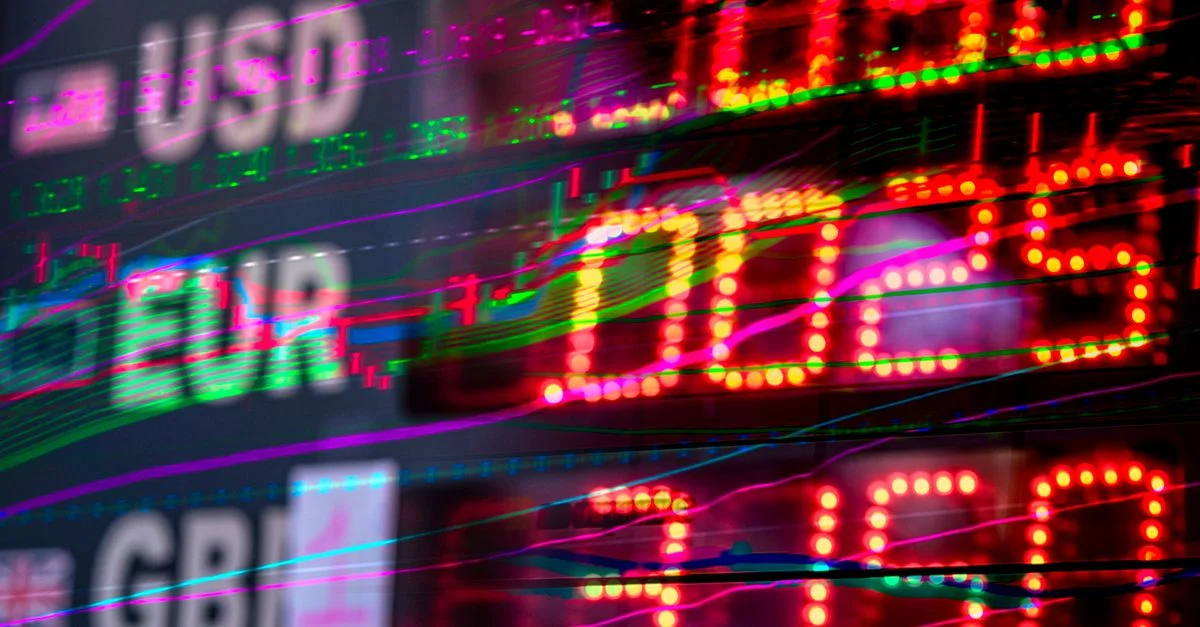
The impact of the peace rumors on the Iranian economy has been immediate and dramatic. The US Dollar, which had been trading at 174,600 Toman just 24 hours ago, fell to 170,300 Toman, marking a significant -2.5% decrease in value. This rally in the national currency reflects a surge in public confidence and a rush by speculators to exit 'safe haven' positions. The gold market saw even sharper declines; 18-karat gold dropped from 17,935,038 to 17,410,314 Toman per gram (-2.9%), while the benchmark Emami coin plummeted from 182,000,000 to 175,000,000 Toman, a staggering -3.8% loss in a single day.
Analysts suggest that the Emami coin is falling faster than raw gold because it carried a higher 'anxiety premium.' As the threat of direct military escalation recedes, the demand for physical assets that are easily tradable during crises has softened. However, investors should remain cautious. The market is currently 'trading the headline,' and any delay in the Sunday signing could lead to a sharp reversal. If the deal is not signed as Trump predicted, we could see a 'dead cat bounce' where the Dollar regains its lost ground as uncertainty returns to the bazaar. For now, the sentiment is overwhelmingly bullish for the Toman, but the next 24 hours will be the true test of this momentum.
---
Global Macro: Inflation and Defense Scrutiny
While the Middle East moves toward a potential peace, the West is grappling with its own economic and security challenges. In the United States, new reports indicate that Social Security’s Cost-of-Living Adjustment (COLA) could hit 4.7% in 2027 as inflation reaches its highest level in three years. This highlights a persistent inflationary environment that keeps global gold prices elevated, even as the Toman strengthens locally. The financial toll is particularly heavy on 'grandparent-headed' households, millions of whom are now spending their retirements raising grandchildren due to the rising costs of childcare and housing. This demographic shift is creating a new class of 'working retired' individuals who are highly sensitive to any fluctuations in purchasing power.
Simultaneously, the United Kingdom is facing a defense crisis. Following the resignation of high-ranking defense officials, including Al Cairns, warnings are being issued that the UK’s military spending is insufficient to deter potential Russian aggression. Former ministers have warned that 'Putin will be watching' the internal budget disputes in London very carefully. This creates a complex global landscape: while one major conflict zone (Iran) appears to be cooling down, the potential for escalation in Eastern Europe remains a significant tail risk for global markets. Investors are caught between the optimism of a Middle East peace deal and the structural reality of high Western inflation and geopolitical instability in Europe.
Crypto and Tech: BTC Resistance and Quantum Threats
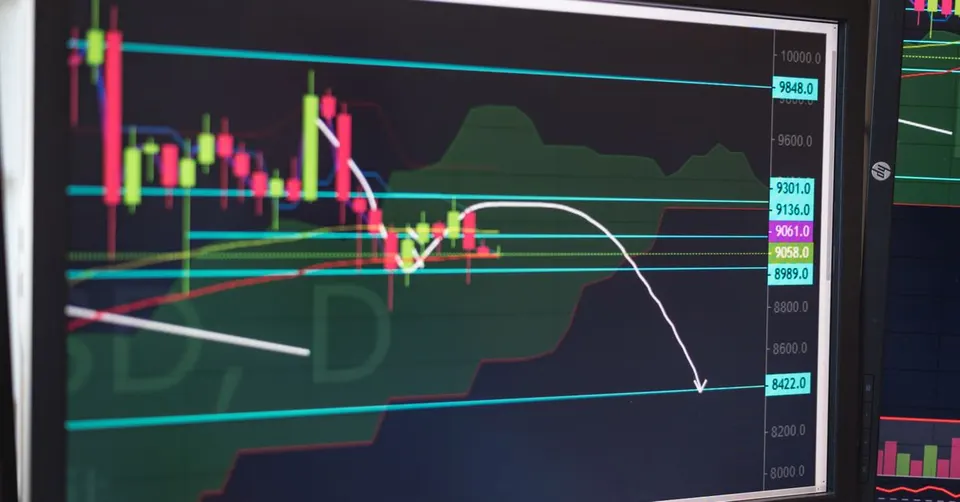
In the digital asset space, Bitcoin is currently struggling to maintain its momentum, stalling at the $64,400 resistance level. Despite the positive geopolitical news from the Middle East, which usually favors risk-on assets, BTC has remained relatively flat, trading around $64,126. The market is currently processing news regarding SpaceX’s Bitcoin reserves following its IPO, as well as a new report from Coinbase highlighting the vulnerability of 'cold wallets' to future quantum computing threats. This 'quantum cliff' is becoming a major talking point for long-term holders, as millions of Bitcoin exposed by address reuse could eventually become targets for sophisticated decryption attacks.
Furthermore, the tech sector is reeling from the US government's order for Anthropic to pull its Claude Fable and Mythos AI models. This regulatory crackdown, reportedly spurred by security concerns raised by Amazon CEO Andy Jassy, suggests that the 'AI arms race' is entering a more restrictive phase. For crypto users, particularly in the DeFi space, the loss of advanced AI tools for code auditing and security could be a double-edged sword. While it prevents malicious actors from using AI to find vulnerabilities, it also slows down the development of defensive patches. As we move into the Sunday deadline for the Iran deal, the convergence of AI security, quantum risks, and geopolitical shifts is creating a highly volatile environment for all asset classes.
Frequently Asked Questions
Why is there a discrepancy between Trump and Tehran on the signing date?
Why did the Emami coin drop more significantly than 18k gold?
How does US inflation affect the Iranian gold market?
What is the 'Quantum Threat' mentioned regarding Bitcoin?
Quantum Computing and the Future Security of Bitcoin
Bitcoin’s security relies on two fundamental cryptographic primitives: the SHA‑256 hash function and the Elliptic Curve Digital Signature Algorithm (ECDSA) over the secp256k1 curve. Both are considered computationally infeasible to break with today’s classical computers, which is why the network can safely validate transactions and protect private keys. However, quantum computers operate on qubits that can exist in superposition, enabling algorithms like Shor’s algorithm to factor large integers and compute discrete logarithms exponentially faster than any classical method.
If a sufficiently powerful, error‑corrected quantum computer were built, it could derive a user’s private key from the public key that is exposed when a Bitcoin transaction is broadcast. In practice, this would allow an attacker to forge signatures and spend coins that do not belong to them. The window of vulnerability is short: a Bitcoin address remains safe until its public key is revealed, which typically happens only when the owner spends from that address. This has spurred the community to explore mitigation strategies, such as moving to post‑quantum signature schemes (e.g., lattice‑based or hash‑based signatures) or adopting “quantum‑resistant” address formats that never expose a public key.
Transitioning Bitcoin to post‑quantum cryptography is not trivial. The network’s consensus rules would need to be updated, requiring broad agreement among miners, developers, and users—a process that could take years. Moreover, any new scheme must retain Bitcoin’s core properties: low computational overhead, small signature size, and strong security guarantees. Researchers are actively testing candidates like the Falcon and Dilithium signatures from the NIST post‑quantum cryptography standardization project, but none have yet been deployed on the main chain.
In the meantime, the risk remains largely theoretical because the most advanced quantum machines today have only a few hundred noisy qubits, far short of the thousands needed to threaten Bitcoin’s cryptography. Nonetheless, the prospect underscores the importance of forward‑looking security design and the need for the cryptocurrency ecosystem to stay ahead of emerging technologies.
For anyone holding Bitcoin, a practical short‑term safeguard is to avoid reusing addresses and to move funds to fresh addresses after each transaction, minimizing the time a public key is exposed. As quantum hardware matures, the community will need to coordinate a hard fork or soft fork to embed quantum‑resistant algorithms, ensuring the longevity of the world’s first decentralized digital currency.
Topics
Related Articles