Trump's Renewed Iran Threat Casts Shadow on G7-Praised Deal; Markets React to Uncertainty
تهدید دوباره ترامپ علیه ایران، سایه بر توافق تحسینشده G7 میاندازد؛ واکنش بازارها به عدم قطعیت
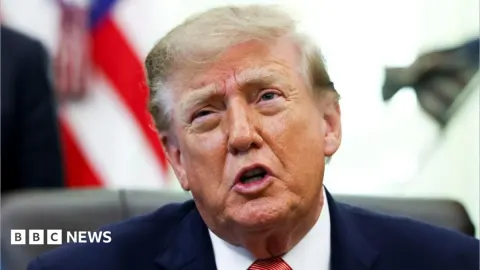
Just hours after G7 leaders lauded a preliminary US-Iran deal as a "breakthrough," former President Trump issued a stark warning, threatening to resume bombing Iran if he dislikes the agreement. This immediate counter-rhetoric has plunged the nascent diplomatic progress into fresh uncertainty, directly impacting regional stability and global market sentiment, particularly in Iran.
At time of publishing
USD
157,200
Toman
Gold 18K
16.48M
Toman / gram
Bitcoin
$64,650
US Dollar
Tether
158,001
Toman
Trump Undermines US-Iran Deal Amidst G7 Praise
In a dramatic turn of events, President Trump has once again injected profound uncertainty into the delicate US-Iran diplomatic landscape, just hours after Group of 7 (G7) leaders hailed a preliminary agreement as a significant "breakthrough." Speaking publicly, Trump threatened to resume bombing Iran if he found the tentative deal unsatisfactory or if Tehran "misbehaved." This stark rhetoric directly contradicts the international community's cautious optimism and follows reports that Iranian crude oil tankers have already begun moving past the Strait of Hormuz blockade, signaling Iran's proactive steps to capitalize on the perceived thaw in relations. The swift re-emergence of such aggressive language creates immediate apprehension about the deal's longevity and its broader implications for regional security.
The G7's joint statement also specifically called for an "immediate ceasefire" in Lebanon, explicitly linking it to securing the US-Iran deal, a clear indication of how interconnected regional conflicts are with broader diplomatic efforts. However, Trump simultaneously dismissed reports of a $300 billion reconstruction fund for Tehran, categorically stating, "We’re not putting up 10 cents... We are not investing and we do not have a fund." He reiterated that the current understanding is merely a "memorandum of understanding," which he can unilaterally abandon, threatening to "go right back to dropping bombs right smack in the middle of their head" if his terms are not met. This public disavowal of financial commitments and the return of military threats underscore the immense fragility of the agreement and the deeply personal, often unpredictable, nature of US policy under his leadership. For Iranian citizens, this whipsaw of hope and threat translates directly into heightened economic anxiety and currency volatility.
Japanese Regulators Target Ice Cream Giants in Cartel Probe
Far from the geopolitical tensions of the Middle East, Japan's Fair Trade Commission (JFTC) has launched a significant anti-trust investigation, raiding the offices of six leading ice cream manufacturers. The probe centers on suspicions that these major players have been colluding to fix the prices of popular frozen treats, an illegal practice that stifles competition and unfairly burdens consumers. This move by the JFTC demonstrates a firm commitment to maintaining market integrity and ensuring that everyday goods remain accessible and competitively priced for the Japanese populace.
Such cartel investigations are crucial for a healthy economy, as price-fixing agreements ultimately lead to inflated costs for consumers and reduced innovation within the industry. By eliminating the incentive to compete on price, companies can artificially boost their profits at the public's expense. The outcome of this investigation could result in substantial fines for the implicated manufacturers and potentially lead to consumer compensation, sending a clear message across various industries that anti-competitive behavior will not be tolerated. This vigilance is particularly important in times of global economic uncertainty, where consumers are already facing rising living costs.

UK Retailer Outsourcing Jobs Amidst Profit Surge
In a move highlighting the ongoing global pressures of inflation and corporate cost-cutting, UK electrical retailer AO World has announced it is outsourcing up to 200 call center roles from the UK to South Africa. This decision, which has already led to approximately 150 job losses in Bolton, comes despite the company reporting a remarkable 145% rise in profits and distributing £20 million to its shareholders. The rationale provided by AO World points to "ongoing inflationary cost pressures, and particularly rising employment costs" as the primary drivers behind the shift, projecting annual savings of around £4 million.
This situation exemplifies a broader trend where businesses, facing a complex economic environment, prioritize shareholder returns and operational efficiencies by relocating labor to regions with lower wage structures. While such decisions are often presented as necessary for business sustainability, they frequently spark debate about corporate responsibility, the impact on domestic employment, and the balance between profit motives and national economic welfare. For the UK workforce, it signifies the continued vulnerability of certain job sectors to global outsourcing trends, even as companies within those sectors report robust financial health.
G7 Unites Against Russia, Sanctions Return Signal
The G7 summit in Evian, beyond its focus on the US-Iran deal, also saw leaders solidify their stance against Russia, agreeing to intensify pressure over the ongoing conflict in Ukraine. President Trump, whose administration has been navigating complex geopolitical chess, indicated that Washington might re-impose previously waived sanctions on Moscow. This renewed focus on Russia comes as the "ostensibly" in-the-works US-Iran deal is seen by some as freeing up the Trump administration to dedicate more attention to Europe's largest armed conflict since World War II.
The G7's united front signals a continued commitment to hold Russia accountable for its actions, potentially leading to a fresh wave of economic restrictions that could impact global markets, particularly in energy and commodities. For Ukraine, this represents a crucial diplomatic victory, as international support remains vital for its sovereignty and reconstruction efforts. The interplay between these major geopolitical issues underscores the complex web of global diplomacy, where progress on one front can enable stronger action on another, albeit with potential ripple effects across the global economy.
Iranian Markets React to Geopolitical Headwinds
The tumultuous geopolitical developments surrounding the US-Iran deal have sent ripples through Iranian markets, reflecting deep uncertainty among investors and the public. The Iranian Toman experienced a significant depreciation against the US Dollar, with the USD/IRR rising from 153,200 to 157,200, marking a notable 2.6% increase within 24 hours. This sharp movement is a direct consequence of the renewed threats from President Trump, which dampened initial hopes spurred by the G7's positive appraisal of the preliminary agreement. Such volatility underscores the sensitivity of the Iranian economy to external political pronouncements and the ongoing quest for reliable value stores.
In parallel, traditional safe-haven assets in Iran saw a surge in demand. Gold 18k/gram climbed from 16,076,919 Toman to 16,480,446 Toman, a 2.5% increase, while the Emami coin, a popular investment vehicle, jumped from 158,000,000 Toman to 163,000,000 Toman, recording a 3.2% rise. These movements vividly illustrate the public's immediate response to perceived geopolitical instability, as individuals seek to hedge against potential economic fallout and further currency depreciation. The market's reaction confirms that despite any diplomatic overtures, the specter of renewed US pressure continues to dominate economic sentiment in Iran, driving a flight towards tangible assets that are less susceptible to political whims.
Frequently Asked Questions
What exactly did Trump say about the US-Iran deal, and how does it contradict the G7's stance?
How is the G7 involved in the US-Iran deal and the Lebanon ceasefire?
Why are Iranian markets reacting so strongly to these geopolitical statements?
What is the significance of Japan's ice cream cartel investigation?
What does AO World's outsourcing decision reveal about the UK economy?
Understanding Geopolitical Risk and its Impact on Currency and Commodity Markets
Geopolitical risk refers to the potential for political events, conflicts, or policy shifts between nations to disrupt global stability and economic activity. These risks, such as renewed threats to international agreements or escalating tensions, create significant uncertainty for investors and businesses worldwide. This uncertainty often translates directly into market volatility, as participants attempt to price in the potential consequences of these political developments, ranging from trade disruptions and sanctions to broader economic instability.
One of the most immediate impacts of heightened geopolitical risk is often seen in currency markets. When political tensions rise in a particular region or country, investors may perceive increased risk to their capital. This can lead to a withdrawal of foreign investment and a reduced appetite for the local currency. As capital flows out, or as the prospect of sanctions looms, the demand for the local currency diminishes, causing its value to depreciate against major international currencies. For example, the Iranian Toman has historically experienced significant fluctuations in response to geopolitical developments and the threat of sanctions, reflecting the market's assessment of future economic stability.
Conversely, periods of geopolitical uncertainty typically boost demand for traditional safe-haven assets. Gold is perhaps the most prominent example. Regarded as a reliable store of value that is less susceptible to political whims, currency devaluation, or inflation, gold often sees its price rise when global tensions escalate. Investors flock to gold as a hedge against instability, seeking to preserve their wealth in an asset perceived as universally valuable and immune to the specific political risks affecting national currencies or equity markets. This flight to safety explains why gold prices in Iran, for instance, might climb in response to external political pressures, even as the local currency weakens.
In essence, geopolitical risk acts as a powerful catalyst, re-allocating capital across global markets. It drives a shift from perceived risky assets and vulnerable currencies towards stable, universally accepted stores of value like gold. Understanding this dynamic is crucial for comprehending why financial markets react so acutely to political headlines, particularly when they involve major international powers and critical regions.