Hormuz Locals Speak as Reopening Nears; Trump's New Threats Cloud US-Iran Deal Amid Market Jitters
مردم هرمز از گشایش تنگه میگویند؛ تهدیدهای جدید ترامپ و ابهام بر سر توافق ایران و آمریکا در بحبوحه نوسانات بازار
As the Strait of Hormuz anticipates full reopening, locals share their experiences, offering a human perspective on the US-Iran deal. However, Trump's renewed threats to 'resume bombing' and his domestic political maneuvers are casting a shadow over the agreement's stability, fueling caution in Iranian markets with USD and gold prices on the rise.
At time of publishing
USD
157,600
Toman
Gold 18K
16.56M
Toman / gram
Bitcoin
$64,850
US Dollar
Tether
158,002
Toman
Strait of Hormuz Locals Speak Out as Reopening Nears
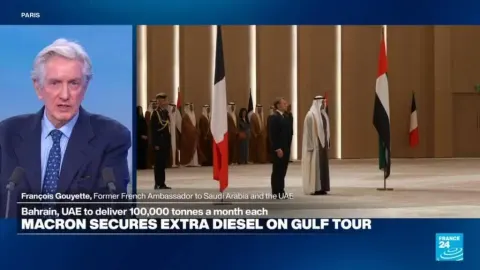
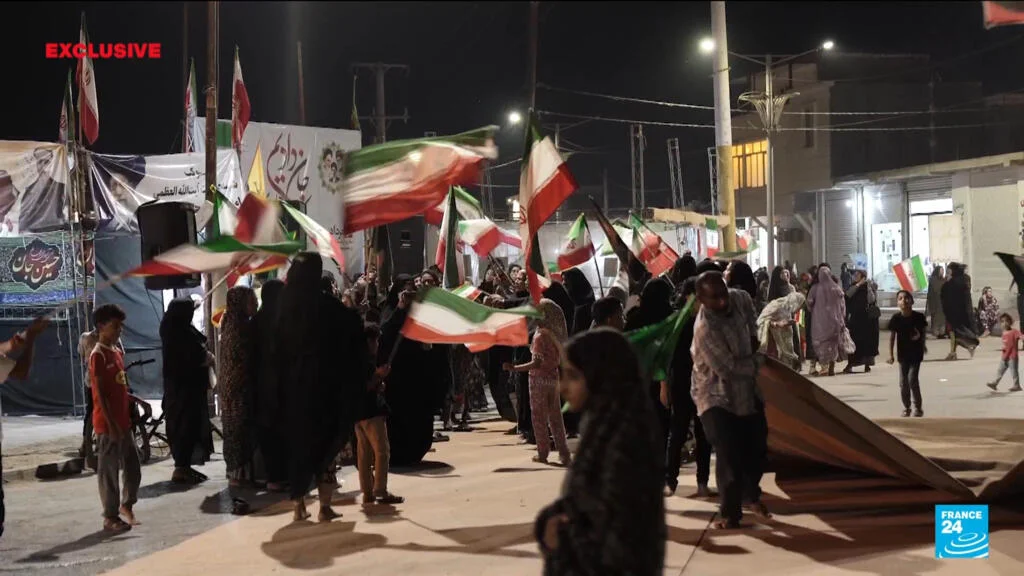
An exclusive report by France 24 offers a rare glimpse into the lives of seafarers and island residents in the Strait of Hormuz, providing a human perspective ahead of the crucial shipping channel's planned full reopening on Friday, June 19. Since US-Israel strikes on Iran began on February 28th, the Strait has been effectively blocked, a strategic move by Iran that severely disrupted global oil supplies and exerted significant pressure on its opponents. The report captures the sentiment and challenges faced by those whose livelihoods are directly tied to the Strait, shedding light on the real-world impact of geopolitical tensions.
This on-the-ground reporting is vital because it moves beyond the geopolitical chessboard to reveal the tangible effects of international disputes on ordinary citizens. The impending reopening of the Strait, a key component of the US-Iran deal, signals a potential return to normalcy for a vital global trade artery. For Iranian readers, this development could mean a significant easing of economic pressure, impacting everything from the availability of goods to overall market confidence and potentially influencing the trajectory of currency and commodity prices, which have recently seen upward movements amidst uncertainty.
Trump's Renewed Threats Shadow Iran Deal Amid G7 Talks
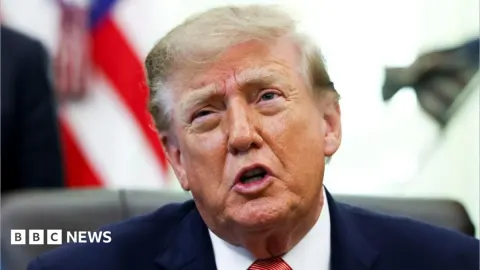
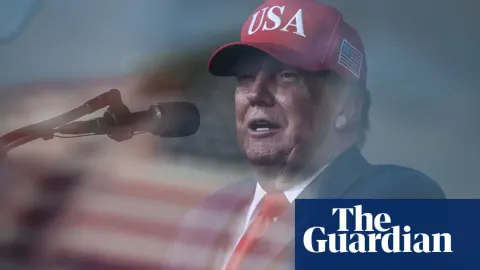
Donald Trump has once again injected a dose of volatility into the delicate US-Iran deal, warning at the G7 summit in France that he is prepared to "resume bombing if Iran acts up." The former president angrily rejected suggestions that the US would contribute to a $300 billion fund for Iran's reconstruction, emphatically stating, "We're not putting up 10 cents." This aggressive rhetoric comes as G7 leaders issued a joint statement welcoming the deal but simultaneously called for a follow-on agreement to address Iran's ballistic missile program, an issue not directly covered in the memorandum of understanding (MOU) expected to be signed on Friday.
Trump's statements underscore the fragile nature of the current agreement and the persistent deep-seated tensions that could unravel it. His insistence that the deal is "not final" and his willingness to revert to military action create significant uncertainty, directly impacting the perceived stability and long-term viability of any peace efforts. For Iranian citizens and markets, such pronouncements from a key international player amplify geopolitical risks, influencing currency expectations, investment decisions, and overall economic sentiment, especially after the recent appreciation of the USD and gold in the local market.

US Political Maneuvering Impacts Iran Deal's Legislative Path
In a seemingly unrelated but strategically significant move, President Trump has abruptly delayed Jay Clayton's nomination for intelligence director. This delay is explicitly tied to Trump's bid to force Congress to pass a voter ID bill, with the President stating he will not approve Fisa (Foreign Intelligence Surveillance Act) without the accompanying "Save America Act." This domestic political leveraging has direct, albeit indirect, implications for the US-Iran deal, particularly concerning its legislative context and the potential for any promised benefits to materialize.
While the memorandum of understanding (MOU) outlining the deal is expected to be released by Friday, its long-term implementation and any subsequent economic "benefits" for Iran – such as re-invitation into the world economy for stopping funding of terrorism or nuclear weapon pursuits – could be contingent on a cooperative US legislative environment. Trump's current tactic demonstrates his willingness to use high-level appointments as bargaining chips, creating potential hurdles for the smooth progression and full realization of the deal's economic promises. For Iranian markets, this political friction in Washington adds another layer of unpredictability, potentially affecting long-term confidence in the deal's economic outcomes and contributing to cautious sentiment reflected in currency and gold prices.
Iranian Markets React to Geopolitical Shifts; Crypto Legal News Unfolds
Amidst the evolving geopolitical landscape, Iranian markets have registered notable movements over the past 24 hours. The USD has seen a significant rise, moving from 153,200 to 157,600, marking a +2.9% increase. Similarly, Gold 18k/gram appreciated from 16,076,919 to 16,557,089 (+3.0%), and the Emami coin surged from 158,000,000 to 163,500,000 (+3.5%). These upward trends across key assets suggest a prevailing cautious sentiment among investors, likely influenced by the ongoing uncertainties surrounding the US-Iran deal and Trump's recent bellicose statements, which temper any optimism generated by the Strait of Hormuz reopening.
In the broader digital asset space, crypto legal news continues to unfold internationally. This week saw developments in the Polymarket insider trading case and the expected retrial of Tornado Cash co-founder Roman Storm. Additionally, former Celsius CEO Alex Mashinsky is awaiting a response to his motion to vacate his sentence. While these are international legal proceedings, they contribute to the global regulatory climate for cryptocurrencies. For Iranian crypto holders, who often view digital assets like USDT and Bitcoin as alternative stores of value against traditional market volatility and sanctions, these legal developments can influence broader risk appetite and sentiment, potentially affecting demand and pricing in the local crypto market.
Watch
FRANCE 24 Exclusive: what Strait of Hormuz locals think of the Iran-US deal • FRANCE 24 English
FRANCE 24 English
Frequently Asked Questions
What is the significance of the Strait of Hormuz reopening for Iran?
How do Trump's recent statements impact the US-Iran deal?
Why are Iranian markets seeing an increase in USD and gold prices despite the Iran-US deal news?
What is the connection between Trump's delay of Jay Clayton's nomination and the Iran deal?
How do global crypto legal developments affect Iranian crypto users?
The Strategic Importance of the Strait of Hormuz
The Strait of Hormuz is a narrow waterway that connects the Persian Gulf with the Gulf of Oman and the open Indian Ocean. At its narrowest point it is only about 21 nautical miles wide, yet it serves as the maritime gateway for roughly 20% of the world’s petroleum—including crude oil and refined products from Saudi Arabia, Iran, the United Arab Emirates, Kuwait and Iraq. Because so much oil flows through this bottleneck, any disruption—whether from a naval incident, a mine, or a temporary closure—can instantly ripple through global energy markets, pushing crude prices higher and tightening supply.
Historically, the strait has been a flashpoint for geopolitical tension. During the Iran‑Iraq War (1980‑88), Iran mined the waters and attacked oil tankers, prompting the United Nations to launch Operation Earnest Will to escort U.S. vessels. More recently, U.S. sanctions on Iran and occasional threats to block the passage have kept the strait in the headlines, reinforcing its reputation as a chokepoint where politics and economics collide. When leaders such as former President Donald Trump issue threats to close the strait, markets react not only to the immediate risk of supply interruption but also to the broader uncertainty about U.S.–Iran relations.
The economic concept that captures this reaction is the geopolitical risk premium. Investors demand higher returns for assets exposed to political instability, which translates into higher oil futures, a stronger U.S. dollar (as a safe‑haven currency), and even spikes in alternative stores of value like gold and, in some regions, crypto. In Iran, heightened tension can exacerbate already volatile exchange rates between the Iranian rial (IRR) and the dollar, while also driving domestic investors toward gold as a hedge against both sanctions and market turbulence.
Understanding the strait’s role helps explain why news about its reopening or potential closure can move markets worldwide, from the price of a barrel of oil to the value of a crypto token in Tehran. It also underscores why regional actors, shipping companies, and global policymakers closely monitor naval activity there, because the health of the global energy system often hinges on a few miles of water.
For anyone watching the interplay of geopolitics, energy, and finance, the Strait of Hormuz remains a vivid case study of how geography can shape economics on a planetary scale.