Trump Defends Iran Deal Amid 'Hormuz Toll' Threat as Rial and Gold Prices Retreat
دفاع ترامپ از توافق با ایران همزمان با تهدید «عوارض هرمز»؛ عقبنشینی قیمت دلار و طلا
President Trump has lashed out at critics of the new Iran memorandum while Tehran issues a 60-day ultimatum for tolls in the Strait of Hormuz. Despite the geopolitical friction, the Iranian market has seen a notable correction with gold and currency prices dropping.
At time of publishing
USD
155,600
Toman
Gold 18K
16.08M
Toman / gram
Bitcoin
$63,924
US Dollar
Tether
156,041
Toman
Trump Defends Iran 'Lifeline' as Tehran Signals Hormuz Tolls
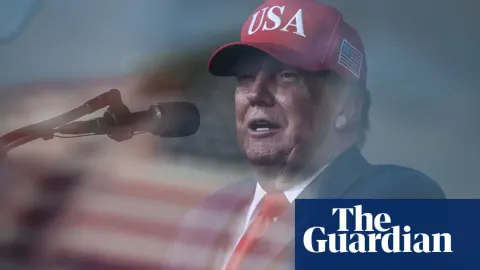
The geopolitical landscape shifted dramatically this afternoon as President Donald Trump fired back at domestic critics of his administration’s initial deal with Tehran. Describing opponents of the memorandum as "jealous, bad people, or stupid," Trump underscored his commitment to a policy that the New York Times characterizes as a "major economic lifeline" for Iran in exchange for minimal initial concessions. While the deal aims to de-escalate regional tensions, the Iranian side has introduced a new complication: a 60-day ultimatum after which Tehran plans to charge a toll for passage through the Strait of Hormuz, asserting the waterway will not return to "pre-war conditions."
For Iranian citizens and investors, this high-stakes diplomacy has triggered immediate volatility. Interestingly, despite the aggressive rhetoric regarding the Strait, the domestic market has seen a cooling effect. The US Dollar (USD/IRR) moved from 156,700 to 155,600, a decrease of 0.7%, while gold prices saw a more significant retreat. Gold 18k/gram fell from 16,535,389 to 16,081,536 (-2.7%), and the Emami coin dropped from 164,500,000 to 161,000,000 Toman (-2.1%). This suggests that the "economic lifeline" aspect of the deal is currently outweighing the fears of renewed maritime friction in the eyes of local traders.

Goldman Sachs Warns of Permanent Shifts in Energy Logistics
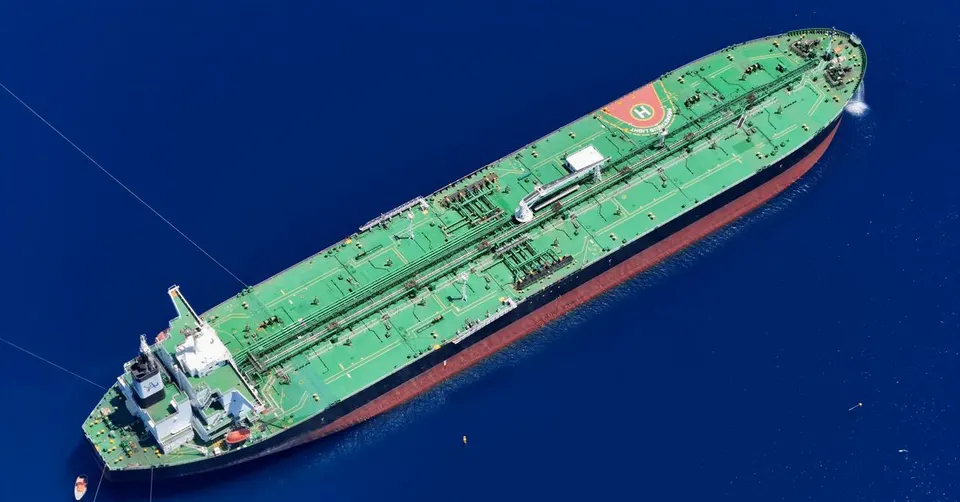
Even as 60 million barrels of crude oil prepare to flood Asian markets following the partial reopening of the Strait of Hormuz, analysts at Goldman Sachs are sounding a long-term alarm. The bank warns that tanker traffic through this critical chokepoint may never fully return to its pre-crisis levels. Current projections suggest a recovery to only about 70% of previous volumes—roughly 13 million barrels daily—as oil producers have successfully pivoted to alternative land-based routes and pipelines during the height of the conflict.
This structural shift in energy transport has profound implications for global inflation and regional influence. If the Strait of Hormuz loses its status as the singular, indispensable artery for global oil, Tehran’s leverage via "tolls" or closures may be permanently diminished. However, in the short term, the arrival of these 60 million barrels is expected to provide some relief to energy-hungry economies in Asia, even as the new US Federal Reserve Chair, Kevin Warsh, signals that higher interest rates remain on the table to combat persistent inflationary pressures.
Tech Inflation: Apple’s Price Hikes and the Intel Pivot
In the technology sector, a new dynamic is emerging between hardware giants and semiconductor manufacturers. Apple CEO Tim Cook recently signaled that price hikes for the next generation of devices are "unavoidable" due to the rising costs of microchips. This announcement has sent shockwaves through emerging markets like South Korea and Taiwan, where semiconductor producers have seen their stock prices hit all-time highs. The narrative took another turn today as President Trump claimed that Intel would be building chips for Apple directly within the United States, a move aimed at securing supply chains but one that likely adds to the premium consumers will pay.
What this means for the average consumer and investor is a "higher-for-longer" environment for both interest rates and retail prices. As the Fed under Kevin Warsh moves away from dovish guidance and toward market-driven data, the cost of borrowing is unlikely to drop soon. In the crypto space, Bitcoin (BTC) has managed to steady itself near the $64,000 mark after a brief dip to 63,924 USD. While some analysts see a floor at $60,000, the combination of a hawkish Fed and tech-driven inflation suggests that the "easy money" era is firmly in the rearview mirror.

Watch
Iran deal 'worst policy blunder in decades': criticism spreads across US political spectrum
FRANCE 24 English
Frequently Asked Questions
Why did gold and dollar prices fall despite the 'Hormuz toll' threat?
What is Goldman Sachs' warning regarding the Strait of Hormuz?
How will the Apple-Intel deal affect consumer prices?
The Strategic Importance of the Strait of Hormuz
The Strait of Hormuz stands as one of the world's most critical maritime chokepoints, a narrow waterway connecting the Persian Gulf to the Arabian Sea and the broader Indian Ocean. Flanked by Iran to the north and Oman's Musandam peninsula to the south, this strategic passage is essential for global energy markets. Its constricted width, at its narrowest point only about 21 nautical miles (39 km), makes it highly vulnerable to disruption, yet indispensable for the transit of vast quantities of oil and liquefied natural gas (LNG).
Economically, the Strait of Hormuz is unparalleled in its significance to the global energy supply. A substantial portion of the world's seaborne oil — roughly one-fifth to one-third of global petroleum liquids consumption, depending on the year — passes through this strait daily. This includes crude oil and refined petroleum products from major producers like Saudi Arabia, Iran, UAE, Kuwait, and Iraq. Any threat to navigation or actual disruption in the Strait can send shockwaves through international oil markets, causing crude prices to skyrocket and potentially leading to global economic instability. The "Hormuz Toll" threat mentioned in the headline directly taps into this vulnerability, highlighting Iran's potential leverage.
Beyond its economic role, the Strait holds immense geopolitical weight. Its strategic location makes it a frequent flashpoint for international tensions, particularly involving Iran, which has historically threatened to close the Strait in response to sanctions or military pressure. Such threats are often seen as a significant escalation, as they directly imperil global energy security and freedom of navigation, drawing immediate international condemnation and potential military responses. The stability of the Strait is thus a critical indicator of broader regional security and a constant factor in diplomatic and military calculations concerning the Middle East.