Trump-Iran Interim Deal Faces Global Skepticism as Toman Hits 160,950 Amid Lebanon Clashes
تردید جهانی نسبت به توافق موقت ایران و ترامپ؛ جهش دلار به ۱۶۰ هزار تومان در سایه درگیریهای لبنان
Global markets are reacting with caution to the interim agreement between President Trump and Tehran, as lack of technical detail and renewed fighting in Lebanon drive the Toman up by 1.4%. Gold prices in Iran have also surged 2%, reflecting a flight to safety as peace talks face immediate disruption.
At time of publishing
USD
160,950
Toman
Gold 18K
16.23M
Toman / gram
Bitcoin
$63,609
US Dollar
Tether
161,665
Toman
The Fragile Hope: Why the Trump-Iran Interim Deal is Rattling Markets
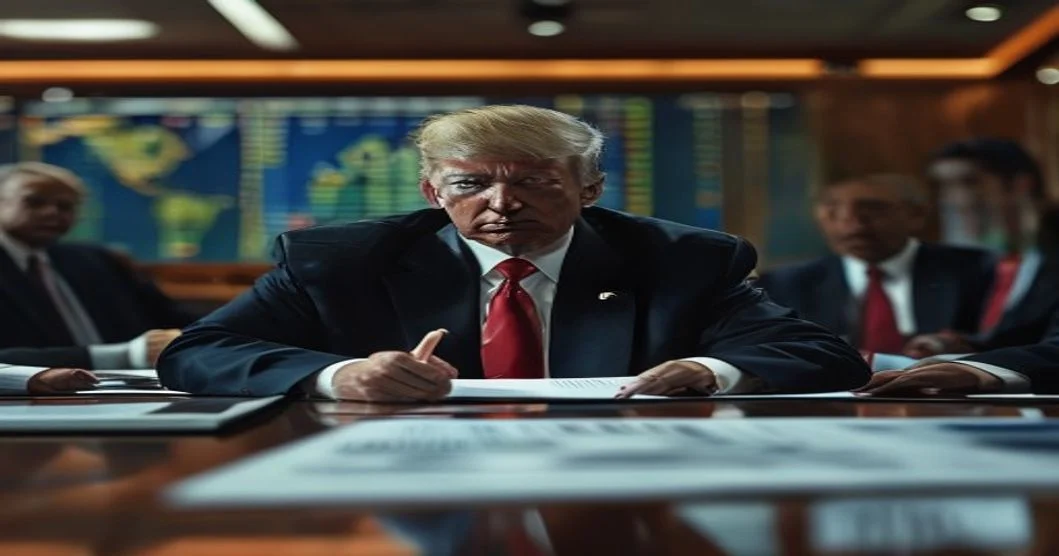
As of 14:00 Tehran time, the geopolitical landscape is dominated by the fallout from President Trump’s interim agreement with Iran. While the deal was initially hailed as a breakthrough to end months of tension, world leaders and institutional investors remain deeply wary. The primary concern lies in the vague nature of the memorandum; it lacks the granular technical details required for long-term sanctions relief or verifiable nuclear limits. This ambiguity has created a "buy the rumor, sell the news" environment where the initial optimism is being replaced by a calculated hedging against failure.
In the domestic Iranian market, this skepticism has manifested in immediate currency volatility. The USD/IRR pair moved from 158,750 to 160,950, a significant 1.4% jump within the last 24 hours. For Iranian citizens and businesses, this suggests that the market does not yet believe in the permanence of the 'Trump Deal.' Traders are pricing in the risk that future negotiations—intended to fill in the blanks of this interim framework—could easily collapse under political pressure from hardliners in both Washington and Tehran. This lack of confidence is pushing liquid capital toward hard assets, evidenced by the 4.0% surge in Emami coins, which rose from 160,500,000 to 167,000,000 Toman.

Lebanon Clashes Derail Peace Talks and Spike Risk Premiums
Just hours after a new ceasefire was supposed to provide the diplomatic breathing room for broader Iran-US peace talks, the situation on the ground in Lebanon has deteriorated. Reports of overnight exchanges of fire between the Israeli military and Hezbollah have effectively derailed the high-level meetings scheduled for Friday. These clashes are more than just tactical skirmishes; they represent a fundamental challenge to the regional stability that any grand bargain requires. When the 'kinetic' reality on the border contradicts the 'diplomatic' rhetoric in the boardrooms, markets respond by spiking the geopolitical risk premium.
For the Iranian economy, the complication of these peace talks is a direct hit to hopes for a swift economic recovery. The 2.0% rise in 18k gold (climbing from 15,918,324 to 16,228,819 Toman per gram) is a textbook reaction to regional instability. Investors are moving away from the Toman and even stabilizing crypto assets like Bitcoin—which is currently hovering around $63,609—to seek the absolute security of physical gold. The narrative is clear: as long as the Lebanon-Israel border remains active, the 'peace dividend' remains a distant dream, keeping the Iranian currency under persistent downward pressure.
The Drone Evolution: Shahed Dominance Meets New Interceptors
Beyond the immediate financial markets, the technological theater of war continues to evolve with Iranian hardware at the center. Recent reports from Ukraine highlight a new stage in the 'drone war,' where Iranian-designed Shahed drones are facing increasingly sophisticated 'interceptor drones' like the Gulliver. While Russia continues to deploy Shahed variants in larger numbers, the emergence of small, agile kamikaze helicopters designed specifically to hunt these drones suggests that the technological gap is closing. This cat-and-mouse game has significant implications for Iran's defense exports and its standing as a regional drone superpower.
What this means for the broader geopolitical context is a potential shift in leverage. If Iranian drone technology begins to face effective, low-cost countermeasures on the battlefield, the 'deterrence value' that Tehran brings to the negotiating table may be re-evaluated. However, for now, the sheer volume of these deployments keeps the world’s eyes on Iranian aerospace capabilities. This technological prominence is a double-edged sword; while it showcases industrial capability, it also provides the primary justification for the very sanctions that the current interim deal seeks to dismantle.

Global Shifts: UK Political Turmoil and the Flight to Assets
While the Middle East remains the focal point, political instability in the United Kingdom is adding another layer of uncertainty to the global economy. Prime Minister Keir Starmer is facing intense pressure to step down following heavy local election losses and the rise of rivals like Andy Burnham. A leadership crisis in a major G7 economy often leads to a temporary weakening of European currencies and a subsequent strengthening of the US Dollar, which indirectly puts more pressure on the Toman. As the British government enters a period of potential paralysis, the global appetite for risk continues to wane.
In the cryptocurrency space, Bitcoin has rebounded above $63,000, but it remains sensitive to these macroeconomic shifts. Traders are closely watching whether the US regulatory environment will follow the lead of jurisdictions like the Philippines, which recently signaled a readiness for Real-World Asset (RWA) tokenization. For the Iranian investor, the message is one of diversification. With the Toman losing value (+1.4% USD/IRR) and gold prices hitting new highs, the current hour is defined by a desperate search for stability in an increasingly unpredictable global order.
Frequently Asked Questions
Why is the USD/IRR exchange rate rising despite news of an interim deal?
How significant is the 4% jump in Emami coin prices?
What is the status of the Lebanon-Israel ceasefire?
How are Iranian drones performing in the current conflict landscape?
Understanding Currency Depreciation Amid Geopolitical Turmoil
Currency depreciation occurs when a country's currency loses value relative to other currencies, often the U.S. dollar. This means that more units of the local currency are needed to purchase one unit of a foreign currency. For instance, if the Iranian Toman depreciates against the USD, it takes more Tomans to buy one U.S. dollar. This phenomenon is a critical indicator of a nation's economic health and its standing in the global financial system, directly impacting everything from import costs to the purchasing power of its citizens.
Several factors can drive currency depreciation, with geopolitical instability and international sanctions being particularly potent. Regional conflicts, like the clashes in Lebanon mentioned in the headline, create significant uncertainty. This uncertainty deters foreign investment, as investors fear for the safety of their capital, and can even trigger capital flight, where domestic investors move their assets abroad. Such outflows reduce the demand for the local currency and increase the demand for foreign currencies, inevitably pushing down the local currency's value.
Furthermore, international sanctions, whether comprehensive or targeted, severely restrict a country's economic interactions with the rest of the world. By limiting trade, blocking access to international banking systems, and freezing foreign assets, sanctions reduce a nation's ability to earn foreign currency through exports and make it difficult to import essential goods. This creates a scarcity of foreign currency within the sanctioned economy, leading to a higher demand and thus a higher price for foreign currencies relative to the local one, exacerbating depreciation.
For ordinary citizens, currency depreciation often translates into higher inflation, as imported goods become more expensive. Their savings and purchasing power diminish, and the cost of living rises. Understanding these dynamics is crucial for comprehending how global political events and policy decisions can have profound and immediate effects on the daily economic realities of millions.