
Hormuz Closure Ignites Market Volatility as Iran Slams Australia; MicroStrategy’s $48B Bitcoin Bet Faces 2026 Test
انسداد تنگه هرمز و جهش قیمت سکه؛ تنش دیپلماتیک ایران و استرالیا و آزمون ۴۸ میلیارد دلاری بیتکوین
Iran’s closure of the Strait of Hormuz has sent the Emami coin up 3.1% as regional tensions peak, while a diplomatic row with Australia over medical professionals intensifies. Meanwhile, Michael Saylor’s MicroStrategy faces a pivotal year for its massive Bitcoin treasury amid global retirement concerns.
At time of publishing
USD
159,550
Toman
Gold 18K
16.05M
Toman / gram
Bitcoin
$63,879
US Dollar
Tether
159,457
Toman
Iran Criticizes Australia Over 'Silencing' of Medical Professionals
In a sharp escalation of diplomatic rhetoric, Iran’s Deputy Foreign Minister for Legal and International Affairs, Kazem Gharibabadi, has formally condemned Australia for its punitive actions against healthcare workers. The dispute centers on reports that Canberra has been penalizing doctors and medical staff who have publicly criticized Israel’s human rights record during the ongoing regional conflicts. Gharibabadi described these measures as an attempt to "silence" the voice of the international medical community, arguing that such professional suppression violates fundamental principles of free speech and humanitarian oversight.
This friction comes at a particularly sensitive moment for Tehran, as it navigates complex negotiations in Switzerland regarding the Islamabad Memorandum of Understanding. For Iranian readers, this diplomatic spat signals a hardening of positions between Iran and Western-aligned nations in the Pacific. While Australia may seem geographically distant, its alignment with US policy often serves as a bellwether for the broader sanctions environment. The move suggests that despite ongoing talks, the ideological and political divide remains vast, potentially impacting long-term trade discussions and diplomatic normalization efforts.

Strait of Hormuz Closure Triggers 3.1% Surge in Emami Coin
The most significant market mover this hour is the official announcement from the IRGC Navy that the Strait of Hormuz has been closed to all vessels. Citing breaches of ceasefire commitments by Israel and the United States in Lebanon, Tehran has effectively halted traffic in the world’s most critical oil chokepoint. The IRGC warned that any vessel approaching the waterway would do so at its own risk, a move that immediately sent shockwaves through the Tehran Gold Bazaar and the currency markets. The immediate consequence was a sharp rise in the USD/IRR rate, which moved from 158,750 to 159,550 (+0.5%), while the Emami coin experienced a dramatic 3.1% jump, rising from 160,500,000 to 165,500,000 Toman.
This closure is not merely a military maneuver; it is a direct economic lever intended to force compliance with regional agreements. For the average Iranian investor, the +3.1% spike in gold coins reflects a flight to safety as the risk of a broader maritime conflict increases. With the global gold ounce price sitting at a staggering $4,156.70, the combination of local geopolitical risk and high international bullion prices is creating a perfect storm for domestic inflation. If the closure persists, we can expect further upward pressure on the Toman as shipping insurance rates skyrocket and regional trade routes are forced into expensive detours.
MicroStrategy’s $48 Billion Bitcoin Bet: Can it Survive 2026?
In the world of digital assets, Michael Saylor’s MicroStrategy remains the ultimate high-stakes experiment. Despite a $48 billion turnaround in its Bitcoin holdings, analysts are questioning whether the company’s new STRC structure can survive the volatility of 2026. With Bitcoin currently trading at $63,879, the massive treasury held by MicroStrategy acts as both a shield and a target. Saylor continues to tout the long-term viability of the "Bitcoin Standard," but as global liquidity tightens, the leverage used to acquire these assets is coming under renewed scrutiny from institutional skeptics.
For crypto enthusiasts in Iran, the fate of MicroStrategy is a proxy for the health of the entire market. If a major institutional holder like Saylor were forced to deleverage, the resulting sell pressure could crash the market toward the $50,000 level. However, if Bitcoin holds its ground above $60,000, it reinforces the narrative of BTC as a legitimate reserve asset. This is particularly relevant as Iranian investors increasingly look to stablecoins like USDT (currently at 159,457 Toman) and Bitcoin to hedge against the volatility of the local rial, especially during weeks of high geopolitical tension like this one.
The Human Cost of Inflation: A Global Retirement Crisis
While the headlines are dominated by billion-dollar trades and naval blockades, a quieter crisis is brewing in the global economy. A recent report highlighting a 60-year-old waiter with only $2,000 in his Roth IRA has become a viral symbol of the "silver poverty" facing the aging workforce. The story underscores a brutal reality: for many, the dream of retirement is being extinguished by decades of persistent inflation and stagnant wage growth. This is not just an American problem; it is a global phenomenon where the cost of living outpaces the ability of the working class to save in traditional fiat-based instruments.
For the Arzbin reader, this story serves as a cautionary tale about the necessity of diversified wealth preservation. Whether it is 18k gold (which rose 0.8% today to 16,048,524 Toman per gram) or digital assets, the traditional model of saving in a bank account is increasingly viewed as a losing strategy. The "work until I die" sentiment expressed by those in the service industry reflects a systemic failure to protect the purchasing power of the individual. As the Toman continues its volatile path, the importance of proactive financial planning—moving away from depreciating currencies and into hard assets—has never been more apparent.
Zelensky Returns Polish Honor Amid Strained Alliance
In a symbolic but significant move, Ukrainian President Volodymyr Zelensky has returned one of Poland’s highest honors after it was reportedly stripped or challenged by Polish authorities. The gesture marks a low point in the relationship between the two neighbors, who have been staunch allies since 2022. Zelensky’s statement that Ukraine is open to discussing "painful chapters of our shared past" suggests that historical grievances are beginning to outweigh current strategic needs. This rift in the European front could have long-term implications for the stability of aid corridors into Ukraine.
Geopolitical shifts like these often precede market movements. A fractured European alliance reduces the efficacy of sanctions and complicates energy policy across the continent. For Iran, which monitors European unity closely to gauge the strength of the JCPOA-related pressure, any sign of Western infighting is viewed as a strategic opportunity. As Poland and Ukraine navigate this diplomatic "divorce" of sorts, the broader impact on global risk appetite could lead to further fluctuations in the price of safe-haven assets like gold and the US dollar.
Frequently Asked Questions
Why did the Emami coin price jump 3.1% today?
What is the core of the dispute between Iran and Australia?
Is MicroStrategy's Bitcoin strategy at risk in 2026?
The Geopolitical Significance of the Strait of Hormuz
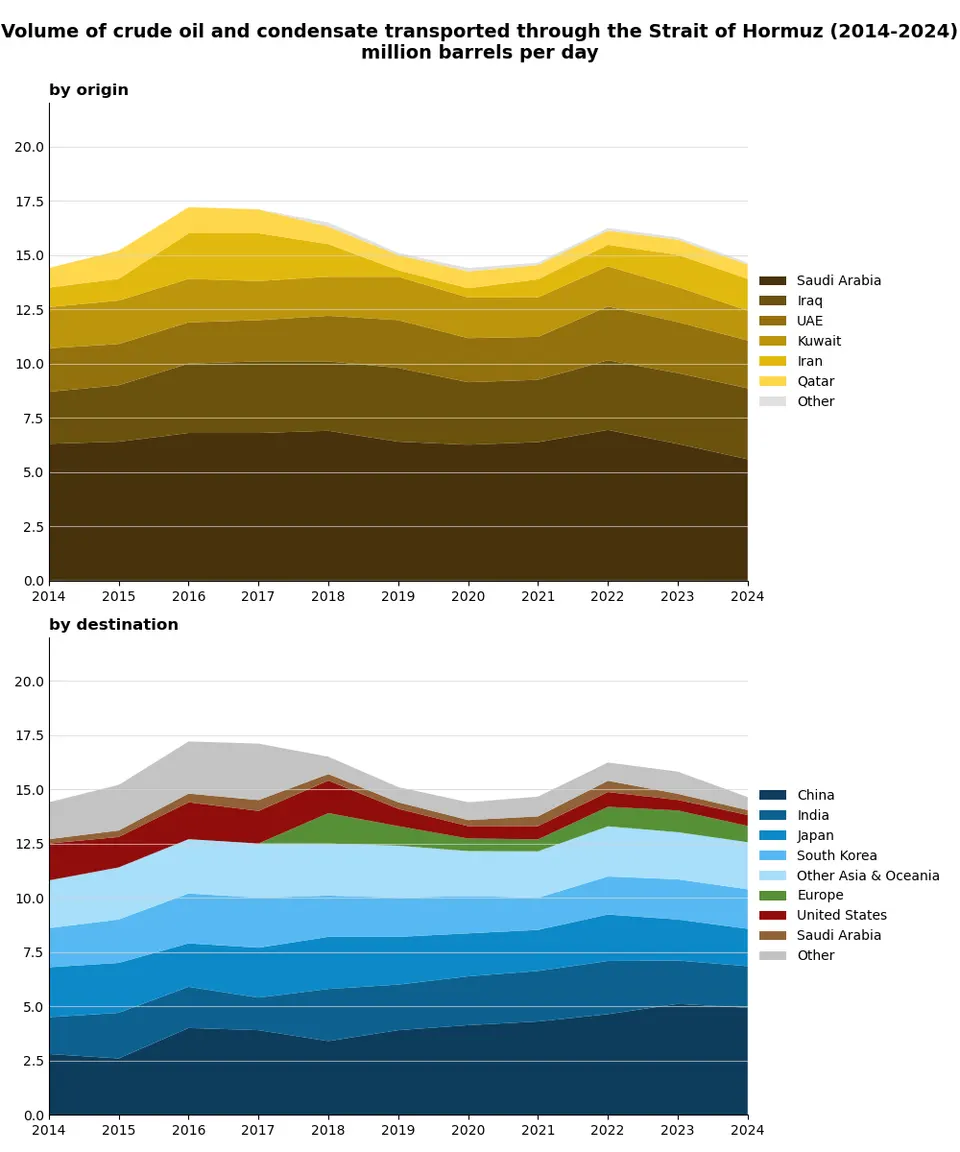
The Strait of Hormuz is one of the world's most critical maritime choke points, a narrow waterway connecting the Persian Gulf to the Arabian Sea and the broader Indian Ocean. Located between Iran and Oman, this strategic passage is incredibly narrow, at its widest point only about 39 kilometers (24 miles) across, with shipping lanes just 10 kilometers (6 miles) wide in each direction. Its geographical constraints make it highly vulnerable to disruption, yet its role in global energy markets is unparalleled.
What makes the Strait of Hormuz so crucial is the sheer volume of oil and liquefied natural gas (LNG) that transits its waters daily. An estimated one-fifth of the world's total petroleum consumption, and roughly one-third of all seaborne traded oil, passes through this strait. This includes crude oil and refined petroleum products from major producers like Saudi Arabia, Iran, Iraq, Kuwait, Qatar, and the UAE. Any significant disruption, such as a closure or prolonged blockade, would immediately trigger massive spikes in global oil prices, potentially leading to severe energy crises and even global economic recession.
Historically, the Strait has been a flashpoint for geopolitical tensions, particularly involving Iran, which controls its northern coast. Threats to impede or close the Strait have been made during periods of heightened international sanctions or military confrontation, underscoring its role as a leverage point in regional and global power dynamics. These threats, even if not fully realized, introduce significant market volatility and uncertainty, as traders and nations scramble to assess risks to supply chains.
Understanding the Strait of Hormuz's geopolitical significance is essential for comprehending global energy security, international relations, and market reactions to Middle Eastern conflicts. Its continued open and safe passage is paramount for the stability of the global economy, making it a constant subject of international diplomatic and military attention.