
Bitcoin Slips Below $63k Amid ETF Outflows as Ghalibaf Launches Diplomatic Mission in Baku
سقوط بیتکوین به زیر ۶۳ هزار دلار همزمان با ماموریت دیپلماتیک قالیباف در باکو
Bitcoin has broken key support levels as institutional outflows and political scrutiny intensify, while Iran's Parliament Speaker arrives in Azerbaijan for a high-stakes Islamic summit.
At time of publishing
USD
161,850
Toman
Gold 18K
15.78M
Toman / gram
Bitcoin
$62,579
US Dollar
Tether
164,457
Toman
Bitcoin Breaks $63,000 Support Amid ETF Exodus and Political Scrutiny
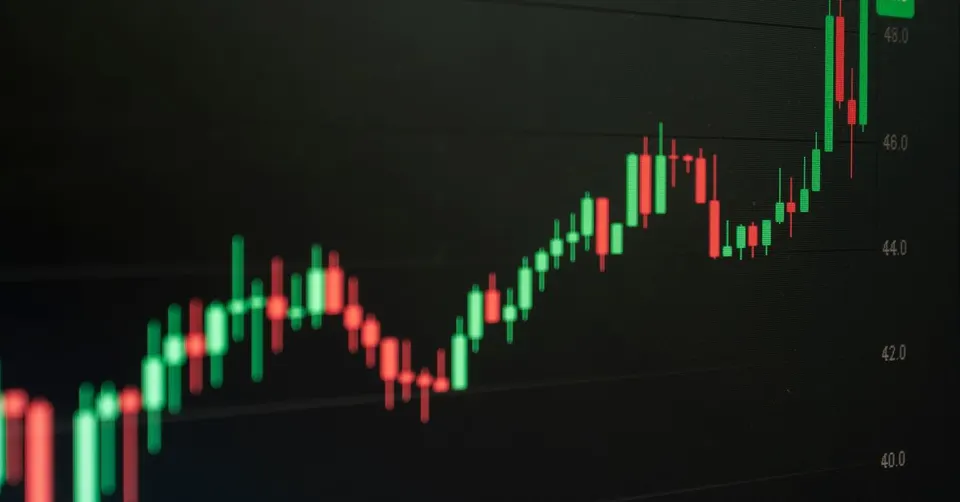
The cryptocurrency market is facing a wave of volatility this Wednesday as Bitcoin (BTC) dropped from its previous highs to trade at $62,579, officially slipping below the psychologically significant $63,000 mark. This decline is largely attributed to a combination of persistent interest rate fears in the United States and a noticeable cooling in demand for spot Bitcoin ETFs. Investors appear to be recalibrating their risk appetite as the 'higher for longer' interest rate narrative gains traction, leading to significant outflows from major funds. Despite this bearish price action, some analysts point to a silver lining: 'OG' investors, or those who have held Bitcoin for years, have reportedly slashed their selling activity to the lowest levels in nearly two years, suggesting that long-term conviction remains intact even as short-term speculators exit the market.
Adding a layer of political complexity to the digital asset space, U.S. Senate Democrats have launched an inquiry into a $500 million investment by United Arab Emirates officials into a crypto venture linked to Donald Trump. The investigation centers on whether this massive capital injection into 'World Liberty Financial' could influence future U.S. policy decisions should the former president return to office. This intersection of high-stakes geopolitics and decentralized finance is creating a cloud of regulatory uncertainty. For the average investor, this means that Bitcoin's price is no longer just reacting to supply and demand, but is becoming increasingly sensitive to the shifting political winds in Washington D.C. and the Middle East.
In the domestic Iranian market, the impact of global volatility remains somewhat decoupled due to local economic factors. The USD/IRR exchange rate held steady at 161,850 Toman (a 0.0% change), while Gold 18k per gram saw a decrease from 15,965,880 to 15,783,046 Toman (-1.1%). This slight cooling in gold prices reflects a broader stabilization in the local market, even as the global gold ounce price hovers near $4,079.70. For Iranian savers, the divergence between the stable dollar and the dipping gold price offers a complex decision-making environment, especially as international crypto markets show signs of stress.
Ghalibaf in Baku: Strengthening the Islamic Parliamentary Front
Parliament Speaker Mohammad Bagher Ghalibaf arrived in Baku, Azerbaijan, on Wednesday morning to lead a high-level delegation at the 20th Conference of the Parliamentary Union of the OIC Member States (PUIC). This visit is more than just a ceremonial appearance; it represents a strategic effort by Tehran to consolidate regional alliances amid ongoing tensions with Western powers. The summit focuses on inter-parliamentary cooperation across the Islamic world, providing a platform for Iran to discuss trade, security, and the Palestinian cause. This diplomatic push coincides with recent statements from Hamas, which praised Iran's 'unwavering support' for the Palestinian people, further cementing Tehran's role as a central pillar in the regional geopolitical landscape.

The timing of Ghalibaf’s mission is particularly critical as the United States Senate continues to debate and pass measures aimed at curbing presidential war powers regarding Iran. While these legislative moves in Washington are largely symbolic, they signal a growing domestic pressure within the U.S. to avoid direct military escalation. For Iran, the strategy appears to be twofold: maintaining a firm stance on nuclear inspections and regional influence while simultaneously engaging in parliamentary diplomacy to bypass Western isolation. The discussions in Baku are expected to touch upon the North-South Transport Corridor and energy cooperation, which are vital for Iran’s goal of economic resilience under sanctions.
What this means for the Iranian economy is a continued emphasis on 'neighborhood diplomacy' to stabilize the currency and trade routes. As Ghalibaf meets with his counterparts in Baku, the market is watching for any signs of new bilateral agreements that could ease trade barriers. The stability of the USD/IRR at 161,850 Toman suggests that for now, the market is in a 'wait-and-see' mode, balancing the risks of international nuclear disputes against the potential gains from regional economic integration.
Global Extremes: From Record Heatwaves to Miraculous Recoveries
On the global stage, extreme weather and human-interest stories are dominating the headlines. The United Kingdom and much of Europe are bracing for record-breaking temperatures, with forecasts predicting a staggering 40°C in parts of London and the southeast. This unprecedented heatwave has already caused widespread disruption in France and Italy, sparking urgent public health warnings and highlighting the growing reality of climate volatility. For global markets, such extreme weather events often lead to spikes in energy demand and can disrupt supply chains, potentially adding to inflationary pressures that central banks are already struggling to contain.

In a more personal but equally gripping story from Australia, Leah Stewart—a woman who was severely injured in a shark attack at Sydney’s Coogee Beach—has miraculously woken from a 10-day coma. Her first words, 'I love you,' spoken to her family, have captured international attention and provided a rare moment of optimism in a news cycle often dominated by conflict and economic data. While seemingly unrelated to finance, such stories often impact public sentiment and consumer confidence in regional tourism sectors, illustrating the unpredictable nature of risks in the modern world.
Lastly, the energy sector is seeing significant movement as President Trump has officially ordered a Department of Justice investigation into alleged gas price gouging at fuel stations. He argues that oil companies are not passing the savings from lower crude prices onto consumers at the pump. This move is a clear attempt to address voter frustration over inflation and could lead to increased regulatory pressure on major energy firms. As oil prices remain volatile, this investigation could have ripple effects on global energy stocks and the broader inflation outlook for the remainder of 2026.
Frequently Asked Questions
Why did Bitcoin drop below the $63,000 support level?
What is the primary goal of Ghalibaf's visit to Azerbaijan?
How did the Iranian gold market react to global price movements today?
What are the implications of Trump's gasoline price gouging probe?
Understanding ETF Outflows and Their Impact on Asset Prices
An Exchange-Traded Fund (ETF) is an investment fund traded on stock exchanges, much like stocks. Unlike traditional mutual funds, ETFs can be bought and sold throughout the day. In recent years, the introduction of spot Bitcoin ETFs has provided a regulated and accessible way for institutional and retail investors to gain exposure to Bitcoin's price movements without directly owning the cryptocurrency. These ETFs hold actual Bitcoin, and their shares represent ownership in that underlying asset.
"ETF outflows" occur when investors sell their shares in an ETF, leading to a net redemption of shares from the fund. When a significant volume of investors decide to exit an ETF, the fund issuer is compelled to sell a corresponding amount of the underlying assets it holds to meet these redemption requests. For a Bitcoin ETF, this means the fund manager must sell Bitcoin on the open market to return cash to the exiting shareholders.
This selling pressure from ETF issuers directly impacts the price of the underlying asset. If an ETF experiences substantial outflows, the forced selling of Bitcoin can flood the market with supply, exceeding demand and pushing the cryptocurrency's price downwards. This mechanism highlights how even indirect investment vehicles can have a profound effect on the spot price of volatile assets like Bitcoin, illustrating the interconnectedness of traditional finance and the digital asset space.
Beyond the immediate price impact, sustained ETF outflows can signal a shift in investor sentiment, potentially indicating declining confidence in the asset or broader market concerns. This can create a negative feedback loop, where falling prices trigger more outflows, further exacerbating the downturn. Understanding these dynamics is crucial for investors tracking the performance of assets heavily influenced by ETF activity.