Trump’s Vandalism Claims Ignite DC as Venezuela Earthquake Tests U.S. Ties; Gold Surges to 16.2M Toman
جنجال تخریب در واشینگتن و آزمون سخت اتحاد آمریکا در زلزله ونزوئلا؛ طلا به ۱۶.۲ میلیون تومان رسید
National Park Service officials back Donald Trump’s claims of razor-cut vandalism at the Lincoln Memorial, while a devastating earthquake in Venezuela forces a geopolitical pivot for the White House. In Tehran, gold prices jumped 2.2% as Saudi Arabia’s export recovery reshapes the regional energy landscape.
At time of publishing
USD
165,750
Toman
Gold 18K
16.20M
Toman / gram
Bitcoin
$59,593
US Dollar
Tether
167,721
Toman
Political Sabotage or Maintenance? The Battle Over the Lincoln Memorial
In a move that has intensified the already polarized atmosphere in Washington, a senior official from the National Park Service (NPS) has filed a court statement alleging that the Lincoln Memorial reflecting pool was intentionally vandalized. Frank Lands, the NPS deputy director for operations, claimed that the pool’s liner was "cut with a sharp knife or razor" and that dozens of fence post tops were thrown into the water. This development lends significant weight to President Donald Trump’s earlier claims that the site had been targeted by activists opposed to his administration’s massive renovation projects at the National Mall.
For Iranian observers and global investors, this domestic friction in the United States is more than just a local news story. It signals a deepening administrative and social rift that often precedes erratic shifts in U.S. foreign policy. When the executive branch is embroiled in lawsuits and allegations of internal sabotage, its ability to maintain a consistent stance on international sanctions or Middle Eastern security often wavers. The litigation, brought by a nonprofit group seeking to halt the renovations, is now evolving into a criminal investigation, adding another layer of volatility to the American political landscape as the 2026 midterms approach.

Venezuela’s Tragedy Becomes a Geopolitical Litmus Test
The humanitarian crisis in Venezuela has reached a breaking point following twin earthquakes that have claimed at least 188 lives. As rescue teams shift their focus to the hardest-hit La Guaira area and the Altamira district of Caracas, the disaster is posing a direct challenge to President Trump’s foreign policy. Having previously boasted about the success of armed interventions and a "newfound alliance" with Caracas, the White House is now under immense pressure to match its rhetoric with substantial disaster relief. The search for survivors continues amid the rubble of collapsed apartment blocks like the Residencias Obelisco, where volunteers and relatives are working desperately alongside official teams.
This disaster creates a complex dynamic for Tehran, a long-standing ally of Venezuela. Foreign Minister Abbas Araghchi has already expressed condolences and offered Iranian assistance, highlighting the strategic bond between the two nations. If the U.S. fails to provide adequate aid, it risks losing its recently gained influence in the region back to traditional allies like Iran and Russia. Conversely, a massive U.S. aid package could signal a pivot toward stabilization in the Western Hemisphere, potentially affecting global oil market sentiment if Venezuelan production infrastructure—already fragile—is further compromised by the seismic activity.

Saudi Energy Recovery Challenges Iran’s Hormuz Leverage
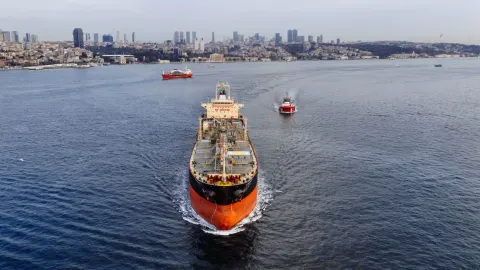
While tensions remain high in the Strait of Hormuz due to Iran’s tightening grip on the waterway, the regional energy balance is shifting. Saudi Arabia’s largest oil export terminal, Ras Tanura, has roared back to life after months of relative inactivity. Data indicates that multiple Very Large Crude Carriers (VLCCs) owned by Bahri are moving toward the Ju'aymah offshore loading area. This recovery in Saudi supply capacity provides a crucial buffer for global markets, which have been on edge as oil risks fresh shocks from Iranian naval activity near the world’s most vital maritime choke point.
For the Iranian economy, this is a double-edged sword. While the USD/IRR rose from 164,650 to 165,750 (+0.7%) and 18k gold jumped to 16,200,886 Toman (+2.2%) today, the return of Saudi supply could cap the global oil price rally that Tehran relies on for its budget. The market’s reaction shows a preference for safety; as Saudi exports increase, the "risk premium" on oil might stabilize, but the domestic Iranian market remains hyper-sensitive to the local currency's depreciation. Investors are currently flocking to gold and hard currency as a hedge against the ongoing regional deadlock.
Market Summary and the Digital Shift
The broader financial landscape remains characterized by a flight to quality. Bitcoin has dropped to the $59,593 level, confirming a bear flag pattern that has some analysts eyeing the $50,000 mark. In Tehran, the USDT (Tether) price of 167,721 Toman continues to trade at a significant premium over the physical dollar, reflecting the difficulty of moving capital in a highly sanctioned environment. Gold, however, remains the undisputed king of the current session, with the Emami coin holding steady at 163 million Toman despite the global ounce trading at a historic $4,040.40.
Frequently Asked Questions
How does the Saudi oil recovery at Ras Tanura affect Iran?
Why is the Lincoln Memorial vandalism significant for global markets?
What is the impact of the Venezuela earthquake on Iran-US relations?
Understanding Safe-Haven Assets: Why Gold Shines During Uncertainty
In times of global political upheaval, economic uncertainty, or geopolitical tensions, investors often seek refuge in what are known as safe-haven assets. These are investments that are expected to retain or even increase in value during periods of market turbulence, offering a degree of stability when other assets like stocks or more volatile currencies are declining. The underlying principle is that in times of fear, investors prioritize capital preservation over high returns, shifting their funds from perceived riskier assets to those considered more secure.
Among the various safe havens, gold stands out as the quintessential example. Its status as a store of value dates back millennia, rooted in its rarity, durability, and universal acceptance. Unlike fiat currencies, gold cannot be printed by governments, giving it an intrinsic value that is less susceptible to inflation or the economic policies of any single nation. When headlines scream about political disputes, international crises, or domestic economic instability—such as concerns about the Iranian economy or fluctuating exchange rates like USD/IRR—the demand for gold typically surges, driving up its price, as seen with the reported jump in Tehran's gold market.
Other assets can also function as safe havens, depending on the specific crisis. For instance, certain government bonds (like U.S. Treasuries or German Bunds) from highly stable economies are often sought after, as are strong, stable currencies such as the Swiss Franc or the Japanese Yen. However, gold's unique history and physical nature often make it the default choice for many, especially when the stability of financial institutions or sovereign debt is called into question. Its global liquidity and lack of counterparty risk further cement its role as a reliable anchor in stormy financial seas.