Decoys and Drones: Hezbollah’s Iron Dome Claims Meet Reality as Hormuz Tensions Tighten Oil Markets
پهپادهای حزبالله و فریبهای اسرائیل؛ هشدار تهران درباره تنگه هرمز و نوسان در بازار نفت
Hezbollah's latest drone strikes on Israel’s Iron Dome are revealed to be hitting decoys, while Tehran issues a stern warning regarding the Strait of Hormuz, threatening global oil stability. Meanwhile, gold prices see a slight uptick as Bitcoin struggles near yearly lows.
At time of publishing
USD
165,750
Toman
Gold 18K
16.24M
Toman / gram
Bitcoin
$59,567
US Dollar
Tether
167,276
Toman
Hezbollah’s Drone Offensive Meets Israel’s Decoy Defense
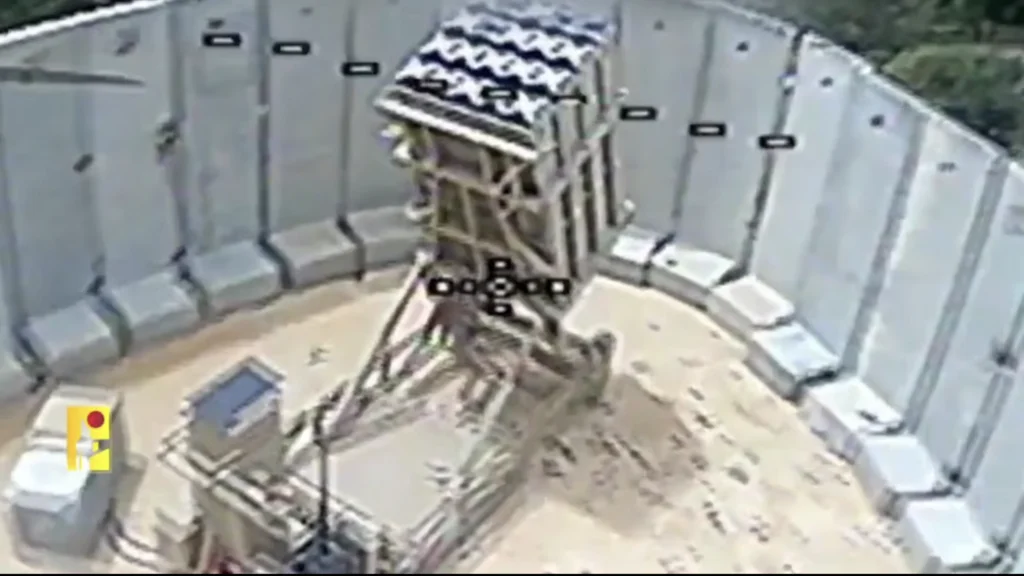
As the tactical landscape of the Middle East conflict evolves, the Iranian-backed militia Hezbollah has intensified its use of First-Person View (FPV) drones to target Israel’s renowned Iron Dome defense systems. However, recent visual evidence and independent analysis suggest that the Israeli military has resurrected a classic Second World War-era strategy: the use of decoys. While Hezbollah’s propaganda wings have released footage claiming successful strikes on radar installations and interceptor batteries, detailed scrutiny of the impact sites reveals that many of these targets were sophisticated mock-ups designed to draw fire away from actual hardware.
This development underscores the high-stakes technological game being played on the border. For Hezbollah, the FPV drone—a small, inexpensive quadcopter rigged with explosives—represents a low-cost method to challenge Israel’s air superiority. For Israel, the success of these decoys means preserving its multi-million dollar defense infrastructure while forcing the adversary to deplete its precision-guided munitions on plywood and fiberglass. For regional observers, this escalation signals a shift toward more asymmetric and unpredictable warfare that continues to keep the risk premium in energy and currency markets at elevated levels.

The Strait of Hormuz: Tehran Issues a Strategic Warning
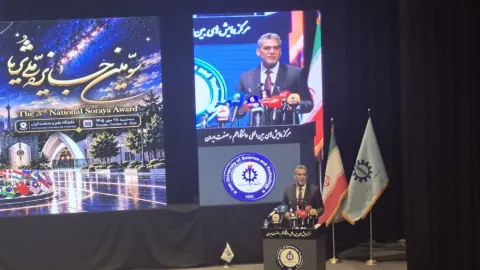
In a significant geopolitical move at 16:00 Tehran time, Iran’s Deputy Foreign Minister for Legal and International Affairs, Kazem Gharibabadi, issued a stern warning regarding the safety of the Strait of Hormuz. Tehran has made it clear that any parallel maritime routes or international decision-making processes that bypass Iran’s strategic considerations will not be able to guarantee safe passage through this critical chokepoint. This statement comes as a direct response to recent international efforts to secure alternative shipping lanes and follows a pause in ship-evacuation efforts by United Nations organizations due to the heightened threat level in the region.
This diplomatic hardening has immediate implications for the global energy market. Although oil prices have been heading for a losing week due to broader economic concerns, analysts warn that the sluggish traffic through the Strait of Hormuz—caused by Iran’s insistence that vessels follow strictly approved routes—could send prices soaring again. If the flow of nearly 20% of the world's oil consumption remains under threat of disruption or significant delay, the current market lull will likely be short-lived. For the Iranian economy, this posturing is a double-edged sword; while it asserts regional dominance, it also invites further scrutiny and potential maritime sanctions that could impact the local Toman's stability.
Cultural Friction and Sporting Success on the World Stage
On the cultural front, the Iranian national football team finds itself in a complex situation in Seattle as they prepare for a crucial Group G match against Egypt. The match, coinciding with local Pride celebrations, has created a diplomatic challenge for the Iranian coaching staff, who have steadfastly refused to discuss the surrounding festivities. This "awkward Pride Match" highlights the ongoing friction between international sporting events and the domestic policies of participating nations. Despite the off-field tension, the sporting world remains captivated by the tournament, which has also seen the rise of unexpected contenders like Cape Verde, whose performance has galvanized diaspora communities across the UK and Europe.

Market Snapshot: Gold Edges Higher as Bitcoin Falters
Domestic markets in Iran remain relatively stable but sensitive to the aforementioned geopolitical developments. The USD/IRR rate held steady at 165,750, showing no change over the last 24 hours. However, gold has seen a modest increase; 18k gold per gram rose from 16,200,886 to 16,240,131 Toman (+0.2%). This slight uptick reflects a localized flight to safety as investors weigh the risks of further escalation in the Persian Gulf. Meanwhile, the Emami coin remained unchanged at 163,000,000 Toman, suggesting a wait-and-see approach among major retail investors.
In the global digital asset space, Bitcoin (BTC) continues to struggle, currently trading at $59,567. The cryptocurrency has touched its lowest levels of 2026 as ETF outflows extend into their seventh consecutive week. Derivatives data suggests further downward pressure may be in the pipeline, as over $1 billion in futures positions have been liquidated recently. For Iranian crypto holders, the USDT rate remains the primary metric of concern, currently sitting at 167,276 Toman, slightly higher than the paper dollar rate due to the persistent demand for digital liquidity in a volatile geopolitical environment.
Frequently Asked Questions
Why is the Strait of Hormuz causing oil prices to fluctuate right now?
What are FPV drones and how is Hezbollah using them against the Iron Dome?
Why is the Iran vs. Egypt match in Seattle called an 'awkward Pride match'?
Is Bitcoin expected to recover from its current 2026 lows?
Understanding Geopolitical Choke Points: The Strait of Hormuz
Geopolitical choke points are narrow, strategically important passages on land or sea that are crucial for global trade and transportation. These points, often natural geographic features like straits, canals, or mountain passes, concentrate traffic from vast regions into confined areas, making them incredibly vulnerable to disruption. Their strategic significance stems from the immense volume of goods, especially energy resources like oil and natural gas, that must pass through them to reach global markets. Any blockage, conflict, or political instability in these areas can have immediate and far-reaching economic consequences, impacting supply chains, commodity prices, and international relations.
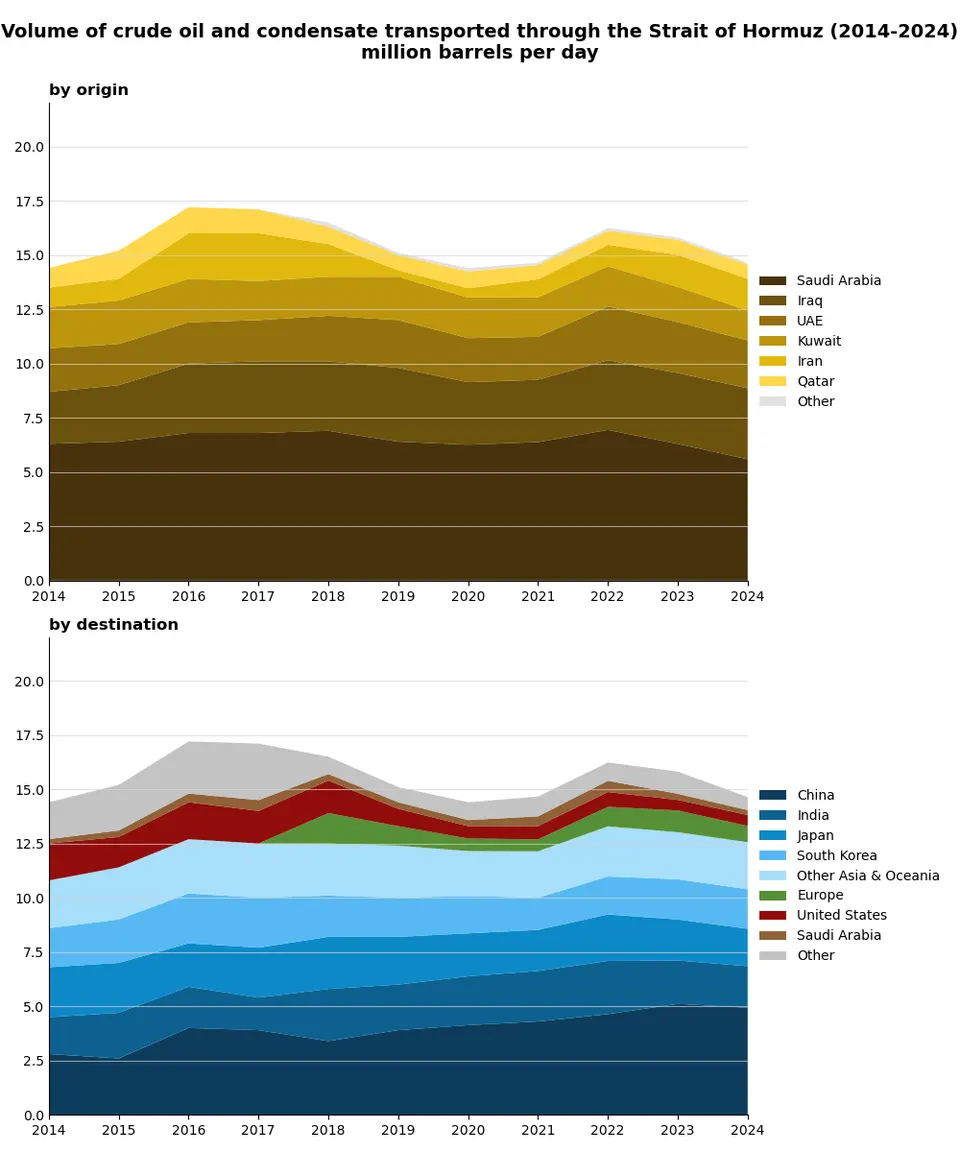
One of the most critical maritime choke points in the world is the Strait of Hormuz. Located between the Persian Gulf and the Arabian Sea, this narrow waterway is the sole sea passage from the Persian Gulf to the open ocean, making it indispensable for the transport of crude oil and liquefied natural gas (LNG) from major producers like Saudi Arabia, Iran, UAE, Kuwait, and Iraq. Approximately one-fifth of the world's total petroleum liquids consumption and about one-third of the world's seaborne oil trade pass through the Strait daily, alongside a significant portion of global LNG shipments.
The strategic vulnerability of the Strait of Hormuz is frequently highlighted by regional tensions, as hinted in the headline. Given its proximity to Iran and its historical role in regional conflicts, the Strait is often at the center of geopolitical maneuvering. Threats to disrupt shipping lanes, whether from state actors or non-state groups, are taken very seriously by the international community because of the immediate impact on global energy prices and economic stability. Even the mere perception of heightened risk can lead to speculative increases in oil prices, demonstrating the profound influence these choke points exert on global markets. Understanding these vital arteries of global commerce is key to comprehending many international economic and political dynamics.
Strait of Hormuz - Wikipedia
en.wikipedia.org
The Strait of Hormuz is the world's most important oil transit chokepoint - U.S. Energy Information Administration (EIA)
eia.gov
Chokepoint Definition & Examples - Investopedia
investopedia.com
Factbox: The Strait of Hormuz, the world's most important oil chokepoint - Reuters
reuters.com
Topics
Related Articles