Beirut Protests Surge as Israel-Lebanon Deal Sparks Division
تظاهرات در بیروت با توافق اسرائیل و لبنان اوج میگیرد
Mass protests have erupted in Beirut as a controversial deal between Lebanon and Israel divides the nation. Meanwhile, the economic aftershocks of recent earthquakes continue to challenge Venezuela's recovery.
At time of publishing
USD
166,450
Toman
Gold 18K
16.43M
Toman / gram
Bitcoin
$60,517
US Dollar
Tether
167,001
Toman
Beirut’s Streets Erupt Over Israel-Lebanon Deal
A controversial deal between Lebanon and Israel has sparked widespread protests across Beirut, reflecting deep divisions within Lebanese society. The agreement, hailed by some as a diplomatic victory that could curb Iran’s influence in Lebanon, has been condemned by others as an unacceptable capitulation to Israeli demands. Protesters took to the streets, voicing their discontent and calling for the deal to be scrapped.
This development comes at a critical time for Lebanon, a country already grappling with economic instability and political turmoil. The agreement, which aims to tie a ceasefire to the disarmament of Hezbollah, has drawn sharp criticism from the group’s leaders, further complicating the political landscape. For Iran, the deal represents a potential shift in regional dynamics that could affect its strategic interests in Lebanon. The protests highlight the fragile nature of Lebanese politics, where any perceived threat to sovereignty can lead to significant unrest.
Earthquakes Shake Venezuela’s Recovery Prospects
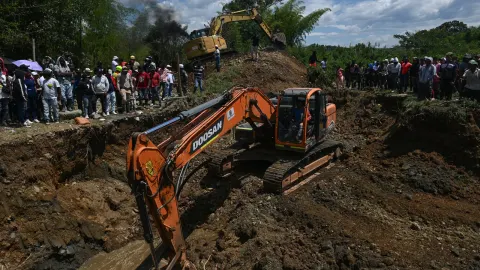
Venezuela, already struggling to overcome years of economic mismanagement, has been dealt a severe blow by recent earthquakes that have devastated northern regions of the country. The quakes have killed over 900 people and left many trapped under rubble, prompting a massive international rescue effort. These natural disasters have further strained the country’s resources and could derail its tentative economic recovery.
The international community, including the United States, is now focused on how best to assist Venezuela in this humanitarian crisis. The earthquakes have exposed the vulnerabilities of an already fragile economy, and the pressure is mounting on the Venezuelan government to manage both immediate relief efforts and long-term rebuilding plans. The situation underscores the interconnectedness of geopolitical events and economic stability, with potential ripple effects on global oil markets and regional economic policies.

, Public domain]
Asian AI Startups Challenge US Dominance
In the tech sector, Asian AI startups are gaining ground as they capitalize on the void left by Anthropic’s export ban from the United States. These startups are launching new AI models with capabilities similar to the popular Mythos, providing a competitive alternative without the regulatory hurdles faced by their American counterparts. This shift highlights a significant trend where Asian companies are increasingly setting the pace in AI innovation.
The move by Asian startups to fill this gap could have lasting impacts on the global AI market. With less regulatory constraint, these companies are poised to capture significant market share, potentially altering the balance of power in the tech industry. For businesses and consumers, this means more diverse AI solutions and potentially accelerated technological advancements in fields like fintech and smart technology. The development also raises questions about the future of AI regulation and the competitive landscape of global tech industries.

Frequently Asked Questions
What is the Israel-Lebanon deal about?
Why are there protests in Beirut?
How has the earthquake affected Venezuela?
Why are Asian AI startups gaining prominence?
What is the impact of the protests on Lebanon?
Understanding Lebanon's Confessional Power-Sharing System
Lebanon’s political landscape is built on a unique system called confessionalism, where government positions are allocated among religious communities based on a pre‑determined quota. Originating from the 1943 National Pact and later reinforced by the 1989 Taif Agreement, this arrangement was designed to balance power among Maronite Christians, Sunni and Shiite Muslims, and other minorities. While it aimed to prevent domination by any single group, it also entrenched sectarian identities into the very fabric of state institutions.
Because ministries, parliamentary seats, and even the presidency are tied to sectarian affiliation, political parties often mobilize support along religious lines. This has made coalition building a delicate art, as any shift—such as a new Israel‑Lebanon border agreement—can trigger fierce debate within and between communities. The recent surge of protests in Beirut reflects how a diplomatic deal can exacerbate existing tensions, with Hezbollah’s Shiite base, Christian factions, and Sunni groups each interpreting the deal through their own sectarian lens.
Confessionalism also hampers economic reform. The need for consensus among diverse sects means that decisive fiscal policies, like those required for IMF‑backed recovery programs, are frequently delayed or watered down. As Lebanon grapples with a severe debt crisis, high inflation, and a collapsing banking sector, the very structure meant to ensure stability now often stalls the reforms needed for economic revival.
Critics argue that the system perpetuates patronage networks and corruption, as leaders distribute public resources to their own communities to maintain loyalty. Reform advocates propose moving toward a secular, merit‑based system, but such changes face deep resistance from entrenched political elites who benefit from the status quo. Understanding confessionalism is therefore essential to grasp why Lebanon’s protests, foreign policy decisions, and economic challenges are so tightly interwoven.
For anyone following the region’s developments—from the Israel‑Lebanon negotiations to the broader influence of Iran and Hezbollah—recognizing the role of confessional power‑sharing provides a lens to decode the country’s complex and often volatile dynamics.