Regional Powers Pay Tribute in Tehran as Global Markets Weigh Political Shifts
ادای احترام مقامات منطقهای در تهران همزمان با ارزیابی تحولات سیاسی توسط بازارهای جهانی
As high-level delegations from Oman, Turkey, and Kazakhstan arrive in Tehran to pay respects to the late Leader, the Iranian Rial remains remarkably stable. Meanwhile, global markets react to a surge in Bitcoin ETF inflows and growing political uncertainty in the United Kingdom.
At time of publishing
USD
175,050
Toman
Gold 18K
17.75M
Toman / gram
Bitcoin
$62,433
US Dollar
Tether
176,213
Toman
Diplomatic Concourse in Tehran: Regional Stability Amid Mourning
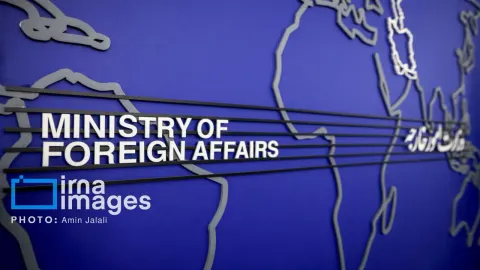
The diplomatic landscape in Tehran has become a focal point of global attention as high-ranking officials from across the region arrive to pay their respects to the late Leader of the Islamic Revolution, Ayatollah Seyyed Ali Khamenei. On July 3, 2026, the Chairman of Oman’s State Council, Abdulmalik Al Khalili, alongside the Vice President of Turkey, Cevdet Yılmaz, and the Foreign Minister of Kazakhstan, Yermek Kosherbayev, were among the prominent figures attending the farewell ceremonies at the Grand Mosalla. This influx of regional leadership underscores a period of high-stakes diplomacy, where the continuity of regional relations is being tested and reaffirmed during a sensitive transition for the Islamic Republic.
From an economic perspective, the currency markets have reacted with uncharacteristic calm. The USD sell rate in Tehran is currently holding steady at 175,050 Toman, showing a 0.0% change over the last 24 hours. This stability suggests that market participants have already priced in the immediate geopolitical risks and are now looking toward the signals of institutional continuity provided by these high-level visits. The presence of Turkish and Omani delegations, in particular, is viewed by analysts as a sign that trade corridors and diplomatic channels remain robust despite the national mourning period.

Rhetorical Fire: Ghalibaf Rebuts Trump’s Claims on US Independence Day
As the United States prepares to celebrate its 250th anniversary with massive fireworks and a lengthy address from President Donald Trump, the rhetorical bridge between Tehran and Washington remains fraught with tension. Iran’s Parliament Speaker, Mohammad Bagher Ghalibaf, delivered a sharp rebuttal to recent comments made by the US President regarding the Iranian people. Ghalibaf suggested that instead of focusing on unfounded claims about Iran, the US administration should address its own domestic crises, specifically highlighting the malnutrition rates affecting millions of American citizens. This exchange highlights a persistent ideological divide that continues to shape the geopolitical risk premium in global energy and financial markets.
This verbal sparring comes at a time when the "special relationship" between the US and its traditional allies, particularly the UK, is being questioned. As the US marks two and a half centuries of independence, critics argue that the economic gap between America and Britain has widened to the point of British irrelevance in Washington’s eyes. For Iranian policymakers and market observers, these shifts in Western alliances are critical; they dictate the future of sanctions enforcement and the potential for new multilateral agreements. The stability of the Emami coin at 177,000,000 Toman reflects a domestic market that is currently more focused on internal political transitions than the external noise of US-Iran rhetoric.

Crypto Relief: Bitcoin ETF Inflows Signal a Potential Bottom
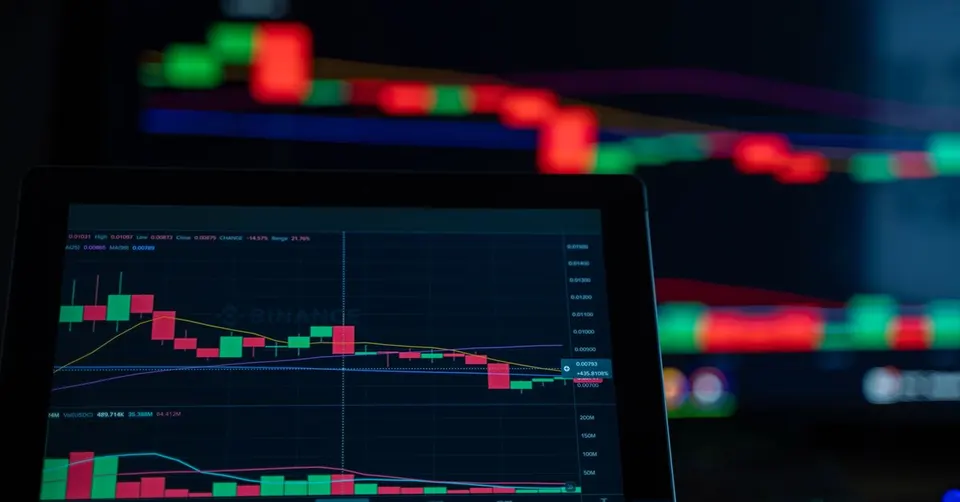
In the digital asset space, Bitcoin and Ether are extending their relief rallies as a wave of "extreme fear" begins to subside. Bitcoin (BTC) is currently trading at $62,433, supported by a significant $221 million inflow into spot BTC ETFs on July 2. Analysts from Bitwise and Swan Bitcoin suggest that the market bottom may be closer than previously anticipated, as institutional buyers step in to take advantage of multi-year lows. This surge in ETF buying provides a necessary liquidity cushion that has helped stabilize the broader crypto market after a period of intense volatility and liquidations.
However, the recovery is not uniform across all assets. While the majors are bouncing, EOS has seen a sharp 15% fall in a recent market rout, illustrating the continued fragility of smaller-cap altcoins. For Iranian investors, the Tether (USDT) price in Toman sits at 176,213, closely tracking the free market USD rate. The slight -0.4% dip in 18k gold prices to 17,752,435 Toman per gram suggests a minor rotation out of traditional safe havens as some risk appetite returns to the global stage, though gold remains historically high at $4,176.10 per ounce.
European Turmoil: The Rise of Reform and the Future of the UK
Across the Atlantic, political leaders in the UK and Ireland are bracing for what many describe as "constitutional turmoil." The rise of Nigel Farage and the Reform UK party has prompted serious discussions about the potential breakup of the United Kingdom. As Farage’s influence grows, unionists and nationalists alike are gaming out scenarios where the current political order is upended. This internal instability in one of the world's major economies adds another layer of complexity to global trade, potentially impacting everything from student fees for British teens in the EU to broader European security cooperation.
These geopolitical shifts are occurring against a backdrop of environmental extremes. Sydney, Australia, has just recorded its hottest June since 1859, with mean temperatures reaching 16.1°C. Experts are calling this a "signature" of global warming, a reminder that while political and financial markets are preoccupied with short-term cycles, the long-term structural risks of climate change continue to intensify. For the global economy, the combination of political populism and environmental instability suggests a future of higher volatility and the need for more resilient investment strategies.
Frequently Asked Questions
Why is the USD/IRR rate stable despite the national mourning period?
What does the $221 million Bitcoin ETF inflow signify for retail investors?
How does the rise of Reform UK impact global markets?
Understanding the Political Risk Premium in Global Markets
When investors assess the attractiveness of a country’s assets, they add a political risk premium to the expected return. This extra cushion compensates for the uncertainty that political events—such as leadership changes, diplomatic tensions, or high‑profile funerals—might disrupt economic policies, affect currency stability, or trigger social unrest. The premium is not a fixed number; it fluctuates with the intensity and perceived likelihood of political shocks.
In practice, the political risk premium shows up in several market signals. A sudden rise in the USD/IRR exchange rate often reflects investors demanding higher returns for holding Iranian assets amid uncertainty surrounding events like the Ayatollah’s funeral or foreign visits. Similarly, gold prices tend to climb when geopolitical tension spikes, as investors seek a safe haven. The recent surge in gold priced in toman illustrates how local investors hedge against both currency depreciation and broader political instability.
Emerging financial instruments also feel the ripple effects. The influx of capital into a Bitcoin ETF in July 2026, for example, can be partially attributed to investors looking for assets that are less directly tied to any single nation’s political climate. However, even decentralized assets can be sensitive to regulatory risk, which is a component of the broader political risk premium.
Analysts quantify the premium using models that compare sovereign bond yields, currency forward spreads, and equity risk premiums across comparable economies. A higher premium signals that markets expect greater policy volatility, potentially prompting governments to adopt more transparent and stable frameworks to attract investment.
Understanding the political risk premium helps investors and policymakers alike gauge how political developments translate into concrete financial costs, influencing everything from exchange rates to commodity prices and emerging asset flows.