Olympic Trial in DC and Explosions in Bandar Abbas: Toman Hits 181,100 as Hormuz Traffic Stalls
دادگاه المپیکی در واشینگتن و انفجار در بندرعباس: صعود دلار به ۱۸۱ هزار تومان همزمان با رکود هرمز
A former US Olympian faces trial for vandalizing Trump’s blue-lined reflecting pool, while Iranians in Bandar Abbas describe 48 hours of terror following US strikes. Meanwhile, shipping through the Strait of Hormuz has plummeted, pushing the Toman to new lows.
At time of publishing
USD
181,100
Toman
Gold 18K
17.94M
Toman / gram
Bitcoin
$62,981
US Dollar
Tether
180,432
Toman
The Olympian, the Blue Liner, and Trump’s Washington
In a case that perfectly captures the surreal intersection of sports, politics, and urban aesthetics, former Olympic canoeist David Hearn pleaded not guilty on Thursday to charges of damaging the Lincoln Memorial reflecting pool. The 67-year-old Maryland resident, a three-time Olympian, finds himself at the center of a federal property destruction case after a $14.7 million renovation project spearheaded by the Trump administration. The renovation notably included a controversial new liner colored in what officials call "American flag blue," a departure from the pool's traditional appearance that has divided Washingtonians.
Hearn’s defense is as peculiar as the charge itself. He claims that while on a routine bike ride, he stopped to inspect the pool and noticed a portion of the blue liner was detached. His curiosity led him to reach into the water to feel the material, an act that federal prosecutors have characterized as felony vandalism. Hearn was reportedly detained for nearly five hours after the incident in mid-June. The trial has become a flashpoint for critics of the administration’s costly aesthetic overhauls, while the government maintains that preserving the integrity of national monuments is paramount, regardless of the defendant's athletic pedigree.

Terror in the South: Bandar Abbas Under Fire and the Toman’s Slide
While legal battles play out in Washington, a far more visceral crisis is unfolding along Iran’s southern coast. Residents in Bandar Abbas and Sirik have described a harrowing 48-hour period of "back-to-back explosions" following intensive strikes by US Central Command. These operations, aimed at degrading the capabilities of regional forces to threaten navigation, have left local communities in a state of shock. Witnesses reported that the blasts were powerful enough to shake residential buildings, leading many to feel "abandoned" by a central government that appears more focused on military posturing than the safety of its coastal citizens.
The economic fallout of this escalation is immediate and punishing for the Iranian public. In the last 24 hours, the USD/IRR rate moved from 180,150 to 181,100, marking a 0.5% increase. This breach of the 181,000 threshold reflects a deepening lack of confidence in the rial as the conflict enters a more kinetic phase. Gold markets are following suit, with 18k gold rising from 17,787,063 to 17,941,733 Toman per gram (+0.9%). For the average Iranian, these numbers represent more than just market volatility; they signify a rapid erosion of purchasing power as the cost of basic goods is expected to spike in response to the currency's decline.
Shipping Collapse and the Shift in Global Energy Logistics
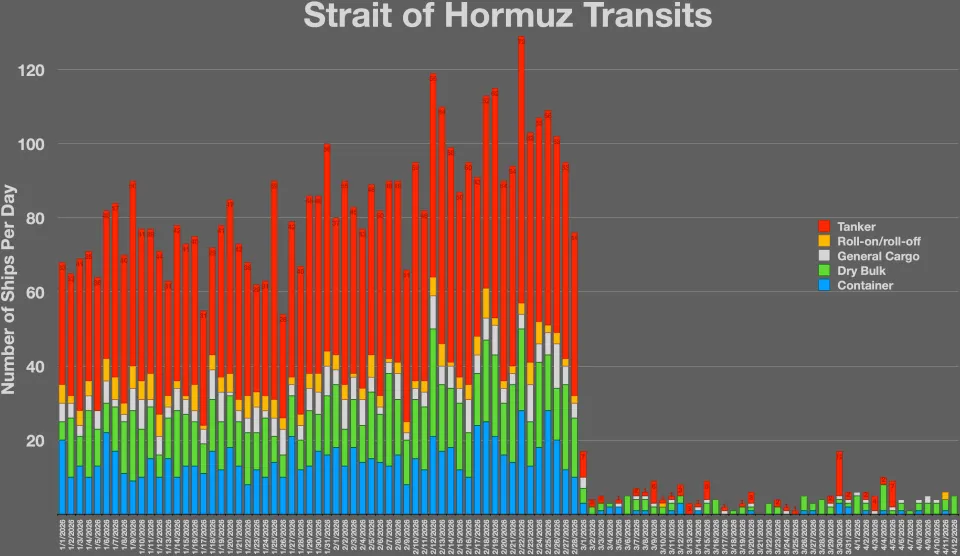
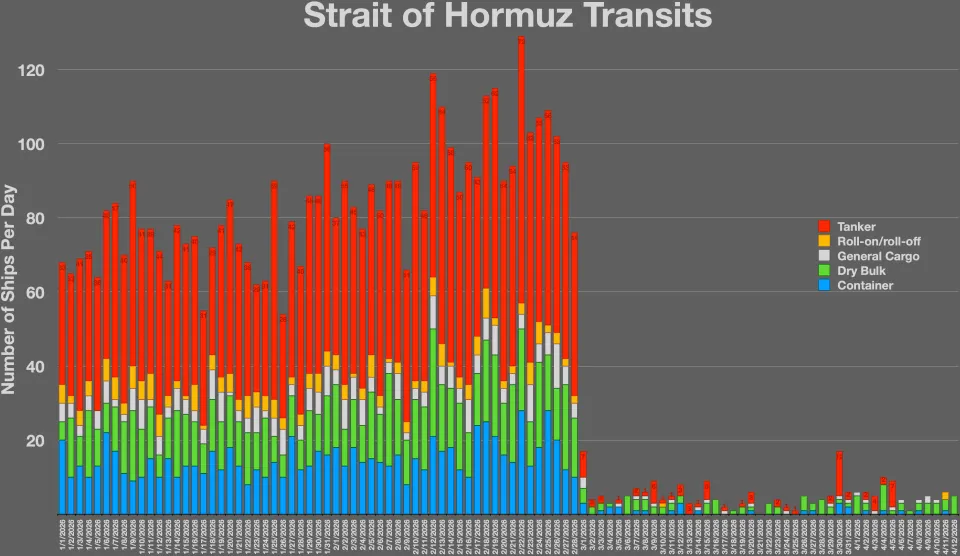
The military tension has effectively paralyzed one of the world's most vital maritime arteries. Recent data indicates a sharp drop in the number of vessels, particularly oil and gas tankers, attempting to cross the Strait of Hormuz. With shipping insurance premiums skyrocketing and the risk of being caught in the crossfire at an all-time high, many global carriers are opting for longer, more expensive routes around the Cape of Good Hope. This bottleneck is not just a regional issue; it is a global supply chain crisis that is keeping Brent crude and gold prices elevated, with gold currently trading at a staggering $4,128.30 per ounce.
Interestingly, some nations are already finding workarounds to this maritime blockade. Indonesia recently received its first shipment of Russian crude oil—approximately 770,000 barrels—under a supply deal struck back in April when the Hormuz crisis first began to simmer. The delivery to the port of Balikpapan suggests that Asian economies are increasingly looking toward direct bilateral deals with Russia to bypass the volatility of the Middle East. As the Strait of Hormuz remains a high-risk zone, the global energy map is being redrawn, favoring overland pipelines and direct shipments that avoid the traditional chokepoints of the Persian Gulf.
Frequently Asked Questions
Why has the USD/IRR rate suddenly jumped to 181,100?
Who is David Hearn and why is he being prosecuted in Washington?
How is the shipping crisis in Hormuz affecting global energy markets?
Understanding Currency Depreciation Amidst Geopolitical Tensions
Currency depreciation refers to the decline in the value of a nation's currency relative to other currencies, often the U.S. dollar. When a headline states "Toman Hits 181,100," it signifies that it now takes 181,100 Iranian Rials (Toman is an unofficial but widely used unit, with 1 Toman = 10 Rials) to purchase one U.S. dollar, indicating a significant weakening of the Iranian currency. This phenomenon reduces the purchasing power of citizens, making imported goods more expensive and eroding savings, often prompting a flight to more stable assets like gold.
The drivers of currency depreciation are multifaceted, encompassing both economic fundamentals and external shocks. Economically, high inflation, large trade deficits, and unsustainable government debt can erode confidence in a currency. However, in geopolitically sensitive regions like the Middle East, external factors often play an outsized role. Sanctions, regional conflicts, and the threat of disruptions to critical trade routes—such as the Strait of Hormuz, a vital chokepoint for global oil shipments—can trigger rapid and severe currency declines by deterring foreign investment and hindering a nation's ability to earn foreign currency.
The recent reports of explosions in Bandar Abbas and stalled traffic in the Strait of Hormuz, coupled with broader geopolitical tensions, illustrate this dynamic vividly. Such events heighten uncertainty, signaling increased risk for international trade and investment. For an economy heavily reliant on oil exports, like Iran's, any perceived threat to its ability to export oil or access international markets directly impacts its foreign currency reserves and, consequently, the value of its domestic currency. This interplay between geopolitical events and currency stability underscores the complex challenges faced by nations operating under significant international pressure.