Spain Wildfires Claim 11 Lives as Middle East Tensions Simmer After US-Iran Missile Strikes
جان باختن ۱۱ نفر در آتشسوزیهای اسپانیا؛ تداوم تنشهای نظامی در منطقه پس از حملات متقابل
Southern Europe faces a deadly heatwave with wildfires in Spain claiming 11 lives, while the Middle East remains on edge following fresh US-Iran missile exchanges and the burial of the Iranian Leader in Mashhad. Meanwhile, SK Hynix makes history with a $26.5 billion US listing driven by the AI boom.
At time of publishing
USD
179,650
Toman
Gold 18K
17.68M
Toman / gram
Bitcoin
$63,880
US Dollar
Tether
178,801
Toman
Deadly Wildfires Ravage Southern Spain Amid Record Heatwave
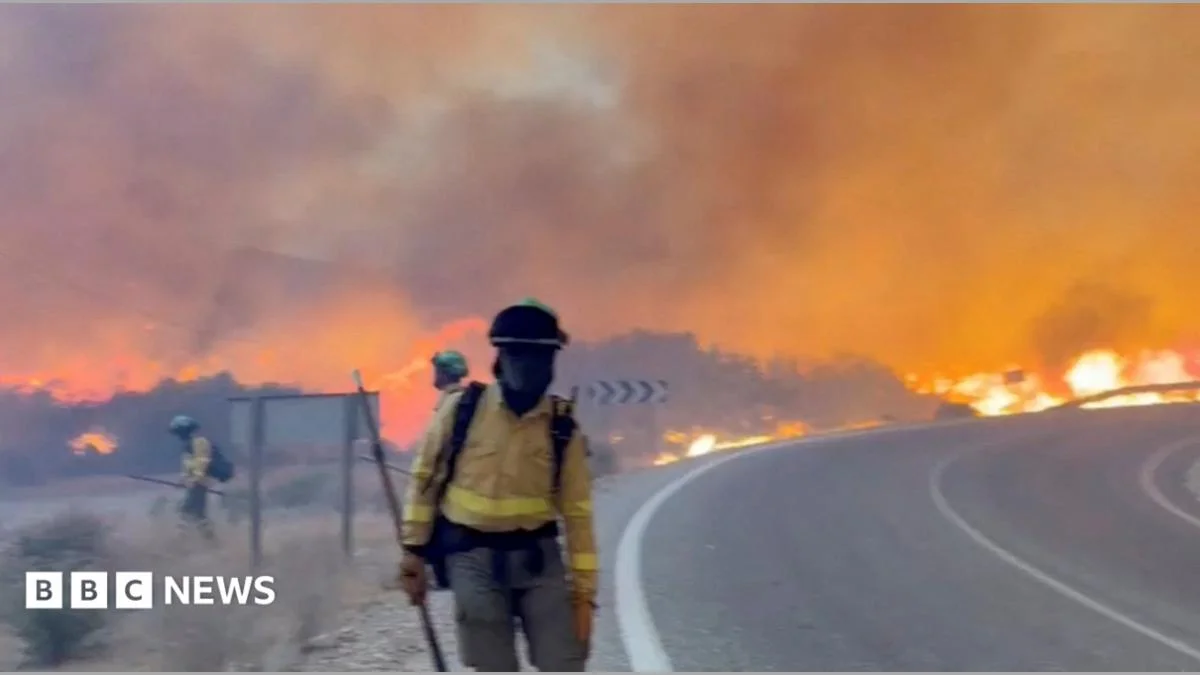
A devastating wildfire in the province of Almería, Southern Europe, has claimed the lives of at least 11 people as an unprecedented heatwave continues to bake the continent. Local authorities reported that the blaze intensified rapidly in the Los Gallardos area, leaving six others critically injured. Emergency services are struggling to contain the flames as high winds and bone-dry vegetation create a perfect storm for rapid fire spread. This latest tragedy highlights the increasing vulnerability of the Mediterranean region to extreme weather events, which scientists warn are becoming more frequent and severe due to shifting global climate patterns.
The human cost in Spain is mirrored by a broader economic anxiety across the Eurozone. As primary agricultural lands face the threat of incineration and tourism hubs are evacuated, the regional infrastructure is being pushed to its breaking point. For global markets, these climate disasters are no longer isolated incidents but systemic risks that threaten supply chains and energy consumption patterns. The ongoing heatwave has already spiked electricity prices across Southern Europe as demand for cooling reaches record levels, adding further pressure to a continent already grappling with volatile energy markets.

Geopolitical Tensions Escalate Following US-Iran Missile Exchanges
The Middle East is navigating a precarious moment as fresh military escalations threaten to collapse a fragile interim ceasefire. Following US airstrikes on Thursday, Tehran reportedly responded by firing missiles at locations in Bahrain, Qatar, Kuwait, and Jordan—nations that host significant US military assets. These exchanges have coincided with the burial of Ayatollah Seyyed Ali Khamenei in Mashhad, an event that drew massive crowds to the Imam Reza shrine. While Iranian state media, IRNA, focused on the domestic mourning process, the international community is focused on the reported explosions near Iran's nuclear infrastructure, which have raised the specter of a much wider regional conflict.
Despite the heightened military rhetoric and the volatility of the situation, the Iranian Toman showed a surprising resilience in early Friday trading. The USD sell rate moved from 181,100 to 179,650, representing a -0.8% decrease. This cooling of the exchange rate, despite the geopolitical heat, suggests that local markets may have already priced in a high degree of conflict risk, or that central bank interventions are working aggressively to prevent a currency freefall during this sensitive transition period. Gold prices also saw a slight correction, with 18k gold moving from 17,874,786 to 17,683,180 Toman per gram (-1.1%).
SK Hynix Makes History with $26.5 Billion US Listing
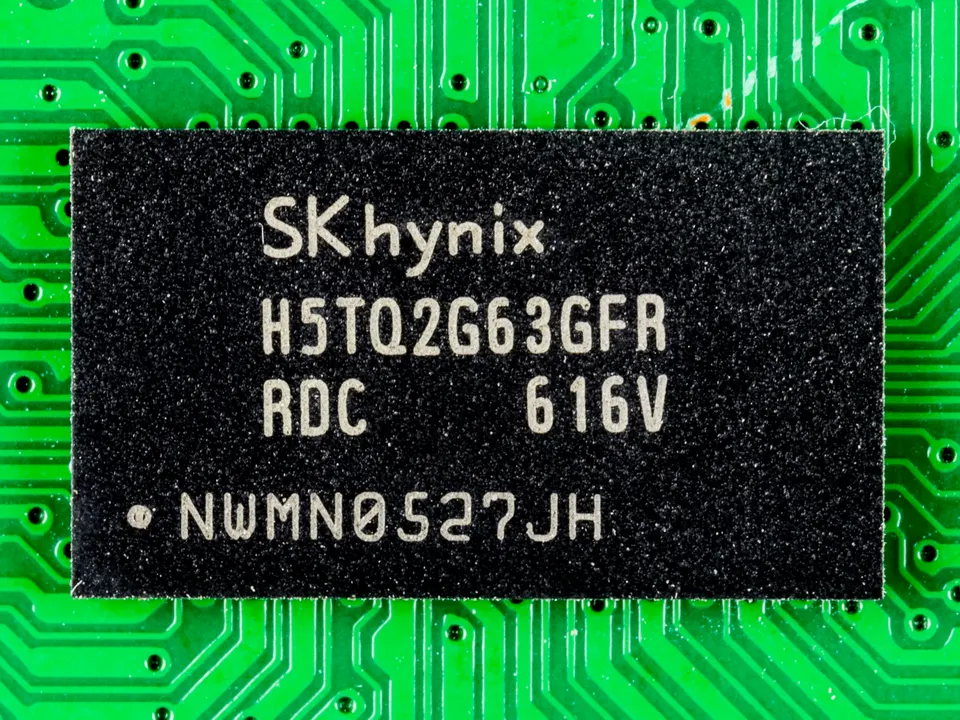
In a landmark move for the global technology sector, South Korean semiconductor giant SK Hynix has successfully priced its mega US listing, aiming to raise a staggering $26.5 billion. This debut on the Nasdaq represents one of the largest ever stock sales by a foreign firm and underscores the insatiable global appetite for artificial intelligence infrastructure. As a primary supplier of High Bandwidth Memory (HBM) chips—essential components for AI data centers—SK Hynix is positioning itself at the very center of the AI revolution, capitalizing on a surge in profits that has redefined its corporate valuation over the past year.
This massive capital injection is expected to fuel a new round of competition in the chip wars between the US, China, and South Korea. By listing on the Nasdaq, SK Hynix is not only seeking liquidity but also strategic alignment with the Silicon Valley ecosystem that drives the demand for its hardware. For investors, this listing provides a direct play on the physical backbone of AI, moving away from software speculation toward the tangible hardware required to run large language models. The success of this IPO is likely to encourage other Asian tech titans to seek Western capital, further integrating global tech markets despite growing geopolitical friction.
EU Privacy Under Fire as 'Chat Control' Moves Forward
The European Parliament has taken a controversial step by passing the 'Chat Control' legislation, which allows tech companies to scan private messages for illegal material until 2028. While the law includes an exemption for end-to-end encrypted messages, privacy advocates argue that the move sets a dangerous precedent for mass surveillance and could eventually force companies to implement 'backdoors' in their security protocols. The decision has sparked a heated debate between those who prioritize child safety and those who view digital privacy as a fundamental human right that should not be compromised under any circumstances.
In the crypto world, this policy shift is being watched with deep concern, as the ethos of decentralization and privacy is directly at odds with state-mandated scanning of private communications. Bitcoin, which recently zipped higher to nearly $64,000 (currently trading at $63,880), remains a hedge for those seeking financial autonomy, yet institutional flows show signs of hesitation. Spot Bitcoin ETFs saw an outflow of approximately $95 million on Thursday, ending a brief streak of inflows. This divergence between price action and institutional sentiment suggests that while the market remains bullish on the asset's long-term value, short-term regulatory and privacy concerns in major jurisdictions like the EU are keeping some big-money players on the sidelines.
Frequently Asked Questions
Why did the USD/IRR price drop despite military escalations?
What is the significance of the SK Hynix listing on Nasdaq?
How does the EU's 'Chat Control' affect crypto users?
The Rise of the AI Semiconductor Market
Artificial intelligence (AI) has transformed the demand landscape for semiconductors, spawning a distinct market focused on chips designed to accelerate machine‑learning workloads. Unlike traditional CPUs, AI accelerators—such as GPUs, TPUs, and specialized ASICs—are optimized for parallel processing and high‑throughput matrix operations that power everything from large language models to autonomous vehicles. This specialization drives higher performance per watt, a critical factor as data centers scale up to meet ever‑growing inference and training needs.
The market’s explosive growth is reflected in the surge of capital‑intensive IPOs and investments, exemplified by SK Hynix’s recent public offering. As one of the world’s largest memory manufacturers, SK Hynix is expanding into high‑bandwidth memory (HBM) and AI‑optimized DRAM, components essential for feeding data‑hungry AI processors. Analysts project that AI‑related semiconductor revenue could exceed $200 billion by 2027, outpacing many traditional chip segments.
However, the rapid expansion brings challenges. Supply chain constraints, especially for advanced node wafers and rare earth materials, can create bottlenecks, while geopolitical tensions—such as US‑Iran frictions—risk disrupting global semiconductor trade flows. Moreover, the concentration of AI chip design in a few firms raises antitrust concerns and prompts regulators to scrutinize market dominance.
For investors and technologists alike, understanding the AI semiconductor market means tracking three key indicators: the pace of AI model scaling, the rollout of new process technologies (e.g., 3‑nm and beyond), and the evolution of memory architectures that keep up with compute speed. These factors together shape the competitive landscape and determine which companies will lead the next wave of AI innovation.