Power Vacuum in Tehran: Supreme Leader’s Absence Rattles Markets as IEA Warns of Oil Shock
خلأ قدرت در تهران؛ غیبت مجتبی خامنهای و هشدار آژانس بینالمللی انرژی درباره شوک نفتی
As the Islamic Republic faces an unprecedented leadership void following the absence of key figures at the late Leader's funeral, global energy markets brace for impact. Meanwhile, Bitcoin defies regional volatility, climbing back to $64,000 despite a cooling Toman and gold market.
At time of publishing
USD
179,650
Toman
Gold 18K
17.66M
Toman / gram
Bitcoin
$64,326
US Dollar
Tether
178,251
Toman
The Silent Succession Crisis: A Void at the Heart of the Regime
The political atmosphere in Tehran has reached a fever pitch following reports that Ayatollah Mojtaba Khamenei, widely considered a frontrunner to succeed his father, failed to appear at the recent high-profile funeral services. This absence has triggered intense speculation regarding his physical condition and the internal stability of the regime. According to reports from the New York Times, this perceived power vacuum is exacerbating divisions within the ruling elite, leaving a country already strained by economic sanctions and social unrest in a state of deep uncertainty. For the average Iranian, this translates to immediate market jitters, as the lack of a clear successor often signals a period of heightened internal conflict and potential policy paralysis.
The domestic markets have reacted to this political fog with a cautious retreat. The US Dollar in the Tehran open market moved from 181,100 to 179,650 Toman, marking a -0.8% decrease as traders wait for a clearer signal of who holds the reins of power. While a slight drop in the dollar might seem counterintuitive during a crisis, it often reflects a temporary freeze in liquidity as major players move to the sidelines, fearful of sudden shifts in the security landscape. This "wait-and-see" approach is a direct consequence of the regime's historical lack of transparency, which forces the public and investors to decipher political health through the absence of figures rather than their presence.
Energy Markets on Edge: IEA Flips the Script on Oil Surplus
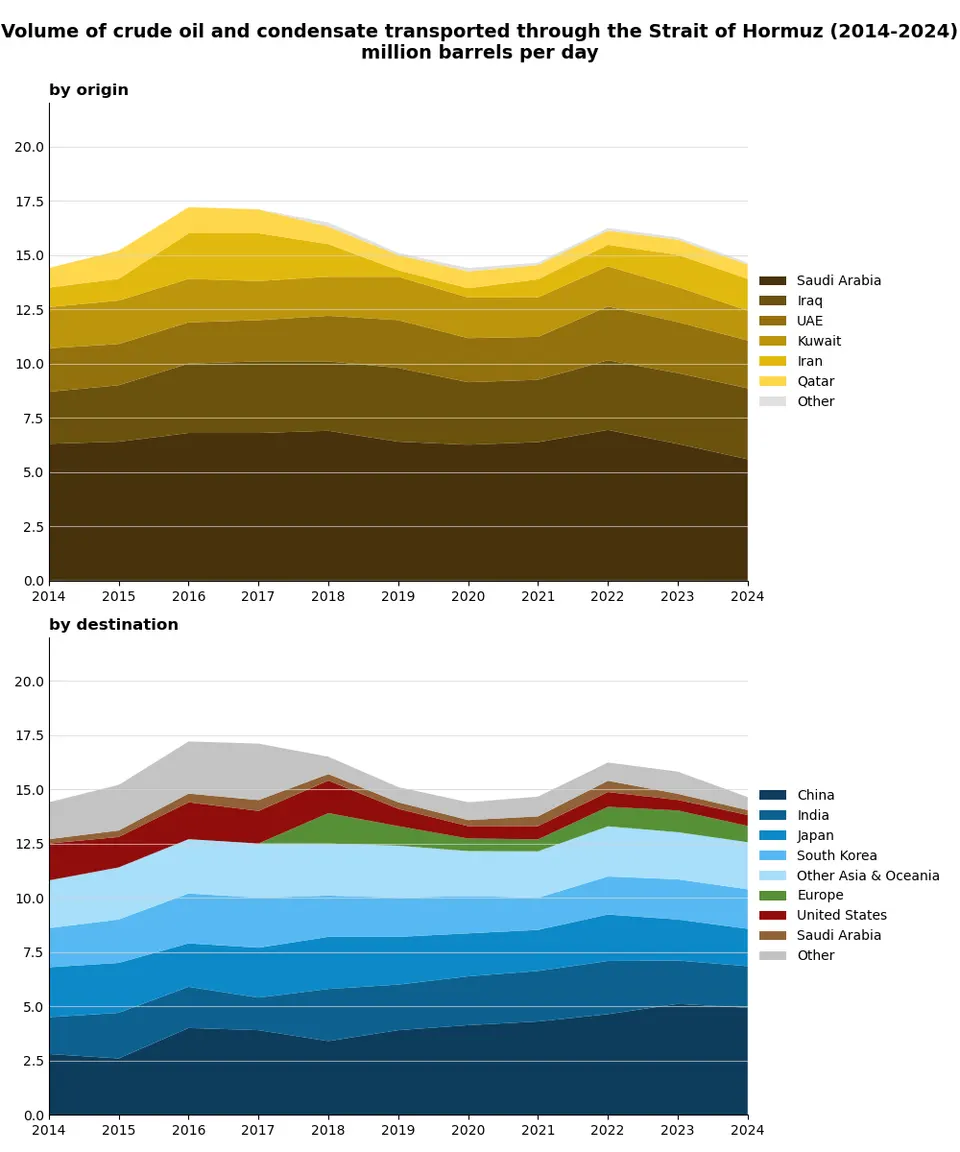
The International Energy Agency (IEA) issued a stark warning this Friday, suggesting that the recent re-escalation of hostilities between the United States and Iran could completely upend the global oil outlook for 2027. Previously, analysts had predicted a comfortable surplus of crude for the coming year, which had helped push North Sea Dated prices down to approximately $68 per barrel by early July. However, the potential for renewed conflict near the Strait of Hormuz threatens to choke off vital shipping lanes once again. The IEA notes that while global stocks had begun to build up for the first time since the war's onset, any major military disruption would flip this surplus into a desperate deficit overnight.
Beyond the raw price of crude, the situation is being further complicated by record-high fuel refining margins. Gasoline and diesel spreads have jumped to new highs as global fuel inventories crumble, exacerbated by Russia’s ongoing ban on diesel exports. For the global economy, this means that even if crude prices remain somewhat stable, the cost of refined products like heating oil and transport fuel will continue to drive inflation. The IEA's report underscores the fragility of the current energy equilibrium, where a single geopolitical miscalculation in the Persian Gulf could trigger a global inflationary wave that central banks are ill-equipped to handle.
Bitcoin Defies Gravity as Toman and Gold Retreat
In a striking divergence from traditional safe-haven assets, Bitcoin has surged back to $64,326, heading for a significant weekly gain despite the geopolitical turmoil in the Middle East. This rally appears to be driven by a broader tech-led surge in global markets and increasing institutional interest, such as the reported $3.5 billion debt raise by Bitcoin miner TeraWulf to fund AI-linked data centers. While the crypto market often reacts to risk-off sentiment, the current price action suggests that investors are increasingly viewing decentralized assets as a hedge against the systemic instability of sovereign states and their fiat currencies.
In contrast, the Iranian domestic market for gold has seen a decline. Gold 18k per gram moved from 17,874,786 to 17,660,095 Toman, a -1.2% drop, while the Emami coin remained stagnant at 181,500,000 Toman (+0.0%). This decoupling of gold and Bitcoin is noteworthy; it suggests that while local investors in Iran are struggling with decreased purchasing power and liquidity, the global digital asset market is moving on its own trajectory. For Iranians, the rising cost of living is highlighted by global social security issues, such as the plight of individuals living on fixed incomes while their assets are dwarfed by inflation, a reality that mirrors the widening wealth gap within the Islamic Republic itself.
Accountability and Ethics: From UK Treasury Scandals to Political Shifts
While the Middle East remains a focal point of tension, Western institutions are facing their own internal crises of accountability. In the United Kingdom, the Treasury is under intense pressure to reform its disciplinary processes following the tragic suicide of Chloe Moffat, a 26-year-old staffer. The case has sparked a national conversation about the treatment of civil servants and the lack of support systems within high-pressure government environments. This story serves as a reminder that even in established democracies, the lack of transparency and rigid bureaucratic structures can have devastating human costs, paralleling the systemic issues often seen in more authoritarian regimes.
Simultaneously, the UK political landscape is shifting as voters express growing disillusionment with established populist figures. Recent polling indicates that more than half of voters now view Nigel Farage and the Reform UK party as "very sleazy," a sentiment that coincides with the removal of former DUP leader Jeffrey Donaldson from the Privy Council. These developments suggest a growing demand for ethical governance and a rejection of the "sleaze" that has characterized certain political movements. For global markets, these shifts in political sentiment are crucial indicators of future regulatory environments and trade policies, particularly as the UK seeks to redefine its economic role in a post-Brexit, high-tension world.
Frequently Asked Questions
Why is Mojtaba Khamenei's absence significant for the markets?
How could the U.S.-Iran conflict impact global oil prices in 2027?
Why did the Toman fall while Bitcoin rose?
What are 'refining margins' and why are they at record highs?
Understanding Geopolitical Risk: When Politics Shakes Global Markets
Geopolitical risk refers to the potential for political events, conflicts, or instability in one region to have significant ripple effects across international relations and global financial markets. It encompasses a broad spectrum of factors, from leadership transitions and internal strife to international disputes and military confrontations. The recent headlines regarding a potential succession crisis in Iran, coupled with escalating tensions around the strategically vital Strait of Hormuz, are textbook examples of how such risks can quickly capture market attention and trigger widespread uncertainty.
When geopolitical tensions rise, the most immediate impact is often felt in commodity markets, particularly oil. Iran, a major oil producer, sits astride the Strait of Hormuz, a critical maritime chokepoint through which a significant portion of the world's seaborne oil supply passes daily. Any threat of disruption to this passage, or to Iran's own production capacity due to internal instability, can immediately send global oil prices soaring. Warnings from institutions like the International Energy Agency (IEA) about potential "oil shocks" are direct responses to such heightened geopolitical anxieties, reflecting concerns about supply security and price volatility.
Beyond oil, geopolitical risk reverberates through broader financial markets. Investors, seeking safety amidst uncertainty, often shift capital from perceived riskier assets to traditional safe havens. This can lead to the devaluation of local currencies, such as the Iranian Toman mentioned in the keywords, as capital flees the country. Conversely, the price of gold, a classic store of value during times of crisis, typically rises. Even cryptocurrencies like Bitcoin, while often volatile, can see increased interest from those looking for alternative assets outside traditional financial systems, though their role as a true safe haven remains debated.
Understanding geopolitical risk is crucial for anyone engaging with global economics, from policymakers and investors to everyday consumers. It highlights the profound interconnectedness of our world, demonstrating how political developments in one corner of the globe can directly influence the cost of energy, the stability of currencies, and the overall health of the global economy. Recognizing these dynamics allows for better preparedness and more informed decision-making in an increasingly unpredictable world.