Regional War Escalates: Iran Strikes US Bases in Bahrain and Kuwait as Bitcoin Slumps to $63K
تشدید درگیری منطقهای: حمله ایران به پایگاههای آمریکا در بحرین و کویت؛ ریزش بیتکوین به ۶۳ هزار دلار
Iran has launched direct strikes against U.S. military facilities in Bahrain and Kuwait, triggering a 5% surge in oil prices and a sharp sell-off in risk assets. Bitcoin has retreated to $63,000 as the Strait of Hormuz effectively shuts down to commercial traffic.
At time of publishing
USD
179,000
Toman
Gold 18K
17.54M
Toman / gram
Bitcoin
$63,038
US Dollar
Tether
179,500
Toman
Direct Confrontation: Iran Targets US Bases in Bahrain and Kuwait
The shadow war between Washington and Tehran has exploded into a direct regional conflict this Monday. Following a fresh wave of U.S. strikes on Iranian targets, the Iranian military retaliated by launching missile and drone attacks against American military facilities in Bahrain and Kuwait. This escalation marks a significant departure from previous proxy-led engagements, as Tehran now directly targets U.S. assets in neighboring Gulf states. While the U.S. military claims to have intercepted several projectiles, the psychological impact on global markets has been immediate, with the UN Secretary-General warning that a return to full-scale fighting would be "catastrophic" for the global order.
In the capital, the Iranian government has doubled down on its rhetoric, insisting that it maintains absolute control over the Strait of Hormuz. Despite President Trump’s public denials regarding the closure of the waterway, the reality on the ground—or rather, on the water—paints a different picture. The Islamic Revolutionary Guard Corps (IRGC) has warned that any further U.S. interference will lead to even greater disruptions in the global energy sector. This direct threat to the world's most vital oil chokepoint has sent shockwaves through financial hubs, causing a flight to safety as investors dump risky assets in favor of more stable holdings.
Energy Markets on Edge: Hormuz Traffic Collapses as Oil Surges 5%
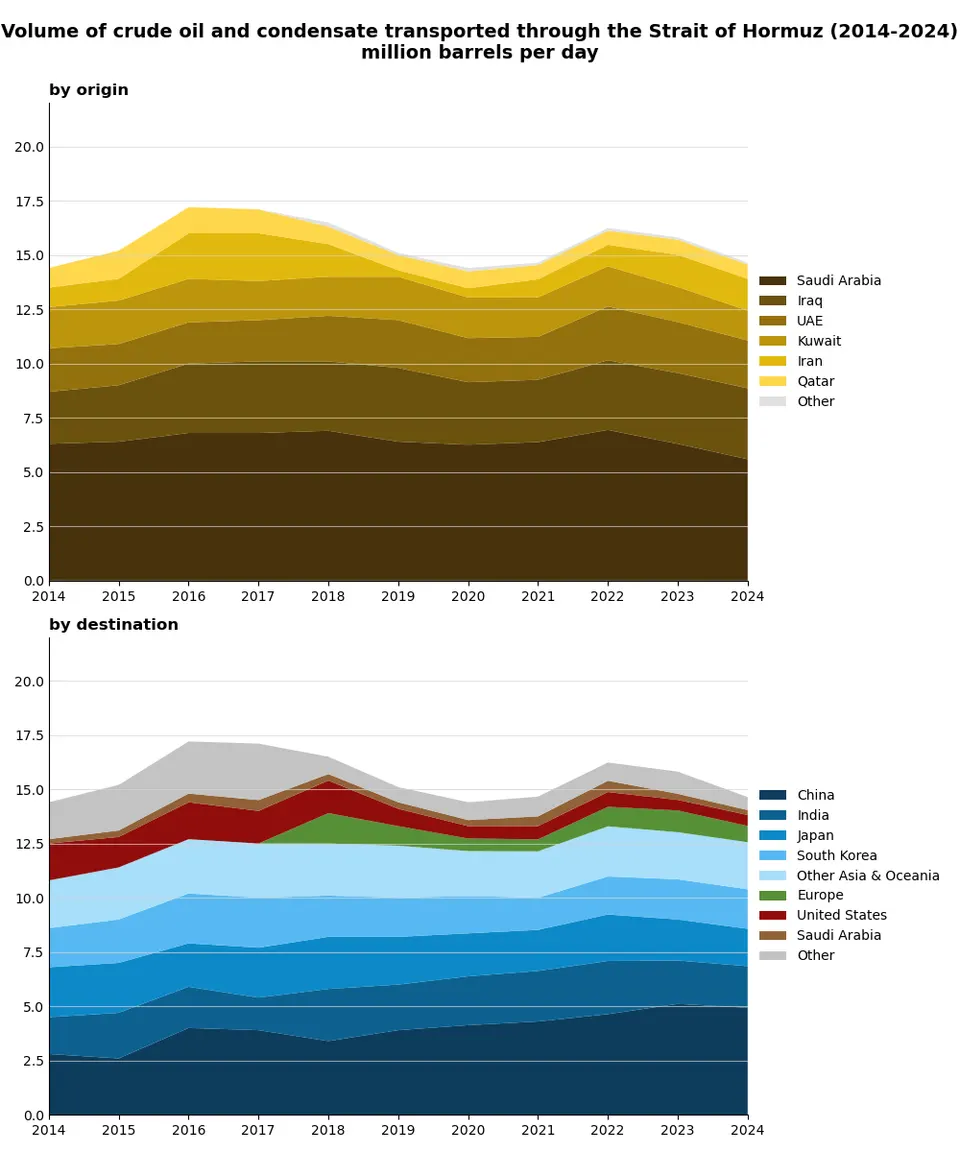
The economic consequences of the military escalation are manifesting rapidly in the energy and crypto sectors. Oil prices surged by as much as 5% this morning as traders factored in the risk of a prolonged closure of the Strait of Hormuz. Data from shipping trackers shows that tanker traffic through the chokepoint has plummeted to a five-week low, with only six tankers recorded transiting the area on Sunday. This bottleneck is not just a regional issue; it is a global supply chain crisis in the making. Ship operators are increasingly reluctant to send vessels into a combat zone, leading to a spike in insurance premiums and a redirection of global energy flows.
Simultaneously, the crypto market is reeling from the geopolitical instability. Bitcoin (BTC) has slipped to $63,038, losing its momentum from the previous week as "risk-off" sentiment takes hold. The sell-off was exacerbated by the liquidation of over $253 million in leveraged positions. While some analysts argue that Bitcoin serves as a digital gold, the current price action suggests that in the face of immediate kinetic warfare, liquidity and cash remain king. The local Toman market has reflected this tension, with the USD sell rate ticking up slightly from 178,900 to 179,000 (+0.1%), while gold and coin prices saw a slight correction due to local profit-taking and global price fluctuations.
Domestic Crackdown: Environmentalists Rearrested Amid Intelligence Intrigue
While the eyes of the world are fixed on the Persian Gulf, the Iranian security apparatus has intensified its domestic crackdown. Nazanin Zaghari-Ratcliffe has publicly condemned the "unimaginably cruel" rearrest of wildlife activists Sepideh Kashani and Houman Jokar. The couple, known for their efforts to save the Asiatic cheetah, were taken from their home by Ministry of Intelligence agents on July 1st. Their whereabouts remain unknown, and no official charges have been filed. This move is seen by human rights observers as a clear signal that the regime is tightening its internal grip to prevent any domestic dissent while it engages in external military adventures.
Adding to the atmosphere of paranoia and intrigue is a stunning report regarding former President Mahmoud Ahmadinejad. Investigations suggest a years-long secret operation by Israeli intelligence aimed at cultivating Ahmadinejad as an asset. While the plan reportedly fell apart during the early days of the current regional war, the revelation highlights the depth of intelligence penetration within the Iranian political establishment. For the average Iranian citizen, these developments create a dual sense of crisis: the external threat of war and the internal reality of an increasingly opaque and repressive security state that views even environmental activism as a threat to national security.

Frequently Asked Questions
Why did Bitcoin drop despite being considered 'digital gold'?
How significant is the drop in Strait of Hormuz tanker traffic?
What is the impact of the US base strikes in Bahrain and Kuwait?
Understanding the Geopolitical Risk Premium in Oil Markets
When geopolitical tensions escalate, particularly in regions vital for global energy supply, financial markets often react by factoring in a "geopolitical risk premium." This premium is an additional cost embedded in the price of commodities, most notably oil, reflecting the increased uncertainty and the perceived threat of supply disruptions. It arises not necessarily from an actual reduction in supply, but from the market's anticipation of potential future disruptions, whether due to conflict, sanctions, or the closure of critical transit routes.
The Middle East, home to a significant portion of the world's proven oil reserves and several crucial chokepoints, is a prime example where this premium frequently comes into play. The Strait of Hormuz, a narrow waterway connecting the Persian Gulf to the open ocean, is particularly sensitive. Through it passes a substantial percentage of the world's seaborne oil. Any threat to its free passage, such as military conflict or a blockade, can immediately trigger fears of a massive disruption to global oil supplies, causing prices to surge as traders price in the heightened risk.
This risk premium acts as a buffer against potential future shocks, but it also has immediate economic consequences. Higher oil prices can fuel inflation, increase transportation costs, and reduce consumer purchasing power, potentially slowing global economic growth. While the headline mentions Bitcoin's slump, this is a broader market reaction where investors often flee riskier assets (like cryptocurrencies) towards safer havens during times of geopolitical uncertainty, even if the direct link isn't immediately obvious. The oil price surge, however, is a direct and often immediate consequence of the geopolitical risk premium.