Trump Declares US 'Guardian of the Strait' with 20% Transit Fee; Oil Surges as Blockade Looms
ترامپ خود را «نگهبان تنگه هرمز» نامید؛ وضع عوارض ۲۰ درصدی و جهش قیمت نفت در پی محاصره دریایی
Donald Trump has shocked global markets by announcing a unilateral naval blockade of Iran and a 20% 'protection fee' for ships crossing the Strait of Hormuz. As oil prices surge past $80 and Bitcoin faces a 'risk-asset rout,' the geopolitical tension between Washington and Tehran has reached a critical breaking point.
At time of publishing
USD
180,200
Toman
Gold 18K
17.56M
Toman / gram
Bitcoin
$62,738
US Dollar
Tether
180,992
Toman
The 'Guardian' Strategy: Trump’s 20% Toll on Global Energy
In a move that has upended decades of maritime law and global energy security, President Donald Trump has announced that the United States will henceforth act as the "Guardian of the Strait of Hormuz." Using his Truth Social platform, Trump declared the reimposition of a full naval blockade on Iran, asserting that the U.S. military will now control the passage. Most controversially, he announced a 20% tariff or "protection fee" on all commercial cargoes shipped through the waterway. This declaration comes amidst some of the heaviest drone and missile exchanges between U.S. and Iranian forces since the conflict escalated earlier this year, signaling a total collapse of recent interim diplomatic efforts.
The implications of this blockade are profound. By claiming the right to tax global trade in international waters, the Trump administration is effectively treating the Strait of Hormuz as a private toll road. This has immediate consequences for regional stability; Bahrain’s military has already accused Tehran of targeting civilian infrastructure in response to the U.S. moves. For the global economy, this is not just a regional skirmish but a structural threat to the flow of 20% of the world's oil supply. The White House maintains that the strait remains "open," but only for those willing to pay the American fee and comply with the blockade against Iranian exports.
Market Chaos: Oil Tops $80 as Toman Feels the Pressure
Financial markets reacted with predictable volatility to the news of the blockade. Global oil prices spiked by over 4%, with Brent crude quickly topping the $80 per barrel mark. Investors are pricing in the combined risk of supply disruptions and the added cost of Trump’s proposed 20% transit fee. Meanwhile, the "risk-off" sentiment has hit the cryptocurrency sector hard. Bitcoin (BTC) struggled to maintain the $62,000 level, trading at $62,738 as traders liquidated speculative positions in favor of the U.S. dollar and other safe havens. The Nasdaq and other major indices also opened lower, reflecting fears that a prolonged maritime conflict will reignite global inflation.
In the domestic Iranian market, the impact was immediate. The USD/IRR exchange rate moved from 178,900 to 180,200, a 0.7% increase within the last 24 hours. This rise reflects growing anxiety among local traders about the potential for total economic isolation if the blockade is successfully enforced. Interestingly, gold and coin prices saw a slight retreat despite the geopolitical heat; Gold 18k/gram fell from 17,660,095 to 17,558,520 Toman (-0.6%), and the Emami coin dropped from 178,000,000 to 177,000,000 Toman (-0.6%). This inverse movement suggests that some liquidity is being diverted directly into hard currency (USD) to hedge against immediate devaluation risks.
Diplomatic Dead-End: Terror Designations and Hard-Line Threats
The geopolitical landscape has darkened further with the United Kingdom officially designating the Islamic Revolutionary Guard Corps (IRGC) as a terrorist organization. This move, long sought by hawks in London and Washington, grants the British government sweeping new powers to seize assets and prosecute anyone linked to the group. The designation follows intelligence reports linking the Iranian state to a series of antisemitic attacks and other foreign threats. By aligning with the U.S. blockade strategy, the UK has signaled that the European "third way" of diplomacy with Tehran is effectively dead, replaced by a policy of maximum containment and economic warfare.
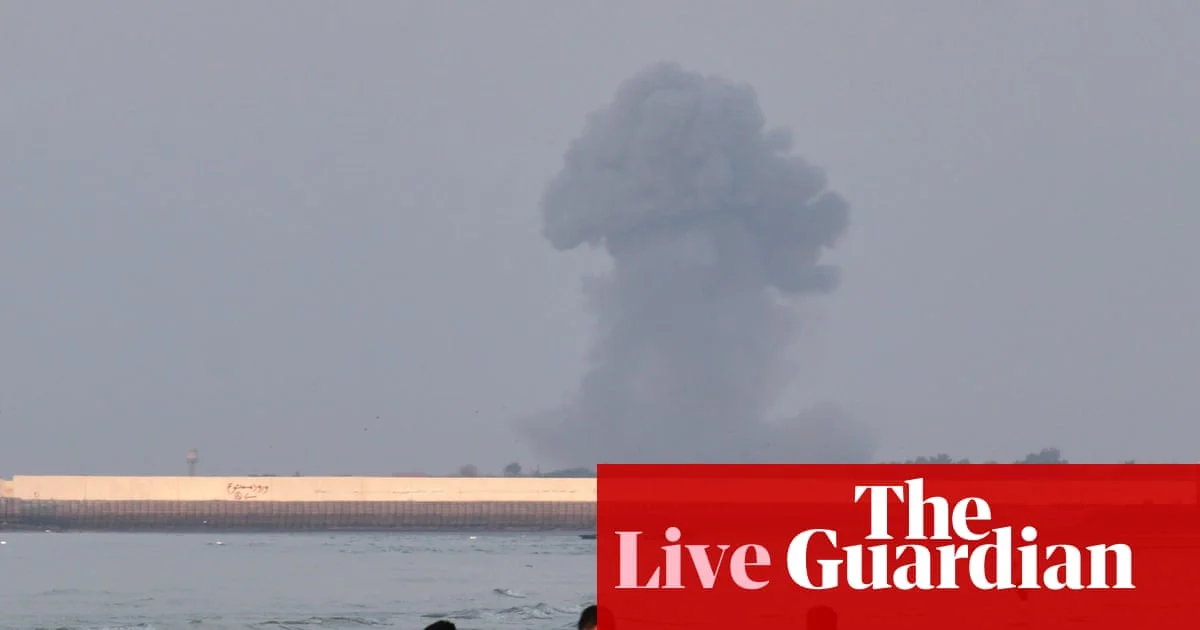
Inside Iran, the rhetoric has reached a fever pitch. Hard-liners are increasingly calling for direct revenge against President Trump and Israeli Prime Minister Benjamin Netanyahu, specifically citing the February assassination of the country’s supreme leader as the primary motivation for continued strikes. The government in Tehran has dismissed recent diplomatic overtures as "futile," choosing instead to double down on regional proxy attacks, including those reported by Bahrain. As the U.S. launches new waves of strikes against Iranian facilities, the cycle of escalation appears to be moving toward a full-scale regional war, with neither side showing a willingness to blink.
Europe’s Stand: Macron Warns of 'Blood' in Defense of Autonomy
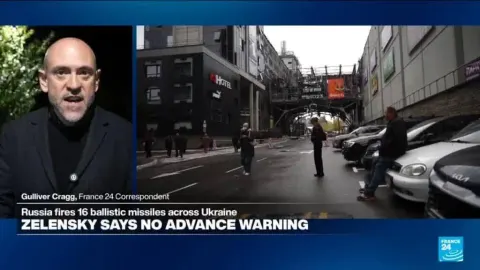
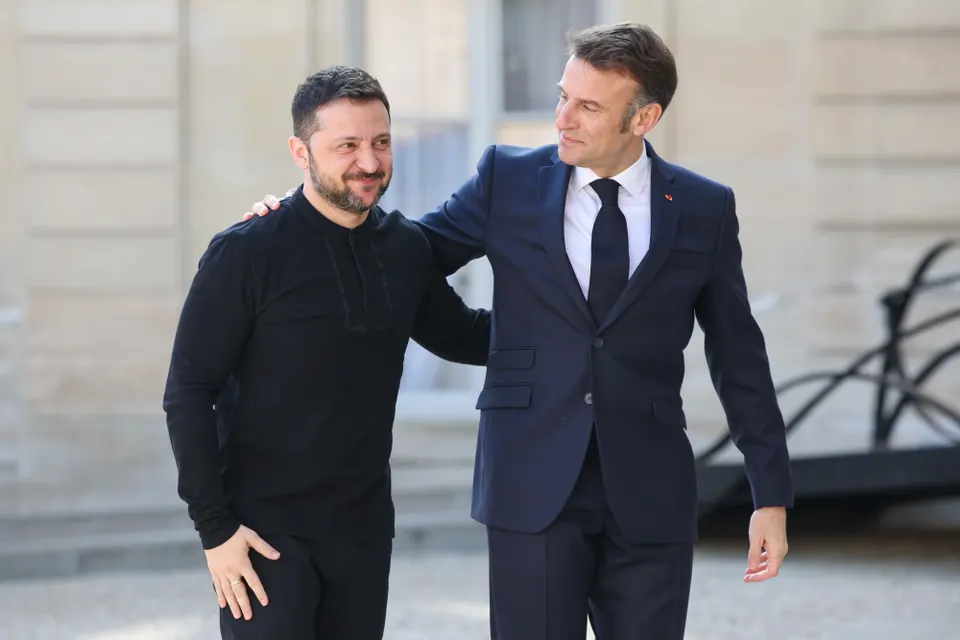
As the Middle East burns, European leaders are beginning to pivot toward a more militarized stance of their own. French President Emmanuel Macron, speaking at a summit of 25 allies in Paris, stated that Europe must be prepared to defend its interests "with blood, if necessary." While his comments were primarily directed at the Russian threat in Ukraine—where Kyiv is presenting a new anti-ballistic program—the subtext was clear: Europe can no longer rely solely on the American security umbrella, especially when U.S. policy in the Middle East is creating such massive economic volatility. Macron’s "coalition of the willing" seeks to establish a more autonomous European defense framework that can withstand the shocks of a fractured global order.
This shift in European sentiment marks a historic turning point. For decades, the EU has acted as a moderating force in the Iran-U.S. standoff, but the combination of the Hormuz blockade and the ongoing war in Ukraine has forced a hardening of positions. As Russia suspends shipping in the Sea of Azov due to Ukrainian drone strikes, the world is witnessing the simultaneous closing of two of the globe's most vital maritime corridors. For the average reader, this means that the era of cheap, globalized trade is under direct assault, and the costs will likely be felt at the pump and in the supermarket for months to come.
Frequently Asked Questions
Is the 24% 'protection fee' for the Strait of Hormuz legal under international law?
Why did gold prices in Iran drop while the USD exchange rate rose?
How will the UK's terror designation of the IRGC affect trade?
Understanding Geopolitical Chokepoints: The Strait of Hormuz
In the realm of international relations and global economics, a "chokepoint" refers to a narrow geographical passage, such as a strait or canal, that is strategically vital for trade, transportation, and military movements. These points are critical because they concentrate significant volumes of global commerce into a confined area, making them highly vulnerable to disruption. Any interruption at a chokepoint, whether due to political instability, conflict, or the imposition of fees, can have far-reaching consequences for global supply chains, commodity prices, and energy security.
The Strait of Hormuz stands as one of the world's most prominent and critical chokepoints. Located between the Persian Gulf and the Gulf of Oman, it is the only sea passage from the Persian Gulf to the open ocean. Its immense significance stems from the fact that roughly one-third of the world's seaborne oil and a fifth of global oil consumption passes through its narrow waters daily. Major oil-producing nations like Saudi Arabia, Iran, Iraq, Kuwait, Qatar, and the UAE rely on this strait to export their crude oil and liquefied natural gas (LNG) to international markets.
A declaration of guardianship, the imposition of transit fees, or a potential blockade, as hinted in the headline, would directly threaten this vital artery. Such actions could trigger an immediate surge in global oil prices, as markets react to the perceived risk of supply disruption. Beyond oil, the strait's closure or restriction would impact the global economy by increasing shipping costs, delaying goods, and potentially leading to energy shortages in importing nations. The geopolitical implications are equally severe, potentially escalating regional tensions and drawing in international powers committed to safeguarding the freedom of navigation through such critical passages.
Understanding chokepoints like the Strait of Hormuz is essential for comprehending the intricate interplay between geography, economics, and international security. They represent flashpoints where national interests, economic stability, and global peace often converge, making their security and unimpeded operation a constant concern for policymakers worldwide.