Spanish PM Scandal & Hormuz War Re-escalation: Toman Hits 183,000 as Global Energy Costs Surge
بحران سیاسی در اسپانیا و بازگشت جنگ به هرمز؛ دلار ۱۸۳ هزار تومانی و جهش هزینه انرژی در جهان
A corruption conviction for the Spanish Prime Minister’s brother has rocked Madrid, while the collapse of a brief US-Iran ceasefire has sent oil prices above $87 and the Toman to a 183,000 sell rate.
At time of publishing
USD
183,000
Toman
Gold 18K
17.91M
Toman / gram
Bitcoin
$63,869
US Dollar
Tether
182,900
Toman
Political Crisis in Madrid: Spanish PM’s Brother Banned from Office
In a significant blow to the administration of Spanish Prime Minister Pedro Sánchez, a court in the south-western region of Extremadura has handed down a nine-year ban from public office to the Prime Minister’s brother. The conviction stems from administrative misconduct related to his hiring by a socialist-led council nearly a decade ago. While the defendant and the ruling Spanish Socialist Workers’ party (PSOE) have denied any intentional wrongdoing, the verdict has energized the opposition, who are now intensifying their calls for a snap general election. This legal defeat is not an isolated incident but rather the latest in a series of corruption allegations targeting the Prime Minister’s inner circle, threatening the stability of one of the Eurozone's key governments.
For international observers and market participants, this political instability in Spain adds another layer of complexity to European unity. As the Eurozone grapples with fluctuating energy prices and geopolitical shifts, a leadership crisis in Madrid could weaken the bloc’s ability to maintain a cohesive foreign policy. For Iranian readers, the stability of European governments often correlates with the strength of the Euro against the Toman and the continuity of diplomatic channels. In the wake of the news, the Euro sell rate in Tehran stood at 209,550 Toman, reflecting a market that remains sensitive to the domestic health of major European economies.

---
Hormuz War Re-ignites: Ceasefire Collapses as Blockade Looms
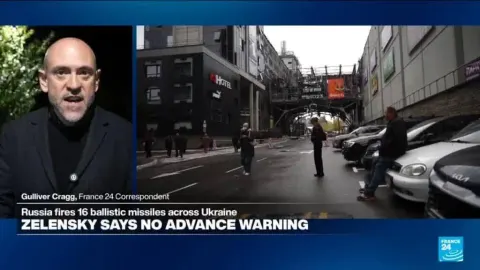
The fragile peace that briefly calmed the Strait of Hormuz has shattered, with the United States and Iran sliding back into open conflict. Reports indicate that the U.S. is planning to reinstate a full blockade on Iranian ports starting Tuesday, a move that has already triggered immediate retaliatory actions. Iran has reportedly targeted two tankers and fired at U.S. military installations, effectively ending the short-lived ceasefire that had provided a temporary respite for global shipping. This escalation has had an immediate and violent impact on energy markets, with oil jumping above $87 per barrel as the risk of a total maritime shutdown in the world's most critical oil artery becomes a reality.
The economic fallout of this re-escalation is being felt most acutely in the United Kingdom and Iran. In London, borrowing costs have surged to a five-month high, with the 10-year government bond yield climbing past five percent. This spike in yields reflects deep market anxiety over the long-term inflationary impact of a sustained conflict in the Middle East. Locally, the Iranian Toman has felt the pressure; the USD sell rate moved from 181,200 to 183,000 (+1.0%) within the last 24 hours. The Emami coin also saw a significant jump, rising from 177,000,000 to 181,000,000 Toman (+2.3%), as domestic investors flee to the safety of gold amid the threat of renewed sanctions and military strikes.

---
The Inflation Paradox: Cooling US Data vs. Rising Energy Costs
Newly released data from the Bureau of Labor Statistics shows that U.S. inflation cooled to an annual rate of 3.5% in June, a decrease that was largely attributed to the temporary reduction in energy prices during the brief US-Iran ceasefire. This cooling of the Consumer Price Index (CPI) initially provided a sense of relief to global markets, suggesting that the aggressive interest rate hikes of the past year were finally stabilizing the economy. However, this progress is now under direct threat. The collapse of the ceasefire and the subsequent jump in oil prices mean that the 0.8% month-over-month decrease in CPI seen in June is likely to be reversed in the coming months as higher transportation and production costs filter back through the global supply chain.
This paradox creates a difficult environment for the Iranian economy. While global inflation might appear to be moderating on paper, the localized "war premium" on energy and basic goods is driving domestic prices higher. Gold 18k/gram in Iran rose from 17,637,010 to 17,914,031 Toman (+1.6%) today, tracking the rise in global gold prices which have reached $4,080.40 per ounce. For the average consumer, the "relief" mentioned in international headlines feels distant, as the immediate reality is one of a weakening currency and rising costs for essential imports. The market remains in a defensive posture, awaiting the next move in the high-stakes standoff in the Persian Gulf.
---
Australia’s Energy Debate: Net Zero and the Cost of Power
Across the globe, another policy battle is highlighting the long-term challenges of energy security. A new report from Australia’s CSIRO (GenCost) has directly contradicted claims by the Coalition and One Nation parties that abandoning net-zero targets would lower electricity prices. The report finds that generation costs are likely to rise after 2030 regardless of the policy path taken, but that nuclear energy—often touted as a cheap alternative—would actually be the most expensive method for generating power. This debate underscores a global reality: the transition to new energy systems is fraught with political and economic hurdles that often clash with short-term populist narratives.
For global investors, the Australian case study serves as a reminder that energy prices are no longer just a matter of supply and demand, but are deeply entwined with national security and climate policy. As Iran faces its own energy infrastructure challenges and the threat of blockades, the global shift away from traditional fossil fuels—or the failure to do so efficiently—will continue to dictate the long-term value of the Toman. The current volatility in the Strait of Hormuz only accelerates the need for countries to find stable, internal energy solutions, though the path to such stability remains expensive and politically contested.
Frequently Asked Questions
Why did the Toman weaken despite cooling US inflation data?
What are the implications of the corruption conviction in Spain for the Euro?
How is the UK economy linked to the conflict in the Strait of Hormuz?
Understanding Geopolitical Risk and its Global Economic Ripple Effects
Geopolitical risk refers to the potential for political events, conflicts, or instability in one region to significantly impact global economic stability. These risks can range from interstate conflicts and civil unrest to policy shifts and terrorism. The headline's mention of a "Hormuz War Re-escalation" immediately flags a major geopolitical flashpoint: the Strait of Hormuz. This narrow waterway, connecting the Persian Gulf to the open ocean, is a critical chokepoint through which a substantial portion of the world's seaborne oil and liquefied natural gas (LNG) passes daily. Any threat to its free passage sends shockwaves through international markets, highlighting the profound interconnectedness of global politics and economics.
When geopolitical tensions escalate, particularly in energy-rich regions, the most immediate and visible impact is often on global energy markets. A potential blockade or disruption in the Strait of Hormuz, for instance, would severely constrain the supply of crude oil and natural gas to major consuming nations. This sudden reduction in supply, against a backdrop of inelastic demand, inevitably leads to a sharp surge in energy prices, as indicated by the "Global Energy Costs Surge" in the headline. Such price hikes are not merely an inconvenience; they represent a significant cost increase for industries reliant on energy, from manufacturing and transportation to agriculture.
The ripple effect of surging energy costs extends directly to inflation, a general increase in prices and fall in the purchasing value of money. As businesses face higher input costs due to expensive oil and gas, they often pass these costs on to consumers in the form of higher prices for goods and services. This contributes to broader inflationary pressures, as seen in the keyword "US inflation CPI June 2026." Central banks typically respond to persistent inflation by raising interest rates, which can increase borrowing costs for governments and businesses alike, as hinted by "UK borrowing costs Iran war." In countries with direct exposure to the conflict or high reliance on energy imports, like Iran in the context of the Toman's devaluation, these inflationary pressures can be even more acute, leading to significant currency depreciation.
Understanding geopolitical risk is crucial for individuals, businesses, and policymakers alike. It underscores how events far removed from one's immediate surroundings can directly influence daily expenses, investment decisions, and national economic policies. The interconnectedness of global supply chains, energy markets, and financial systems means that a conflict in a vital shipping lane can quickly translate into higher petrol prices, increased grocery bills, and economic uncertainty worldwide.