AG Nomination Sparks Outcry as US Fuel Prices Surge Amid Iran Conflict; Tehran Accuses US of 'Barbaric' Strikes
نامزد دادستان کل آمریکا با انتقاد روبرو شد؛ افزایش قیمت سوخت در آمریکا همزمان با تشدید درگیری با ایران؛ تهران آمریکا را به حملات 'بربرگونه' متهم کرد
The nomination of Todd Blanche for Attorney General has drawn sharp criticism, with a former pardon attorney warning against further degradation of the justice system. This controversy unfolds as US fuel prices climb, directly linked to the ongoing conflict with Iran. Meanwhile, tensions in the Middle East escalate dramatically, with both the US and Iran intensifying attacks and mutual accusations, casting serious doubt on recent peace efforts.
At time of publishing
USD
187,700
Toman
Gold 18K
18.27M
Toman / gram
Bitcoin
$64,533
US Dollar
Tether
187,975
Toman
AG Nomination Under Fire as US Fuel Prices Reflect Iran War Costs
The nomination of Todd Blanche for Attorney General has ignited a firestorm of criticism, with former pardon attorney Liz Oyer publicly slamming his testimony to the Senate judiciary committee. Oyer, who claims she lost her job for refusing to "rubber stamp a political favor for a friend of the president," warned against further degrading the US justice system. This high-profile political battle underscores deep divisions within the American political landscape, highlighting concerns about the integrity and independence of key government appointments.
This domestic political drama plays out against a backdrop of rising economic strain, directly tied to the geopolitical climate. The average price of diesel fuel in the US has once again surged past $5 a gallon, while gas prices are nearing $4, returning to their pre-June highs before the memorandum of understanding between the US and Iran. The AAA attributes these increases to the "costs of the Iran war and the unpredictable rhetoric from both Washington and Tehran," serving as a stark reminder to consumers and truckers of the tangible economic consequences of ongoing regional instability and political maneuvering.
US-Iran Conflict Escalates: Fresh Strikes Near Qeshm Island and Mutual Accusations
The Middle East is bracing for a potential all-out war as the conflict between the US and Iran enters its sixth consecutive day of intense back-and-forth attacks. The US has reportedly intensified its assaults, hitting targets near Tehran and striking a ship it accused of attempting to breach its blockade. In retaliation, Iran has fired missiles and drones at US allies in the region, signaling a dangerous escalation that threatens to unravel the fragile interim peace deal reached just last month.
Iranian news agencies have reported fresh strikes near Qeshm Island, located in the strategically vital Strait of Hormuz, further exacerbating tensions. Tehran has vehemently accused the US of a "barbaric" hospital attack in Ahvaz, claiming a children's cancer hospital had to be evacuated, though independent verification remains pending. This cycle of intensification and accusation casts a long shadow over the region, directly impacting shipping lanes, oil markets, and the daily lives of millions, including Iranian citizens who face heightened uncertainty regarding regional stability and economic prospects.
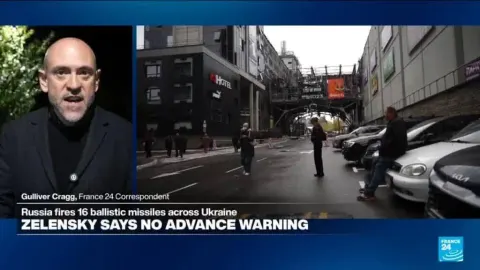
Zelensky's Defense Minister Ouster Sparks Widespread Protests in Ukraine
Ukrainian President Volodymyr Zelensky's decision to remove popular defense minister Mykhailo Fedorov has ignited widespread protests across Ukrainian cities, signaling significant internal discord within the country's leadership amidst its ongoing war. Fedorov, who has been a vocal advocate for modernizing the Ukrainian armed forces, publicly defended his efforts following his dismissal. The move has reportedly stemmed from an apparent rift between Fedorov and Commander-in-Chief Oleksandr Syrskyi, suggesting deeper power struggles within the military and political establishment.
This unexpected shake-up comes at a critical juncture for Ukraine, which relies heavily on a unified front to prosecute its defense against Russian aggression. The protests highlight public dissatisfaction and concern over the stability of the country's leadership, potentially impacting troop morale and international confidence in Ukraine's ability to manage its war effort effectively. Such internal political turmoil could have broader geopolitical implications, influencing the dynamics of international support and the overall trajectory of the conflict.
Argentina Revives Falklands Dispute, Iran Markets Show Mixed Signals
Decades after the bloody 1982 conflict, the dispute over the Falkland Islands (Malvinas) has resurfaced in a symbolic gesture, with Argentina holding up a banner on defeating England, reigniting nationalist sentiments. The long-standing territorial claim continues to suffuse matches between England and Argentina, serving as a powerful reminder of historical grievances and the enduring nature of national identity and sovereignty disputes. While seemingly a cultural or sports-related event, such displays can reflect underlying geopolitical tensions that occasionally flare up, shaping international relations in subtle but persistent ways.
Meanwhile, the Iranian market showed mixed signals in the last 24 hours amid regional instability. The USD/IRR exchange rate moved from 188,300 to 187,700, reflecting a slight decrease of -0.3%. Gold prices also saw a downturn, with Gold 18k/gram falling from 18,514,243 to 18,271,850 Toman, a decline of -1.3%. In contrast, the Emami coin remained perfectly stable, holding at 185,000,000 Toman with a +0.0% change. These fluctuations underscore the sensitivity of local markets to both internal and external pressures, with the ongoing US-Iran conflict and broader geopolitical developments creating an environment of cautious trading and investment.

Frequently Asked Questions
Why is Todd Blanche's nomination for Attorney General causing controversy, and how is it linked to the Iran conflict?
What are the latest developments in the US-Iran conflict, and what do they mean for regional stability?
How has the Ukrainian political landscape changed with the removal of Defense Minister Fedorov?
What is the significance of Argentina reviving the Falklands dispute, and how does it relate to current global events?
What were the key movements in the Iranian market in the last 24 hours, and what factors are influencing them?
The Strait of Hormuz: Global Oil's Most Critical Chokepoint
The Strait of Hormuz is a narrow, strategically vital waterway connecting the Persian Gulf to the Arabian Sea and the broader Indian Ocean. It is arguably the most important oil chokepoint in the world, a maritime passage through which a significant portion of the global oil supply travels daily. Flanked by Iran to the north and Oman's Musandam Peninsula to the south, its strategic geography makes it indispensable for energy transit from the Middle East.
What makes the Strait of Hormuz so crucial is the sheer volume of energy commodities that pass through it. Approximately one-fifth of the world's total petroleum consumption and one-third of the world's liquefied natural gas (LNG) moves through this strait. Major oil-producing nations like Saudi Arabia, Iran, the UAE, Kuwait, Iraq, and Qatar depend almost entirely on this passage to export their crude oil and natural gas to international markets, including critical consumers in Asia, Europe, and North America.
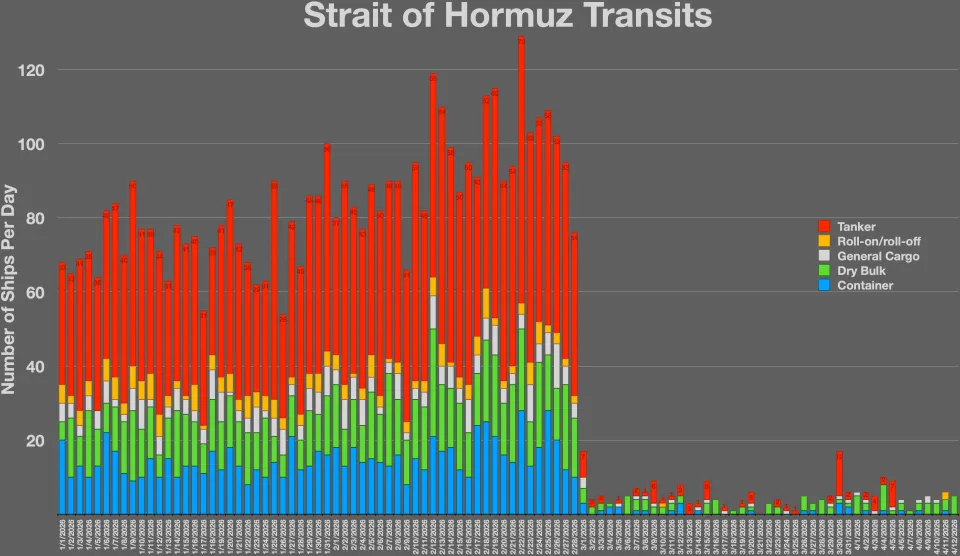
Given its narrowness—at its narrowest point, the shipping lanes are only about two miles wide in each direction—the Strait of Hormuz is highly vulnerable to disruption. Geopolitical tensions, military conflicts, or even threats of blockades in this region can immediately send shockwaves through global energy markets. Any perceived threat to the free flow of oil through the Strait can lead to sharp spikes in crude oil prices, impacting everything from gasoline at the pump in the US to international trade and economic stability worldwide.
Understanding the Strait of Hormuz's role as a critical chokepoint is essential for comprehending the intricate relationship between geopolitics, energy security, and global economic stability. Its continued open and secure passage is paramount for the world's energy supply chain, making events in the Persian Gulf region, such as the Iran conflict mentioned in the headline, directly relevant to the price of fuel far beyond its immediate vicinity.