Tehran Warns Europe Over US 'Aggression' as Trump Teleprompter Scandal Rocks Prediction Markets
هشدار تند تهران به اروپا در پی تهدیدات آمریکا؛ جنجال «تلهپرومپتر» ترامپ در بازارهای پیشبینی
Iran's envoy to Germany warns that European silence on US threats will backfire, while a bizarre insider trading scandal involving Donald Trump's teleprompter operator hits the Kalshi platform. Meanwhile, Bitcoin struggles at key resistance as the Toman sees a marginal gain.
At time of publishing
USD
188,000
Toman
Gold 18K
18.28M
Toman / gram
Bitcoin
$64,206
US Dollar
Tether
188,648
Toman
Tehran’s Warning to Europe: The Cost of Silence
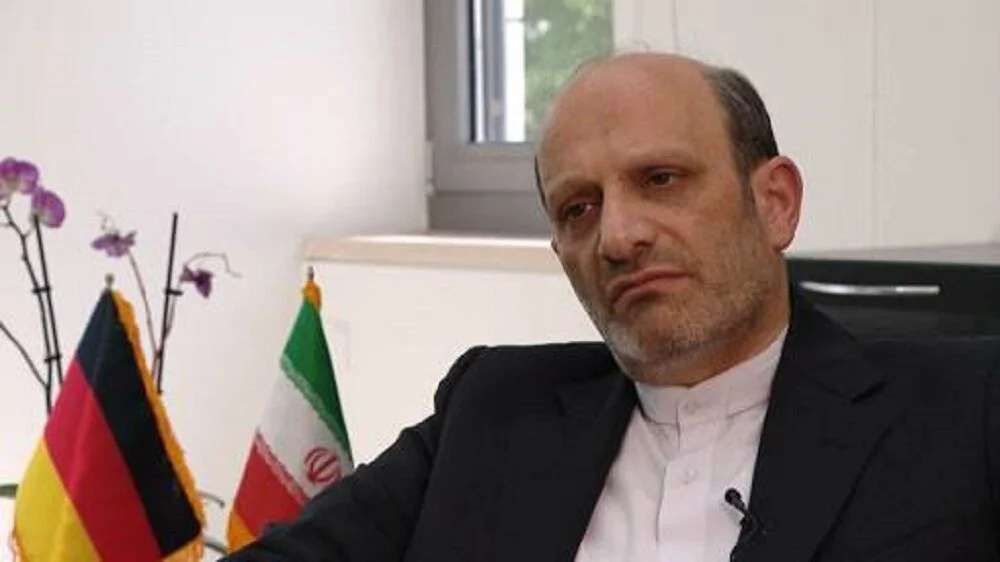
In a sharp diplomatic escalation, the Iranian ambassador to Germany has issued a stern warning to European capitals regarding their perceived passivity toward United States military posturing. According to reports from Iranian state media (IRNA), the ambassador criticized Europe’s silence concerning overt threats made by the US President against Iranian civilian infrastructure. The diplomat argued that by failing to condemn what Tehran describes as "Washington's aggression," European nations are setting a dangerous precedent that will ultimately destabilize their own security and economic interests. This rhetoric comes at a time when regional tensions are at a fever pitch, and Tehran appears to be attempting to drive a strategic wedge between the EU and its transatlantic ally.
From a geopolitical perspective, this warning signals Iran’s deep frustration with the current sanctions regime and the lack of European diplomatic cover. By framing the issue as one of "appeasement," Tehran is invoking historical parallels to pressure Germany and its neighbors into taking a more independent stance. For the average Iranian citizen, this high-stakes diplomacy is a harbinger of continued economic isolation. As long as the rhetoric remains this combative, the likelihood of a return to stable trade relations remains slim, keeping the pressure on the Toman and domestic inflation.

The Teleprompter Scandal: Insider Trading in the Age of Prediction Markets
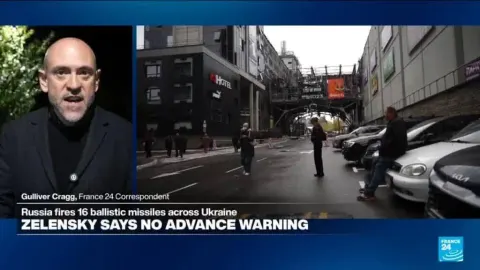
In one of the more bizarre intersections of technology and high-level politics, the prediction market platform Kalshi has reportedly uncovered a sophisticated insider trading scheme involving Donald Trump’s teleprompter operator. Federal investigators, as reported by ABC News, believe that Gabriel Perez—who has managed the President’s scrolling speeches since 2016—used his advance knowledge of specific speech phrases to place lucrative bets on the platform. Kalshi, which allows users to bet on real-world outcomes and specific events, reportedly saw suspicious activity that led back to Perez, who is accused of netting nearly $100,000 by knowing exactly what the President would say before he said it.
This scandal highlights the growing influence and inherent risks of prediction markets in the 2026 political landscape. While these platforms are often touted as more accurate than traditional polling, they are clearly vulnerable to those with access to non-public information. The breach of trust at the highest levels of the administration’s communications team raises serious questions about security protocols. For tech investors and political analysts, it serves as a wake-up call: as markets move closer to the source of information, the potential for manipulation increases exponentially, requiring more robust oversight and perhaps new federal regulations specifically targeting "information arbitrage" in political betting.

Market Stagnation: Bitcoin Hits a Ceiling as Toman Gains Ground
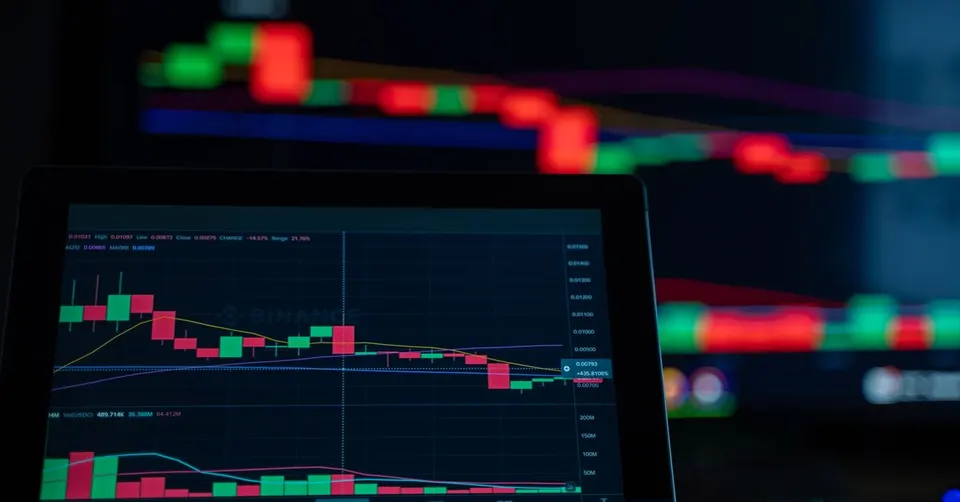
Global financial markets are showing signs of exhaustion as the week draws to a close. Bitcoin has found itself stalled just below a critical resistance level of $65,556, currently trading at $64,206. Despite encouraging signs noted by institutional giants like JPMorgan—who pointed toward increased cash reserves in major strategies—the premier cryptocurrency lacks the momentum to break through. This stagnation is partly fueled by political uncertainty in both the US and UK, where "Continuity Keir" policies under Andy Burnham and fractures within the US Democratic party over Middle East policy are keeping investors in a defensive posture.
In the domestic Iranian market, we are seeing a rare moment of relative stability despite the aggressive diplomatic rhetoric. The USD/IRR exchange rate moved from 188,300 to 188,000, representing a marginal gain of 0.2% for the Toman. Gold, however, saw a more pronounced decline, with 18k gold dropping from 18,514,243 to 18,283,392 Toman per gram (-1.2%). This divergence suggests that while the currency is holding firm for the moment, the global cooling of gold prices is being reflected locally. For Iranian investors, the message is one of caution: while the Toman isn't currently in freefall, the underlying geopolitical risks remain a powder keg that could ignite at any moment.
Frequently Asked Questions
Why is the Iranian ambassador warning Europe specifically about 'appeasement'?
How did the Kalshi platform catch the teleprompter operator's insider trading?
What is the significance of Bitcoin's $65,556 resistance level?
Understanding Prediction Markets and Insider Trading Risks
Prediction markets are exchange‑like platforms where participants trade contracts whose payoff depends on the outcome of future events, such as elections, economic indicators, or commodity prices. By aggregating diverse information, these markets often generate surprisingly accurate probability estimates, a phenomenon known as the "wisdom of crowds." For example, the Iowa Electronic Markets correctly forecasted U.S. presidential election results for decades before the market was shut down in 2002.
The rise of regulated U.S. platforms like Kalshi has brought prediction markets into the mainstream financial system. Kalshi offers contracts on topics ranging from macroeconomic data releases to geopolitical events, allowing traders to hedge or speculate. However, because the contracts are tied to real‑world outcomes, they are vulnerable to insider trading—trading on non‑public information that could affect the event’s result. In early 2026, the U.S. Securities and Exchange Commission (SEC) charged Kalshi and several of its traders with insider trading after a leak about a high‑profile political scandal (the Trump teleprompter incident) was allegedly used to profit from related contracts.
Insider trading in prediction markets raises unique regulatory challenges. Unlike traditional securities, the underlying events are often public and unpredictable, making it harder to define what constitutes material non‑public information. Regulators must balance the market’s informational value against the potential for abuse, especially when political or geopolitical events—such as heightened U.S.-Iran tensions—are involved. Robust surveillance systems, mandatory reporting of large positions, and clear rules on information disclosure are essential to maintain market integrity.
For traders, understanding the legal landscape is crucial. Engaging in prediction market trading without proper safeguards can expose individuals and firms to severe penalties, including fines and bans. Moreover, the volatility inherent in political events—like the Trump teleprompter scandal—can amplify price swings, making risk management and ethical compliance even more important.
Overall, prediction markets offer a powerful tool for aggregating dispersed information, but they also demand vigilant oversight to prevent insider exploitation. As these platforms expand, both participants and regulators must stay informed about the evolving legal frameworks and best practices.