Regional Escalation: Drones Strike US Bases in Kuwait as Tehran Markets Diverge on Gold and Coins
تنش در منطقه: حمله پهپادی به پایگاههای آمریکا در کویت و نوسان متناقض طلا و سکه در بازار تهران
Regional tensions have reached a new flashpoint as Iranian state media reports drone strikes on US bases in Kuwait, following a deadly missile attack in Jordan. Meanwhile, the Tehran market is showing a unique divergence: while raw 18k gold prices have dipped, the Emami coin has surged, reflecting a complex shift in local investor sentiment.
At time of publishing
USD
195,800
Toman
Gold 18K
18.88M
Toman / gram
Bitcoin
$64,693
US Dollar
Tether
195,774
Toman
Kinetic Escalation: Drones Target US Positions in Kuwait and Jordan
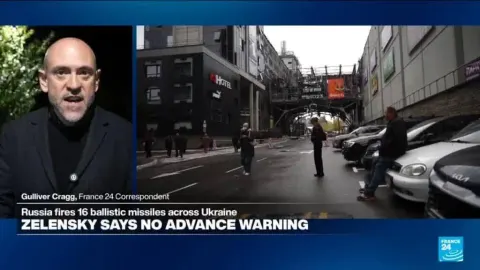
The geopolitical landscape in the Middle East has shifted into a more volatile phase this Sunday morning. According to reports from IRNA, the Iranian Army has launched what it describes as the sixteenth phase of its regional operations, allegedly targeting the Ali Al-Salem airbase and Camp Udairi in Kuwait using one-way attack drones. This follows a confirmed and highly lethal incident at Jordan’s Muwaffaq Salti Airbase, where an Iranian missile strike resulted in the deaths of two US service members. These actions appear to be a direct response to a series of US strikes in Iran’s Hormozgan province, specifically targeting the Sirik and Hajiabad areas, which Washington claimed were retaliatory measures for previous troop losses.
For the average observer, this cycle of 'tit-for-tat' strikes indicates a breakdown in the informal de-escalation channels that had previously kept the conflict contained. The involvement of the regular Iranian Army, rather than just proxy forces or the IRGC, signals a potential shift in Tehran's official engagement strategy. While the US military has yet to provide a full damage assessment for the Kuwaiti strikes, the psychological impact on regional markets is already palpable. Traders are closely watching the Strait of Hormuz and surrounding logistics hubs, as any disruption to energy or commercial shipping would immediately send shockwaves through the global economy and the domestic Toman exchange rate.

Market Divergence: Gold Dips While Coins Rally in Tehran
Despite the drums of war beating louder in the region, the Tehran market opened with a surprising lack of uniformity. The US Dollar remained essentially flat at 195,800 Toman, showing no immediate panic buying at the 10:00 AM mark. However, the internal dynamics of the gold market revealed a curious split. Gold 18k per gram moved from 19,045,200 to 18,883,604 Toman, marking a -0.8% decrease. Conversely, the Emami coin rose from 190,000,000 to 192,500,000 Toman, a +1.3% increase. This divergence typically suggests that while international gold prices (currently at $4,019.30/oz) or local liquidity may be softening the price of raw gold, the demand for minted coins as a 'safe haven' hedge against regional instability remains high.
This 'bubble' in the coin market is a classic indicator of local anxiety. Investors often prefer the liquidity and standardized value of the Emami coin when they anticipate sudden geopolitical shifts, even if the underlying gold value doesn't justify the premium. Meanwhile, in the crypto space, Bitcoin is attempting to recover toward the $65,000 level after a brief slide. Currently trading at $64,693, BTC remains a secondary consideration for most Iranian retail investors compared to the immediate physical security of gold and hard currency during periods of military escalation.

The Ideological Front and Global Policy Shifts
Beyond the kinetic conflict, a significant ideological narrative is being pushed through state-affiliated channels. Lebanese writer Roni Alpha recently emphasized that his support for Tehran is rooted in 'Christian values' of justice and resistance to oppression, rather than sectarian politics. This is a calculated move by regional thinkers to frame the current conflict not as a Shia-Sunni or Iran-West struggle, but as a broader moral crusade. For the Iranian public, this rhetoric is designed to bolster domestic morale and justify the economic costs of regional military involvement by framing it as a defense of universal human dignity.
On the global stage, other forms of control are being tested. In Victoria, Australia, Premier Jacinta Allan has announced new 'demasking' powers that could force social media and AI platforms to reveal the identities of anonymous users. While framed as a measure to protect children from vilification, civil liberties groups are concerned about the precedent this sets for global digital privacy. In a world where geopolitical tensions are high, the ability of governments to identify and track anonymous dissenters or even foreign influencers is becoming a central tool of statecraft. Whether in the deserts of Kuwait or the legislative chambers of Melbourne, the theme of 2026 continues to be one of increasing state visibility and intervention.
Tokyo’s 'Shorts' Debate and the Future of Work
In a lighter but no less telling development, the Tokyo metropolitan government has sparked a nationwide debate by allowing its employees to wear shorts during the summer heatwave. While it sounds trivial, in the rigid corporate culture of Japan, this is a revolutionary shift in etiquette. It highlights the growing pressure that climate change—and the resulting extreme heat—is placing on traditional social norms. As Europe also grapples with a heatwave that is turning into an energy crisis by drying up key river routes for fuel delivery, the world is finding that it must adapt its infrastructure and its culture to a much harsher environment.
Frequently Asked Questions
Why did the price of the Emami coin rise while 18k gold fell?
What is the significance of the Iranian Army targeting bases in Kuwait?
How do the new social media laws in Victoria, Australia, affect global users?
Why Gold Shines During Geopolitical Turmoil
Gold has long been regarded as a safe‑haven asset—a store of value that investors turn to when political or economic uncertainty spikes. Unlike fiat currencies, which can be devalued by inflation or policy shifts, gold’s supply is physically limited and its value is recognized worldwide. When events such as a drone strike on a U.S. base in Kuwait or heightened tensions in the Middle East occur, investors often scramble for assets that are less likely to be directly affected by the fallout, and gold typically benefits.
The mechanism behind this flight to safety is straightforward: heightened geopolitical risk raises the perceived probability of currency devaluation, capital controls, or supply chain disruptions. As a result, demand for gold rises, pushing its price up. In Tehran, for instance, the local gold market can diverge sharply from global benchmarks when sanctions or regional conflicts limit access to foreign currency, making gold a preferred hedge for both households and traders.
Gold’s role is also amplified by its inverse correlation with the U.S. dollar. When a crisis threatens the dollar’s stability—perhaps through a sudden surge in defense spending or a spike in oil prices—gold often gains as investors seek an alternative store of wealth. This dynamic explains why gold prices in Iran and other emerging markets can rally even if the global price moves modestly.
Historically, major geopolitical shocks—such as the 2008 financial crisis, the 2011 Arab Spring, and more recent Middle‑East flare‑ups—have been followed by noticeable gold price spikes. The pattern reinforces the perception that gold is a reliable insurance policy against the unknown, a perception that remains strong among both retail and institutional investors.
Understanding gold’s safe‑haven appeal helps explain why Tehran’s market updates frequently highlight gold price movements alongside local coin prices like the Emami coin. When regional tensions rise, the gold market often serves as a barometer of investor sentiment, signaling how much fear is priced into the economy.