Tehran Demands War Reparations as Toman Hits 190k; Nuclear Barges and Aviation Crisis Shake Global Markets
درخواست غرامت جنگی تهران همزمان با عبور دلار از ۱۹۰ هزار تومان؛ بحران سوخت و ظهور نیروگاههای هستهای شناور
As the US-Iran conflict intensifies, legal experts in Tehran are calling for reparations under the Geneva Conventions while the USD/IRR exchange rate surges past 190,000. Meanwhile, the global energy crisis is devastating airline profits and sparking a new race for portable nuclear power.
At time of publishing
USD
190,800
Toman
Gold 18K
18.53M
Toman / gram
Bitcoin
$66,400
US Dollar
Tether
190,646.788
Toman
Legal Battle Escalates as Toman Breaches 190,000 Threshold
In a significant legal move amid the ongoing regional conflict, international law experts in Tehran are now asserting that host countries of US military bases have effectively become 'war parties.' According to reports from IRNA, legal scholars are arguing that the use of foreign soil to launch strikes against Iranian civilian infrastructure and educational facilities constitutes a clear violation of the Geneva Conventions. This rhetoric suggests that Iran is preparing a massive legal framework to seek reparations for damages incurred during the US military campaign, signaling that the conflict is moving into a complex phase of international litigation and diplomatic pressure.
This geopolitical uncertainty is manifesting directly in the domestic markets. The Iranian Toman has seen a sharp decline today, with the USD sell rate moving from 188,500 to 190,800, a 1.2% increase in just 24 hours. The psychological barrier of 190,000 has been breached as citizens and traders rush toward hard currency and gold to hedge against the risk of further escalation. Gold has followed suit, with 18k gold per gram rising 2.0% to reach 18,530,403 Toman, reflecting a broader 'flight to safety' sentiment that is gripping the Iranian economy.

Global Aviation and Energy Markets Under Siege
The economic ripples of the Middle East war are now hitting the global aviation sector with devastating force. Ryanair, Europe’s largest budget carrier, reported a staggering 36% drop in profits as its unhedged jet fuel costs more than doubled. The airline revealed that the price for a portion of its fuel supply surged to $150 per barrel, driven by the volatility in the Persian Gulf. This serves as a stark warning to the global economy: the 'crack spread'—the difference between crude oil and refined product prices—is widening, meaning consumers will feel the pinch at the pump and in airfares far more severely than the raw price of Brent crude might suggest.
Adding fuel to the fire, a Kuwaiti-owned oil products tanker, the Kaifan, was reportedly struck by a projectile in the Strait of Hormuz near Oman today. This incident sent Brent crude prices back above the $90 mark, as insurance premiums for maritime shipping in the region skyrocket. The strike near Limah, Oman, underscores the extreme vulnerability of global energy arteries. For Iranian readers, this translates to a feedback loop where regional instability drives up global energy costs, which in turn fuels domestic inflation and puts further downward pressure on the Toman as the cost of imported goods rises.

The Nuclear Pivot: Portable Power for a War-Torn Grid
As traditional energy infrastructure becomes a target in global conflicts, the technology sector is pivoting toward radical new solutions for power resilience. Bluecore Energy, a maritime nuclear startup, has successfully raised $10 million in pre-seed funding to develop portable nuclear reactors mounted on barges. This technology aims to provide 'plug-and-play' carbon-free power to coastal cities or industrial hubs that have been disconnected from the main grid due to war or natural disasters. The investment, led by Slauson & Co., highlights a growing belief among venture capitalists that the future of energy must be decentralized and mobile to survive the geopolitical volatility of the late 2020s.
For the broader market, the rise of portable nuclear energy represents a shift in how we perceive national security and infrastructure. If successful, these 'power barges' could mitigate the impact of strikes on traditional power plants, which have been a recurring theme in recent conflicts. However, the deployment of nuclear material on floating platforms in international waters also raises significant regulatory and safety questions. While Alphabet and other tech giants pour billions into land-based data centers for AI, startups like Bluecore are betting that the real bottleneck for the next decade won't be software, but the physical ability to generate and protect energy in an increasingly unstable world.

Civil Rights and the Domestic Fallout of Foreign Policy
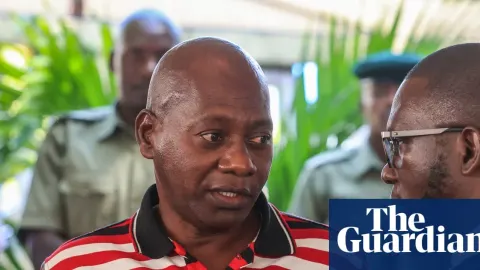
The human cost of the current geopolitical climate is also being felt within the United States, where domestic tensions over Middle Eastern policy are boiling over. Salah Sarsour, the president of Wisconsin’s largest mosque, recently spoke out after spending over 80 days in ICE detention. Sarsour described his treatment as 'dehumanizing,' comparing it to his experiences in Israeli military prisons decades ago. His case has become a flashpoint for civil rights groups who argue that the US government is increasingly using immigration enforcement as a tool of political pressure during times of international crisis.
This story matters to the global audience because it illustrates the internal friction within the US as it manages a multi-front conflict. As the Biden-Trump transition era continues to reshape American policy, the treatment of religious and community leaders at home often mirrors the intensity of the administration's actions abroad. For investors and observers, these domestic social fractures are a key indicator of US political stability—or the lack thereof—which ultimately influences the strength of the US Dollar and the country's long-term capacity to sustain military commitments in the Middle East.
Frequently Asked Questions
Why did the USD/IRR exchange rate break the 190,000 mark today?
What are the legal grounds for Iran's reparation claims against US base hosts?
How is the Middle East conflict affecting global airline profits?
Understanding War Reparations: History, Law, and Economic Impact
War reparations refer to payments or acts of restitution made by a defeated party to the victors or victims of a war. These payments are intended to compensate for damages, losses, and suffering incurred during conflict, and can take various forms, including monetary compensation, transfer of goods, services, or territory. The underlying principle is often to hold the aggressor accountable for the destruction and human cost of war, and to aid in the reconstruction and recovery of the affected nations and populations.
Historically, war reparations have been a significant feature of peace treaties, most notably after World War I with the Treaty of Versailles, which imposed substantial reparations on Germany. These demands were a major point of contention and are often cited as a contributing factor to economic instability and political resentment in the interwar period. Following World War II, a different approach was largely adopted, focusing more on reconstruction aid and less on punitive financial reparations, though some restitution for specific damages (like the Holocaust) was pursued. The legal basis for reparations today often stems from international law, including principles of state responsibility for internationally wrongful acts and, in some cases, violations of international humanitarian law, such as those outlined in the Geneva Conventions.
The economic and political implications of war reparations are profound. For the paying nation, they can impose immense financial burdens, potentially crippling their economy and hindering their ability to recover and rebuild. This can lead to hyperinflation, unemployment, and social unrest, as seen in Germany post-WWI. For the receiving nations, reparations can provide vital funds for reconstruction and victim compensation, but they can also prolong animosity and complicate efforts towards lasting peace and reconciliation. The challenge lies in balancing justice for victims with the practical economic realities and the goal of fostering future stability.
Modern discussions around reparations also extend beyond traditional state-on-state conflicts to include claims for historical injustices, colonial exploitation, or damages resulting from specific violations of international law. The complexity of determining responsibility, quantifying damages, and ensuring enforceability without a clear victor-vanquished scenario makes the application of war reparations a highly intricate and often contentious aspect of international relations and justice.