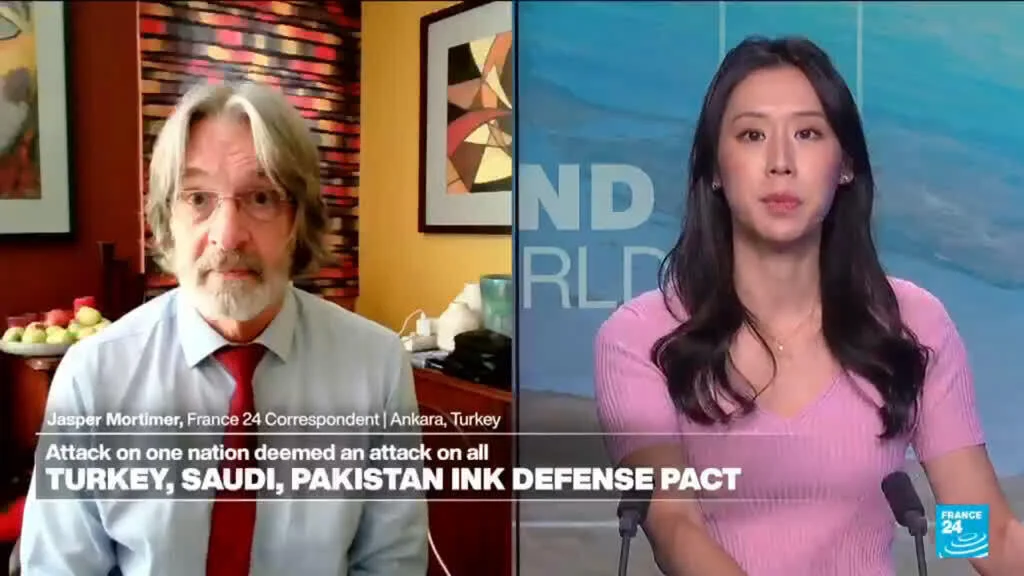
Triple Defense Pact: Turkey, Saudi, and Pakistan Forge Alliance as Gold Surges 2% Amid Regional Shift
اتحاد نظامی سهجانبه ترکیه، عربستان و پاکستان؛ جهش ۲ درصدی قیمت طلا در پی بازآرایی قدرت منطقهای
Turkey, Saudi Arabia, and Pakistan have signed a mutual defense treaty, declaring an attack on one as an attack on all, while gold prices in Tehran jump 2% in response to heightened geopolitical risks.
At time of publishing
USD
186,700
Toman
Gold 18K
18.89M
Toman / gram
Bitcoin
$64,966
US Dollar
Tether
186,341
Toman
The Triple Alliance: A New Security Architecture in the Middle East
In a move that fundamentally reshapes the geopolitical landscape of Western Asia, Turkey, Saudi Arabia, and Pakistan have officially signed a mutual defense agreement. This pact, reported by France 24, establishes a collective security framework where an armed attack on any one of the three nations is treated as an attack on all. For Saudi Arabia, this represents a decisive step toward diversifying its security partnerships beyond traditional Western alliances, particularly following persistent threats to its critical infrastructure. The timing is critical, as regional tensions remain elevated, and the agreement signals the emergence of a powerful new bloc that could challenge existing spheres of influence.
For the Iranian market, this development is more than just a diplomatic headline. The creation of a unified military front among three of Iran's most significant neighbors—two of which are major Sunni powers and one a nuclear-armed state—introduces a new layer of strategic complexity. Markets reacted almost immediately to the heightened sense of regional risk. In Tehran, the price of 18k gold surged from 18,525,786 to 18,888,221 Toman, a significant 2.0% increase within 24 hours. This flight to safety reflects a growing unease among local investors regarding the long-term stability of the current regional order and the potential for new forms of economic or military containment.

AI Stocks Defy Volatility as Gold Hits Monthly Highs
While geopolitical tremors shook the Middle East, global markets saw a surprising recovery in the technology sector. After a period of intense selling in semiconductor and AI-related stocks, two major AI names staged a significant bounce today. This recovery was bolstered by new economic data from the United States; specifically, lower-than-expected non-farm payrolls have cooled expectations for aggressive interest rate hikes by the Federal Reserve. This "bad news is good news" dynamic for risk assets allowed Bitcoin to tag a monthly high of $65,300, even as the broader crypto market continues to navigate regulatory uncertainty.
In the domestic Iranian market, the currency showed a slight divergence from the gold rally. The USD sell rate moved from 187,000 to 186,700 Toman, a marginal 0.2% decrease. This suggests that while gold is pricing in regional war risks, the currency market remains tightly managed or perhaps temporarily exhausted after recent fluctuations. However, with the New York Fed reporting little change in long-term inflation expectations, the global backdrop remains one of cautious optimism for tech investors, even as physical assets like gold continue to serve as the primary hedge against regional instability.
Global Instability: From Thailand’s Tragedy to Washington’s Legal Shift
The sense of global volatility was further amplified by a horrific mass shooting in Thailand, where a 14-year-old gunman killed seven people, including five teachers at a school. Such events, while geographically distant, contribute to a general atmosphere of unpredictability that often rattles global sentiment. Meanwhile, in the United States, the political landscape reached a milestone as Todd Blanche, Donald Trump’s former personal lawyer, appeared to clear the final hurdles for confirmation as Attorney General. This move signals a significant consolidation of power within the U.S. executive branch, with major implications for future trade policies and international legal cooperation.
In the consumer tech space, Samsung launched its Galaxy Z Fold 8 Ultra, a device that aims to refine the foldable market rather than reinvent it. While the tech world remains focused on these incremental hardware updates, the real story for many remains the underlying economic pressures. From the $5 per barrel "detour" Saudi Arabia is taking to avoid Red Sea risks to the rising costs of back-to-school shopping in the U.S., the global economy is increasingly defined by the cost of avoiding conflict. For the Iranian observer, these stories collectively point to a world where security—whether digital, physical, or financial—is becoming the most expensive and sought-after commodity of 2026.
Watch
Turkey, Saudi, Pakistan: Attack on one nation deemed an attack on all • FRANCE 24 English
FRANCE 24 English
Frequently Asked Questions
What are the terms of the new Turkey-Saudi-Pakistan defense pact?
Why did gold prices in Iran rise while the USD slightly decreased?
How did the US jobs report affect Bitcoin and AI stocks?
Gold as a Safe-Haven Asset
In times of global uncertainty, such as the formation of new geopolitical alliances or regional shifts, investors often seek to protect their wealth by moving it into assets perceived as stable and reliable. This brings us to the concept of a safe-haven asset—an investment that is expected to retain or increase in value during periods of market turbulence, economic downturns, or political instability. Among various contenders, gold has historically stood out as the quintessential safe-haven, a role it has played for millennia.
The enduring appeal of gold as a safe haven stems from several unique characteristics. Unlike fiat currencies, which are subject to government policies and inflation, or corporate stocks, which are tied to company performance, gold is a tangible asset with intrinsic value. It possesses a limited supply, is universally recognized, and carries no counterparty risk, meaning its value isn't dependent on the solvency of another entity. This makes gold a reliable store of value when confidence in traditional financial systems or political stability wanes.
When significant geopolitical developments occur, such as the formation of a new defense pact in a volatile region, the perceived risk in the global economy often increases. This heightened uncertainty can trigger a "flight to safety," where investors divest from riskier assets like stocks or certain currencies and reallocate their capital into assets deemed more secure. The resulting surge in demand for gold can drive up its price, as reflected in the headline where a regional alliance formation coincided with a notable increase in gold's value.
Ultimately, gold's role as a safe-haven asset highlights its critical function in global finance. It acts as a hedge against inflation, currency devaluation, and geopolitical shocks, providing a sense of stability and a trusted store of wealth when the world feels unpredictable. Understanding this mechanism is key to interpreting how global events, from defense pacts to economic crises, can influence commodity markets.
Topics
Related Articles