
Ghalibaf Frames Journalism as 'National Defense' Amid 2.4% Surge in Tehran Gold Coin Prices
قالیباف خبرنگاران را «مدافعان هویت ملی» خواند؛ جهش ۲.۴ درصدی قیمت سکه امامی در بازار تهران
As Iranian officials reframe the media's role as a frontline of 'cultural sovereignty,' the domestic gold market sees a sharp 2.4% spike in Emami coin prices. Meanwhile, Bitcoin faces a critical 'bull trap' at $65,000 and the US faces accusations of meddling in British politics via a controversial grant scheme.
At time of publishing
USD
187,600
Toman
Gold 18K
19.05M
Toman / gram
Bitcoin
$64,963
US Dollar
Tether
186,458
Toman
The Media as a Battlefield: Ghalibaf’s New Rhetoric
In a series of statements marking National Reporter’s Day, high-ranking Iranian officials have increasingly adopted a martial tone when discussing the role of the press. Parliament Speaker Mohammad Bagher Ghalibaf, as reported by the state-run IRNA, described journalists as "fighters" tasked with defending the nation’s identity and cultural sovereignty. This framing suggests that the government views information flow not as a public service, but as a component of its broader "soft war" strategy against external influence. Culture Minister Abbas Saleh Shariati echoed these sentiments, claiming that journalism assumes a "deeper mission" during times of crisis, effectively signaling a push for more aligned state narratives. For the Iranian public, this rhetoric often precedes tighter controls on independent reporting. By labeling truth-telling as a defensive act of "national identity," the state creates a framework where dissent can be easily categorized as a betrayal of that very identity. This comes at a time when the gap between official state media claims and the economic reality on the street remains wide, leaving citizens to navigate a complex landscape of censored information and state-sponsored messaging. The emphasis on "cultural sovereignty" is a clear indicator that the regime remains deeply concerned about the influence of global digital platforms on the domestic population.

Tehran Markets: Gold Coins Decouple from Global Trends
While global markets have shown relative stability, Tehran's domestic market is experiencing notable volatility. In the last 24 hours, the price of the USD in the open market rose from 186,700 to 187,600 Toman, a modest increase of 0.5%. However, the real story lies in the gold sector. The Emami gold coin saw a significant surge, jumping from 185,000,000 to 189,500,000 Toman, marking a 2.4% increase. This sharp rise in coin prices, despite only a 0.5% move in the underlying currency and a similar 0.5% rise in 18k gold (moving to 19,045,200 Toman), suggests a speculative rush or a flight to physical assets by local investors. This decoupling indicates that local demand for minted coins is outstripping the general pace of currency devaluation. Investors often turn to the Emami coin as a hedge during times of political uncertainty or when they anticipate future shocks that have not yet been fully priced into the USD rate. With the global gold ounce sitting at $4,343.30, the local premium on coins remains high, reflecting a persistent lack of confidence in long-term monetary stability. For the average consumer, this means the cost of traditional savings vehicles is becoming increasingly prohibitive, further squeezing the middle class.
Bitcoin’s 'Bull Trap' and the Global Crypto Standoff
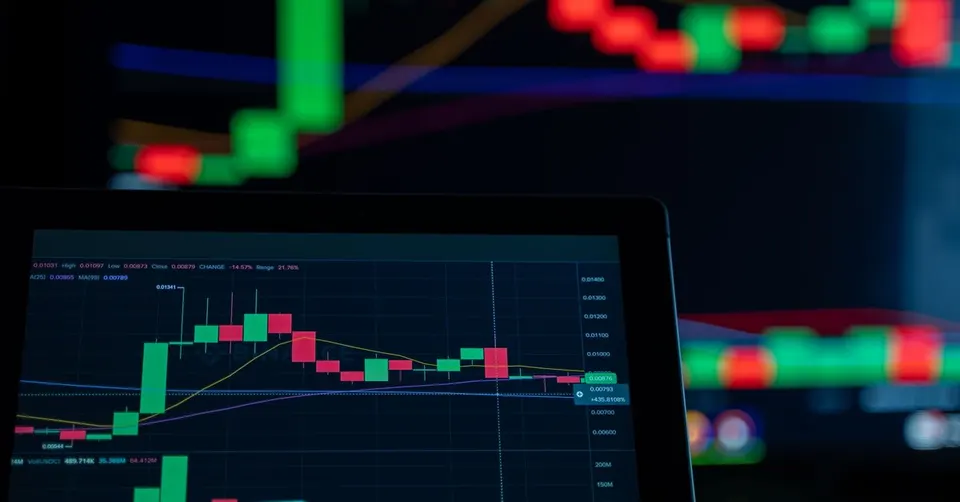
In the digital asset space, Bitcoin is currently testing the patience of investors as it stalls at a critical resistance level of $65,156. Technical indicators, specifically the Average Directional Index (ADX), are flashing warnings of a potential "bull trap." This occurs when a price appears to be breaking out to the upside, luring in buyers, only to reverse sharply. As of this hour, BTC is trading at $64,963, unable to decisively clear the hurdle required to confirm a new bullish trend. The market's hesitation is mirrored by warnings from developers regarding potential network forks (BIP-110), advising holders that "doing nothing" is the safest strategy to avoid losing real BTC in the event of a chain split. Beyond price action, the institutional landscape for crypto is shifting. The IMF has recently suggested that domestic stablecoins could actually boost demand for dollar-backed tokens, as users prioritize liquidity and cross-border acceptance. This contrasts with the ongoing legal battles in the US, where courts have recently backed the exchange Bybit in its efforts to trace $1.5 billion in funds linked to North Korean hacks. Meanwhile, the political dimension of crypto remains volatile; Donald Trump’s media company has reportedly moved to terminate its deal with Crypto.com, signaling a retreat from certain digital asset integrations. These developments suggest that while the technology is maturing, the path to mainstream financial integration remains fraught with regulatory and technical obstacles.
Geopolitical Friction: US Grants and Deepfake Surges
On the international stage, a brewing controversy between the US and the UK has emerged over a $500,000 grant scheme. The US embassy in London is offering these funds to promote "shared civilizational values," using language that critics argue is an attempt to export "MAGA"-style political propaganda to the British public. The focus on "limited government" and "freedom of speech"—terms often used as dog whistles in US domestic politics—has prompted accusations of interference in British domestic affairs. This tension highlights the growing friction within the "special relationship" as political ideologies become more polarized and states attempt to exert soft power through non-traditional diplomatic channels. Simultaneously, a more disturbing trend is unfolding in the UK’s digital landscape. Safety watchdogs have reported a surge in explicit deepfake images featuring the likenesses of children. The "Report Remove" service, which assists in taking down intimate imagery, noted that AI tools have made "nudification" easier than ever, allowing malicious actors to create realistic but fake sexualized content. This surge represents a catastrophic failure of current regulatory frameworks to keep pace with generative AI. For parents and policymakers, it underscores an urgent need for more robust age-verification and AI-watermarking technologies to protect the most vulnerable members of society from digital exploitation.
Frequently Asked Questions
Why is the Emami coin rising faster than the USD price in Tehran?
What does Ghalibaf’s 'national identity' comment mean for Iranian media?
What is the 'bull trap' warning for Bitcoin at $65,156?
Understanding Safe-Haven Assets Amid Economic Uncertainty
When economic clouds gather, investors and ordinary citizens alike often seek refuge in what are known as safe-haven assets. These are investments expected to retain or even increase in value during periods of market turbulence, political instability, or currency depreciation. Unlike typical investments that might fluctuate with economic cycles, safe havens are sought out precisely because they are perceived as reliable stores of value when other assets falter. Their appeal often lies in their historical resilience, universal acceptance, or tangibility.
In contexts like Iran, where the national currency (the Toman) has experienced significant depreciation due to sanctions, high inflation, and economic uncertainty, the concept of safe-haven assets becomes particularly vital for wealth preservation. For many Iranians, the Emami gold coin, a locally minted gold coin, serves as a primary safe haven. The recent surge in its price, as mentioned in the headline, directly reflects this dynamic: as confidence in the Toman erodes, individuals convert their savings into gold, driving up its demand and price. This is a classic response to inflation and currency instability, where tangible assets like precious metals are preferred over depreciating fiat currency.
The mechanism behind this phenomenon is straightforward. When people anticipate further erosion of their purchasing power through inflation or currency devaluation, they move their wealth out of cash or bank deposits and into assets they believe will hold their value. Gold, with its long history as a universal medium of exchange and store of value, naturally fits this role. While other alternatives like real estate or, for some, cryptocurrencies (like Bitcoin mentioned in the keywords) might also be considered, gold offers a unique blend of liquidity, global recognition, and perceived stability, making it a preferred choice in times of crisis.
This flight to safe-haven assets has broader implications for the economy. While it helps individuals protect their savings, it can also exacerbate pressure on the national currency by reducing demand for it. It reflects a deep-seated lack of confidence in the economic outlook and the stability of the financial system. Understanding safe-haven assets, especially gold and its local manifestations like the Emami coin, provides crucial insight into how populations adapt and protect their wealth in challenging economic environments.
Topics
Related Articles