Iran’s Visual War Goes Global as Emami Coin Surges 2.2% Amid New Geopolitical Friction
جنگ بصری تهران جهانی میشود؛ جهش ۲.۲ درصدی سکه امامی در سایه تنشهای جدید ژئوپلیتیک
Tehran leverages AI-enhanced murals to project power globally while domestic markets react to rising tensions, with the Emami gold coin jumping to 189 million Toman. Meanwhile, a diplomatic row erupts in London over alleged US 'MAGA' propaganda grants.
At time of publishing
USD
187,200
Toman
Gold 18K
19.02M
Toman / gram
Bitcoin
$64,941
US Dollar
Tether
186,998
Toman
The Art of War: Tehran’s AI-Powered Visual Strategy
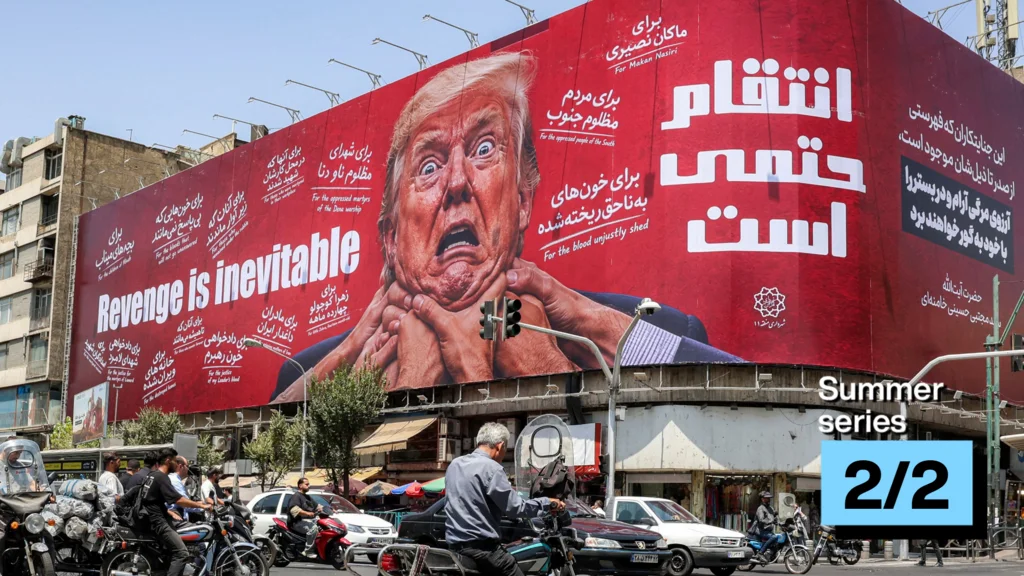
In the heart of Tehran, the walls are no longer just concrete; they have become the frontline of a sophisticated international narrative campaign. A recent investigation by France 24 highlights how the Iranian government has evolved its tradition of state-sponsored murals into a global visual strategy. These massive posters, which once served purely domestic ideological purposes, are now being supercharged by artificial intelligence to create high-impact imagery designed for viral consumption on Western social media. By blending traditional revolutionary themes with modern aesthetic sensibilities, the state aims to bypass traditional media filters and speak directly to a global audience, framing its confrontation with the United States as a civilizational struggle.
This shift in strategy reflects a regime that is increasingly aware of the power of digital optics. The murals are no longer static relics of the 1979 revolution; they are dynamic tools of psychological warfare. Experts note that the integration of AI allows for faster production of propaganda that can respond to real-time geopolitical events, such as sanctions or regional conflicts. For the average Iranian, these murals are a constant reminder of the state's priorities, even as the domestic economy continues to face significant headwinds. The visual dominance of the state in public spaces serves to project an image of stability and ideological fervor that often contrasts sharply with the lived reality of many citizens.

While the government focuses on winning the "visual war," the economic reality for Iranians remains volatile. In the last 24 hours, the Emami gold coin saw a significant surge, moving from 185,000,000 to 189,000,000 Toman, a sharp increase of 2.2%. This jump suggests that despite the state's efforts to project strength through art and media, local investors are still seeking refuge in hard assets. The USD/IRR rate also edged higher, rising from 186,700 to 187,200 Toman (+0.3%), further indicating that the market remains sensitive to the very geopolitical tensions that the state’s murals aim to celebrate.
Diplomatic Friction: US Accused of Exporting 'MAGA' Values to the UK
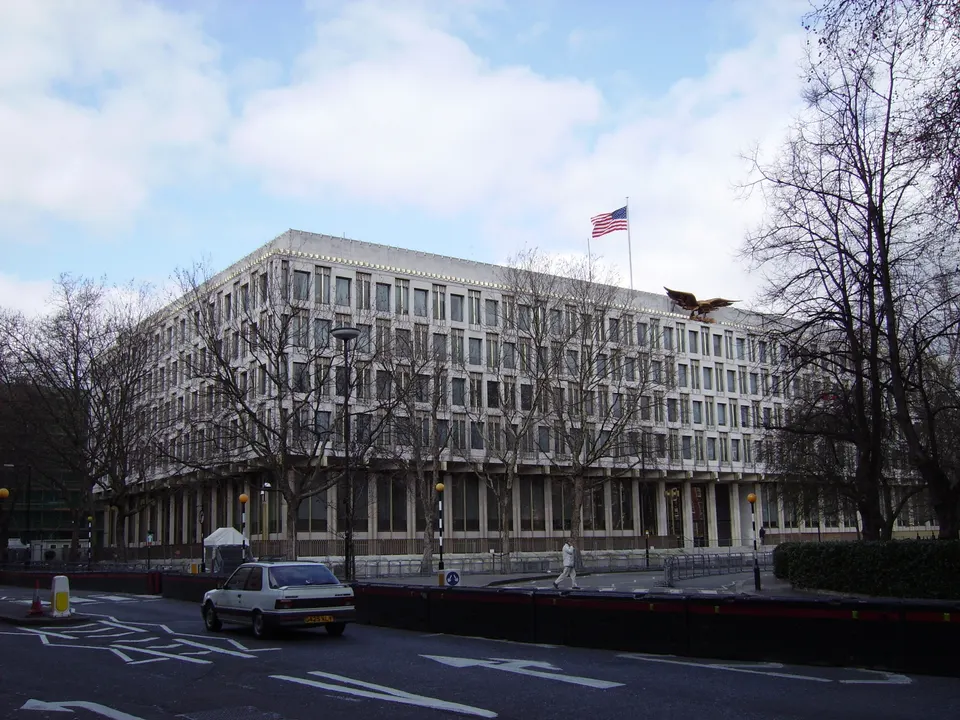
A surprising diplomatic row has erupted between Washington and London following reports that the US Embassy in the United Kingdom is offering grants of up to $500,000 for "public education" programs. Critics in the British political establishment have voiced concerns that these funds are being used to export American-style right-wing propaganda, specifically language associated with the "MAGA" movement. The funding notices reportedly emphasize themes like "limited government" and "shared civilizational values," which some British officials view as an attempt to interfere in domestic politics and influence the UK’s ideological landscape.
This controversy comes at a sensitive time for the US-UK "special relationship," as both nations grapple with internal political divisions. The use of US taxpayer money to fund programs that mirror specific partisan rhetoric has raised eyebrows in Westminster, with some calling it an unprecedented level of meddling. For global observers, this incident highlights the growing trend of ideological soft power being used as a tool of foreign policy, where the goal is not just to influence governments, but to shape the very values of a foreign public. This mirrors the "visual war" seen in Tehran, albeit through the channel of diplomatic grants rather than street murals.
Energy Rifts and the Economics of the Celestial
In the United Kingdom, the battle over climate policy is intensifying as London Mayor Sadiq Khan publicly pressured Greater Manchester Mayor Andy Burnham to reaffirm his commitment to net-zero targets. The friction centers on the potential approval of new North Sea oil and gas projects, specifically the Jackdaw and Rosebank developments. Khan’s intervention follows a summer of record-breaking heatwaves and wildfires, which he cited as definitive proof that climate denial is "deadly." This internal political struggle underscores the global tension between immediate energy security and long-term environmental sustainability, a dilemma that continues to weigh on global energy markets.
Meanwhile, in Spain, the village of Somosierra is preparing for a different kind of economic boom. The upcoming total solar eclipse on August 12 has triggered a wave of "astrotourism," with thousands expected to flock to the remote mountain region. This celestial event poses significant logistical challenges for small communities but also offers a massive temporary boost to local businesses. It serves as a reminder that even in a world dominated by geopolitical strife and market volatility, natural phenomena can still drive significant economic activity and bring diverse groups of people together, if only for the few minutes the sun disappears behind the moon.

Finally, back in Tehran, the government claims it is taking steps to improve journalists' access to information. According to state media, the Secretariat of the Government Information Council is seeking to expand accountability. However, given the state's simultaneous focus on high-tech propaganda and the rising prices of basic goods and gold, many observers remain skeptical. For the Iranian public, the gap between official narratives of transparency and the reality of a 2.2% jump in gold coin prices remains a central theme of daily life.
Frequently Asked Questions
Why is the Emami coin surging more than the US Dollar in Tehran?
How is AI being used in Iran's state-sponsored murals?
What is the 'MAGA' grant controversy in the UK?
What is the significance of the North Sea oil dispute between Khan and Burnham?
Understanding Safe-Haven Assets: Gold in Times of Geopolitical Uncertainty
In an increasingly unpredictable global landscape, understanding "safe-haven assets" is crucial for comprehending market reactions to geopolitical events. A safe-haven asset is an investment that is expected to retain or even increase in value during periods of market turbulence, economic downturns, or political instability. Investors flock to these assets to protect their capital from the volatility seen in riskier investments like stocks during crises. These assets often possess characteristics such as liquidity, a history of stability, and universal recognition, making them reliable stores of value when confidence in traditional markets wanes.
Among the various safe-haven assets, gold stands out as the quintessential choice, a role it has played for centuries. Its appeal stems from its tangible nature, limited supply, and historical acceptance as a store of value across diverse cultures and economies. Unlike fiat currencies, which can be devalued by inflation or government policy, gold's intrinsic value is not tied to any single nation's economic health. Consequently, when geopolitical tensions rise, or there are concerns about inflation and currency depreciation, demand for gold typically surges as investors seek refuge from uncertainty.
This dynamic is particularly evident in economies facing significant geopolitical friction and sanctions, such as Iran. The Emami Gold Coin, a prominent investment vehicle in Iran, often sees its price surge amidst heightened international tensions or domestic economic instability. For Iranian citizens and investors, the Emami Coin represents not just an investment but a critical hedge against the depreciation of the national currency (Rial) and the broader economic uncertainties stemming from sanctions and geopolitical disputes. Its rising value reflects a collective flight to a tangible, universally recognized asset when trust in the local financial system or currency erodes.
Therefore, the surge in the Emami Coin's price amid new geopolitical friction isn't just a market anomaly; it's a clear illustration of how safe-haven assets function in practice. It highlights investors' natural inclination to protect their wealth by converting volatile, locally-denominated assets into more stable, globally-recognized stores of value when faced with external pressures and internal economic challenges. This behavior underscores the deep psychological and economic underpinnings of safe-haven demand, particularly in regions where political and economic stability are frequently challenged.
Topics
Related Articles