
Ghalibaf Issues AI Warning to Region as France Reels from 2,000 Arrests and Bitcoin Tests $80k Support
هشدار موشکی قالیباف به حامیان هوش مصنوعی علیه ایران و آشوب بیسابقه در پاریس؛ دلار عقبنشینی کرد
Tehran warns regional neighbors against assisting AI firms linked to military aggression, drawing a new digital red line. Meanwhile, France faces a 'state failure' crisis with thousands arrested, and Bitcoin struggles to hold the $80,500 support level.
At time of publishing
USD
262,200
Toman
Gold 18K
25.85M
Toman / gram
Bitcoin
$80,994
US Dollar
Tether
262,200
Toman
Tehran’s New Red Line: AI as a Tool of Aggression
In a significant shift of rhetoric, Parliament Speaker Mohammad Bagher Ghalibaf has warned regional governments against providing resources to artificial intelligence and data companies linked to military aggression against Iran. This statement, delivered on Sunday, October 18, 2026, marks a clear evolution in Tehran's defense doctrine. It suggests that the Iranian leadership now views data centers and algorithmic processing power as being just as lethal as traditional kinetic weaponry. Ghalibaf’s warning was explicit: any regional state that facilitates the digital infrastructure used for targeting or intelligence gathering against Iranian interests will face a "forceful response."
This move comes as regional rivals and international actors increasingly integrate AI into their electronic warfare and surveillance suites. For the average Iranian, this high-level focus on AI sovereignty often signals a tightening of domestic controls over data and internet infrastructure. By framing AI as a direct military threat, the government provides a new justification for the 'shielding' of domestic networks and the prioritization of localized tech development. The geopolitical implication is a potential cooling of tech-sector cooperation between Iran’s neighbors and Western or Israeli-linked AI firms, as the risk of being caught in a crossfire—either digital or physical—becomes more tangible.

France in Crisis: Macron Decries 'Unbridled Violence'
President Emmanuel Macron has addressed the French nation following what has been described as a "colossal failure of the state." With more than 2,000 arrests made in just a few days, the unrest across France has reached a fever pitch, characterized by the burning of public buildings and the widespread looting of commercial centers. Macron’s televised address was somber, as he condemned the "unbridled violence" and questioned the social fabric that allows citizens to inflict such damage on their own infrastructure. The crisis has moved beyond a simple protest movement, evolving into a systemic challenge to the authority of the Elysee Palace.
For global markets, the instability in one of Europe’s largest economies adds a layer of uncertainty that could weigh on the Euro and regional trade. The sheer scale of the arrests—2,000 in a single weekend—indicates that the French security apparatus is stretched to its limit. While the riots showed signs of subsiding by Sunday evening, the political fallout is just beginning. Leaders across the political spectrum are already trading blame, and the economic cost of the damage to retail and tourism is expected to run into the billions. This internal European strife often diverts diplomatic attention away from Middle Eastern affairs, potentially giving regional actors more room to maneuver while the West is preoccupied with domestic fires.

Market Pulse: Bitcoin’s $80,500 Support and the Toman’s Retreat
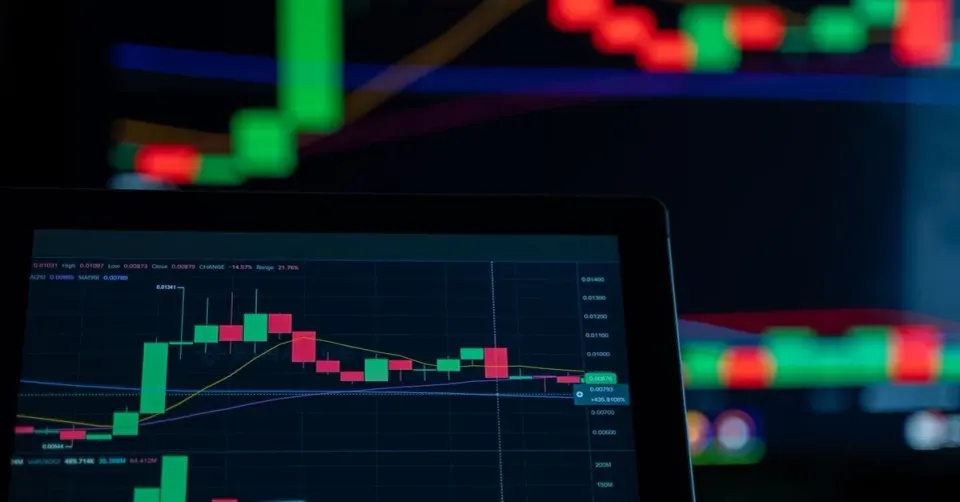
Bitcoin is currently navigating a precarious technical setup, finding itself "trapped" at the $80,500 support level. After a historic run that saw the cryptocurrency break all-time highs, the momentum has stalled as traders weigh the impact of rising volatility in traditional markets. The VIX fear gauge spiked significantly toward the end of the last trading week, yet historical patterns suggest that such Friday panics often lose steam by Monday morning. For crypto holders, the $80,500 mark is the line in the sand; a breakdown below this level could trigger a wave of liquidations, while holding it would confirm the current consolidation as a healthy pause before the next leg up.
In the domestic Iranian market, the Toman saw a slight cooling of the recent feverish demand. On Sunday, October 18, 2026, the USD sell rate moved from 263,400 to 262,200, representing a -0.5% decrease. Similarly, gold 18k per gram dipped by -0.8%, moving from 26,051,525 to 25,852,994 Toman. This minor correction suggests that the market had overextended itself during the recent bouts of regional tension. While the long-term inflationary pressure remains, the current retreat offers a moment of relative calm for buyers who were sidelined by the rapid price spikes earlier in the week. The Emami coin also reflected this trend, slipping -0.2% to settle at 266,000,000 Toman.
Aviation Tragedy and the 'Brighton Dream'
On a more somber note, the aviation community is mourning the loss of an 80-year-old experienced pilot who died in a light aircraft crash near Loch Lomond. Identified as a veteran instructor and a "gentleman of the skies," his passing serves as a reminder of the inherent risks in general aviation, even for those with decades of experience. Meanwhile, in the world of sports, Brighton continues to defy expectations in the Premier League. With 23 goals in just seven matches, the team is drawing comparisons to the legendary 'Barca and Beckham' eras, proving that smart management and tactical innovation can occasionally bridge the massive financial gap between mid-table clubs and the traditional 'Big Six.'
Frequently Asked Questions
چرا قالیباف درباره هوش مصنوعی هشدار داد؟
علت کاهش قیمت دلار در ۲۶ مهر چه بود؟
آیا بیتکوین زیر ۸۰ هزار دلار سقوط میکند؟
Autonomous Weapons and the Emerging AI Arms Race
The term autonomous weapon system (AWS) refers to a class of military hardware that can select and engage targets without direct human intervention. While early examples include simple “fire‑and‑forget” missiles, modern AI‑driven platforms promise far greater decision‑making capabilities, from drone swarms that coordinate attacks to ground robots that navigate complex terrain on their own. This leap from human‑in‑the‑loop to human‑on‑the‑loop raises profound ethical and strategic questions, especially when nations signal that AI will become a core component of regional security doctrines.
International security analysts warn that an AI arms race could destabilize existing deterrence balances. Unlike traditional weapons, AI systems can be replicated and upgraded at software‑level speeds, reducing the cost and time required to field new capabilities. This accelerates the risk of miscalculation: if two adversaries deploy autonomous systems that react in milliseconds, there may be no window for diplomatic de‑escalation. The recent rhetoric from Iranian political figures, warning of “regional AI aggression,” reflects a broader concern that neighboring states could field such systems without clear rules of engagement.
Efforts to govern autonomous weapons are already underway at the United Nations. The Convention on Certain Conventional Weapons (CCW) hosts a Group of Governmental Experts (GGE) tasked with discussing the legality, transparency, and possible bans on fully autonomous weapons. However, consensus has been elusive, as major powers differ on whether existing international humanitarian law suffices or new treaties are needed. The lack of a binding framework leaves a regulatory vacuum that could be exploited by states seeking a strategic edge.
For policymakers and citizens alike, understanding the technical underpinnings of AWS—machine‑learning algorithms, sensor fusion, and real‑time decision loops—is crucial. It informs debates about accountability (who is responsible for a machine‑made mistake?), proportionality (can a robot assess civilian harm?), and the broader societal impact of delegating lethal force to code. As AI continues to permeate the battlefield, informed public discourse will shape whether the technology enhances security or amplifies the specter of uncontrolled conflict.
Topics
Related Articles