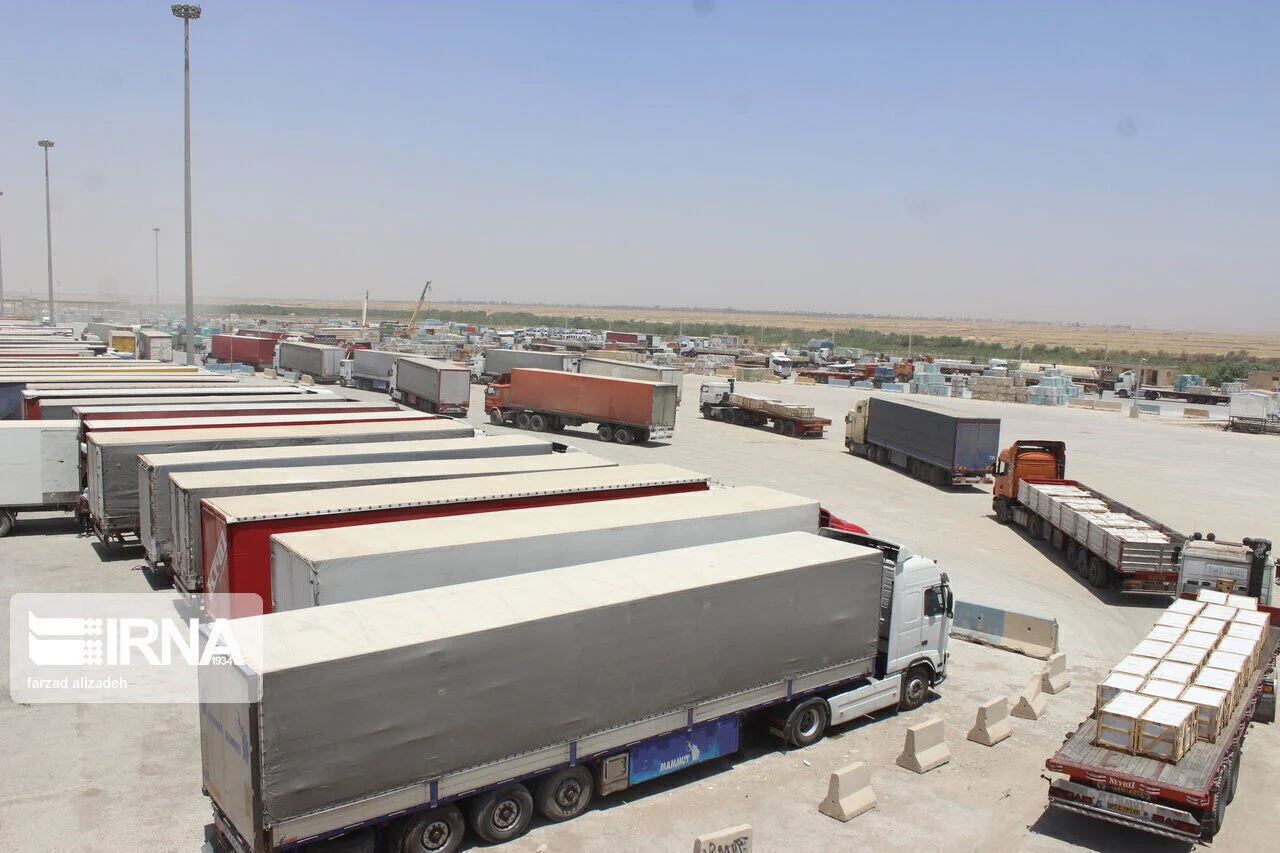
Bazargan Export Surge Defies Sanctions as Japan Reconsiders Nuclear Stance
جهش ۱۳۰ درصدی صادرات از گمرک بازرگان؛ همزمان با بازنگری هستهای در ژاپن
Iran's Bazargan border sees a massive 130% spike in exports despite ongoing economic pressure, while Japan initiates a historic debate on its non-nuclear principles. Markets remain steady with the US Dollar holding at 186,000 Toman.
At time of publishing
USD
186,000
Toman
Gold 18K
18.74M
Toman / gram
Bitcoin
$64,845
US Dollar
Tether
185,751
Toman
Bazargan Customs Reports 130% Surge in Export Volume
Commercial activity at Iran’s Bazargan Customs Office has registered a staggering 130% growth in export value since the start of the Iranian year in March. According to official reports from IRNA, this surge represents a significant pivot in regional trade logistics, as the border crossing remains a vital artery for Iranian goods heading toward Turkey and European markets. Officials attribute this growth to streamlined processing and increased demand for Iranian industrial and agricultural products, though the broader economic context remains complex due to persistent international sanctions and domestic inflation.
While the 130% figure sounds like a windfall for the Iranian economy, the reality on the ground in Tehran tells a more nuanced story. The US Dollar remains pegged at 186,000 Toman, showing no movement in the last 24 hours (0.0% change). For the average citizen, the increase in export volume has yet to translate into lower consumer prices or a stronger national currency. Market analysts suggest that while trade volume is up, the repatriation of hard currency remains a bottleneck, preventing these gains from stabilizing the Toman’s purchasing power.

Araghchi Doubles Down on Resistance Amid Hormuz Negotiations
Foreign Minister Abbas Araghchi has reaffirmed Iran's commitment to the "path of resistance," even as high-stakes negotiations regarding the reopening of the Strait of Hormuz continue. Araghchi’s rhetoric comes at a critical juncture where Iran has presented a list of demands that Western diplomats describe as broad and challenging. Interestingly, reports from Washington suggest that many of these demands were actually addressed in the June Memorandum of Understanding signed in Islamabad, yet the specific language remains a point of contention between the two sides.
This "resistance" stance is widely viewed as a strategic maneuver to gain leverage in the ongoing energy crisis. With global energy markets already volatile, any disruption or conditional reopening of the Strait of Hormuz has immediate impacts on global oil prices. For Iranian readers, this geopolitical posturing is a double-edged sword; while it seeks to force sanctions relief, the resulting uncertainty often drives speculative pressure on the gold and coin markets. Today, the Emami coin fell from 186,500,000 to 185,500,000 Toman (-0.5%), reflecting a slight cooling of speculative fever despite the heated diplomatic rhetoric.

Japan’s Nuclear Debate Rattles Pacific Security Norms
On the 81st anniversary of the Nagasaki atomic bombing, Japan finds itself at a historical crossroads. Mayor Shiro Suzuki used the memorial ceremony to declare that "humanity and nuclear weapons cannot coexist," but the political reality in Tokyo is shifting. Prime Minister Sanae Takaichi’s government has officially opened a debate on the country's postwar non-nuclear principles. This move is driven by increasing anxiety over China’s military expansion and growing doubts about the reliability of the United States' "nuclear umbrella" in the Pacific.
This shift in Japanese policy is not just a regional concern; it signals a broader global trend toward rearmament and the potential end of the traditional non-proliferation consensus. If Japan, the only country to have suffered an atomic attack, moves toward a more flexible nuclear posture, it could trigger a domino effect across East Asia. For global investors, this adds another layer of long-term geopolitical risk, further cementing gold’s status as the ultimate safe haven. Gold 18k in Iran saw a minor dip today, moving from 18,758,945 to 18,735,860 Toman (-0.1%), but remains near historic highs alongside the global ounce price of $4,343.30.
Digital Security Alert: 'The Odyssey' Streaming Scams
As the blockbuster adaptation of Homer’s The Odyssey dominates global culture, a wave of sophisticated phishing scams has emerged targeting fans looking for free streams. Cybersecurity experts warn that fake websites are luring users with high-quality trailers and fake reviews, only to demand credit card details for "free" registrations. These sites often install malware or harvest sensitive banking data, taking advantage of the high demand for digital content in regions where official streaming services may be restricted or expensive.
For Iranian users, who frequently navigate the web through VPNs and alternative mirrors to bypass censorship, the risk is particularly high. The lack of direct access to international payment systems often makes users less suspicious of unusual payment prompts. This serves as a reminder that as digital trade and entertainment grow, the sophistication of financial crimes follows suit. Protecting digital assets is becoming as crucial as monitoring the price of Bitcoin, which currently sits at $64,845, coiled in a tight trading band as it awaits the next major market catalyst.

Frequently Asked Questions
Why did exports from Bazargan Customs increase by 130%?
What is the significance of Japan's new nuclear debate?
How is the 'The Odyssey' film being used in cyber scams?
Economic Sanctions and Strategies for Evasion
Economic sanctions are punitive measures imposed by one or more countries (or international bodies) on another country to achieve specific policy goals, often relating to national security, foreign policy, or human rights. These measures can take various forms, including trade embargoes, asset freezes, travel bans, and restrictions on financial transactions. The primary aim is to exert economic pressure, disrupt the target country's access to international markets and finance, and thereby compel a change in its behavior or policies.
The intended impact of sanctions is often severe, designed to cripple the target economy by limiting its ability to export goods, import essential commodities, or access global financial systems. This can lead to reduced national income, currency devaluation (like the Toman's struggles), inflation, and a decline in living standards. However, the effectiveness of sanctions is a subject of ongoing debate, as targeted nations often develop sophisticated strategies to mitigate their impact and maintain economic activity.
Countries facing sanctions commonly employ various evasion and mitigation strategies. These can include finding alternative trade partners, developing domestic industries to reduce reliance on imports, utilizing informal financial channels or hawala systems, engaging in barter trade, or re-routing trade through third-party countries (often referred to as 'sanctions busting'). The mention of "Bazargan Customs" and an "Export Surge" in the headline suggests that Iran, despite sanctions, is actively pursuing such avenues to sustain its trade and economic resilience, highlighting the complex and persistent cat-and-mouse game between sanctioning and sanctioned entities.
Understanding these dynamics is crucial for grasping international relations and economic resilience. While sanctions aim to isolate, nations often find innovative, albeit sometimes costly, ways to maintain their economic lifelines, transforming the global economic landscape into a complex web of official and unofficial transactions.
Topics
Related Articles