Kinahan Extradition Under High Security as Tehran Sets Hardline Terms for US Talks
انتقال فوقامنیتی کیناهان به ایرلند و تعیین شروط سختگیرانه تهران برای مذاکره با آمریکا
Organized crime boss Daniel Kinahan is being extradited from Dubai to Ireland in a massive security operation, while Iran's Foreign Minister Abbas Araghchi rules out talks with the US until 'violations' are addressed. Meanwhile, Moody’s warns that the banking sector's reliance on AI is handing too much power to Silicon Valley.
At time of publishing
USD
186,200
Toman
Gold 18K
18.80M
Toman / gram
Bitcoin
$64,905
US Dollar
Tether
185,837
Toman
The High-Stakes Extradition of Daniel Kinahan
In a move that signals a significant shift in international judicial cooperation, suspected crime boss Daniel Kinahan is being extradited from Dubai to Ireland under unprecedented security measures. The Irish Prison Service has reportedly commissioned a specialized bulletproof and bombproof van specifically for the transport of the 49-year-old to court. This operation marks the culmination of years of diplomatic and legal maneuvering between Dublin and the UAE, highlighting a new era where former safe havens for organized crime leaders are increasingly closing their doors to those on global wanted lists.

The significance of this extradition extends beyond the individual case. For years, the Kinahan cartel was seen as untouchable, operating a multi-billion dollar illicit empire from the luxury of Dubai. The decision by UAE authorities to facilitate this transfer suggests a deepening of ties with European law enforcement and a desire to scrub the region’s reputation as a playground for international fugitives. This development is being closely watched by intelligence agencies worldwide as a benchmark for future cooperation in dismantling transnational criminal networks that utilize complex financial structures to hide assets.
For the global financial community, the crackdown on the Kinahan network is a reminder of the tightening net around money laundering and illicit flows. As jurisdictions like Dubai implement stricter compliance and extradition treaties, the "risk premium" for operating outside the legal banking system continues to rise. While this specific event may not move the needle on the S&P 500, it serves as a critical indicator of the geopolitical pressure being applied to offshore financial hubs to align with international transparency standards.
Tehran’s Strategic Deadlock: Araghchi and the Toman
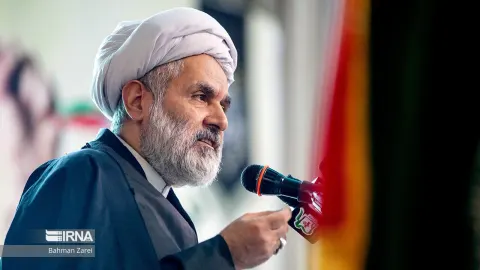
Iranian Foreign Minister Abbas Araghchi has clarified the government's stance on potential negotiations with the United States, stating firmly that no talks are currently underway and will not resume until Washington ends its "violation of commitments." This statement comes shortly after President Pezeshkian called for an end to the "no war, no peace" status quo, suggesting a complex internal tug-of-war within the Iranian leadership. Araghchi’s demand for compensation for past breaches indicates that Tehran is not yet ready to return to the table without significant concessions, maintaining a hardline posture despite the economic pressures of sanctions.

In the local markets, this political rhetoric has resulted in a period of cautious stability. The USD sell rate in Tehran moved slightly from 186,000 to 186,200 Toman, a marginal increase of 0.1% over the last 24 hours. Similarly, Gold 18k per gram rose from 18,758,945 to 18,802,807 Toman (+0.2%). These numbers reflect a market that has largely priced in the ongoing diplomatic stalemate. Traders appear to be waiting for a more concrete signal—either a genuine diplomatic breakthrough or a significant escalation—rather than reacting to the daily ebb and flow of official statements.
What this means for the average Iranian reader is a continuation of the high-inflation environment without the immediate shock of a currency collapse. The "no war, no peace" status may be frustrating for policymakers, but for the market, it represents a known quantity. However, the insistence on compensation and the end of violations suggests that the path to sanctions relief remains long and arduous. Investors are advised to keep a close eye on the upcoming International Conference of Mujahideen in Exile on August 10, which may provide further clues into the ideological direction of the administration's foreign policy.
AI and the New Financial Hegemony
Credit rating agency Moody’s has issued a stark warning regarding the banking sector's rapid integration of artificial intelligence. According to the agency, the race to adopt AI is effectively putting global banks at the mercy of a handful of Silicon Valley tech giants. While AI promises to cut costs and increase revenues across Wall Street and the City of London, it also creates a dangerous structural dependency. If a major cloud provider or AI developer faces an outage or shifts its pricing model, the entire financial infrastructure of the West could be compromised, leading to systemic risks that regulators are currently ill-equipped to handle.
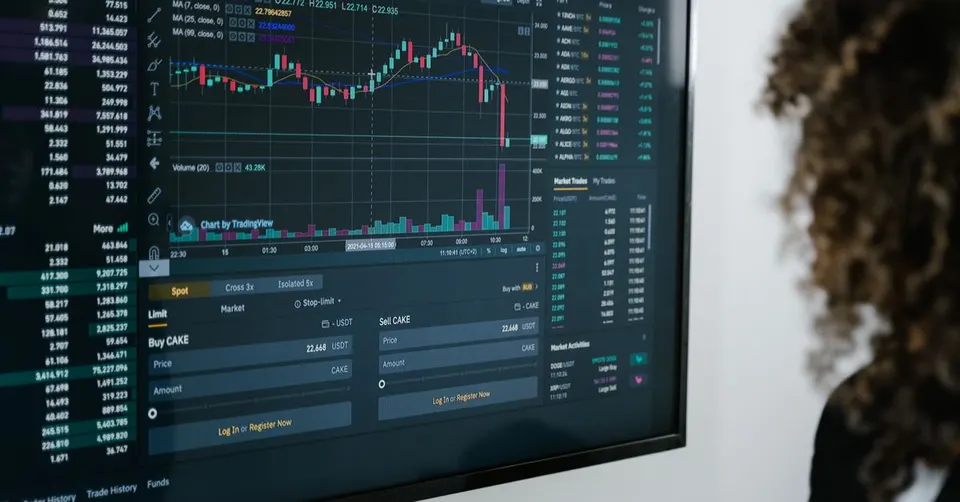
This dependency is not just a technical concern but a strategic one. Moody's points out that "profit-hungry tech bosses" could engage in price gouging once banks have fully integrated proprietary AI models into their core operations. Unlike traditional software, AI systems are deeply embedded into data processing and decision-making, making it prohibitively expensive for a bank to switch providers once a commitment is made. This shift in power from traditional financial institutions to tech firms represents one of the most significant changes in the history of capital markets, potentially altering the very nature of financial sovereignty.
For investors, this trend highlights the growing importance of the "Magnificent Seven" and other AI leaders as the new utilities of the digital age. While banks may see short-term efficiency gains, the long-term value may increasingly be captured by the technology providers rather than the financial institutions themselves. As we move further into 2026, the intersection of high-finance and high-tech will likely become the primary battlefield for market dominance, with regulatory bodies struggling to keep pace with the speed of innovation and the concentration of power in Silicon Valley.
Frequently Asked Questions
Why is the Kinahan extradition considered a major geopolitical event?
How did the Iranian currency market react to Araghchi's comments?
What is the primary risk Moody's identified regarding AI in banking?
Understanding Dual Exchange Rates and Informal Currency Markets
When a headline mentions a country's currency exchange rate, especially in a geopolitically sensitive context like Iran, it often points to a complex economic phenomenon: dual exchange rates and the informal currency market. This situation arises when a country maintains an official exchange rate, typically set by the central bank, that differs significantly from the rate at which foreign currency is traded in the open or "informal" market. This divergence is usually a symptom of severe economic pressures, such as international sanctions, high inflation, or strict capital controls.
In countries like Iran, international sanctions severely restrict access to the global financial system, limiting the supply of foreign currency available through official channels. While the government might offer foreign exchange at a subsidized "official" rate for essential imports or state-approved transactions, the actual demand for foreign currency by individuals and businesses far outstrips this limited supply. This unmet demand then spills over into an unregulated, informal market, where foreign currencies like the US dollar are traded at a much higher, market-driven rate. This informal rate becomes the de facto benchmark for most economic activity and reflects the true purchasing power of the local currency.
The existence of a substantial gap between the official and informal exchange rates has profound implications. For ordinary citizens, it erodes their purchasing power, making imported goods prohibitively expensive and driving up local inflation. Businesses struggle with unpredictable costs, hindering investment and growth. Furthermore, assets like gold often become a primary hedge against currency devaluation, explaining why gold prices in such economies are closely watched and can surge dramatically in response to economic uncertainty or geopolitical tensions, such as those surrounding US-Iran relations. The informal exchange rate also acts as a critical barometer of public confidence in the economy and the impact of international events.
Managing dual exchange rates is a persistent challenge for governments. Attempts to unify the rates often face hurdles due to underlying economic imbalances and external pressures. The informal market, while officially discouraged, often serves as a crucial, albeit volatile, mechanism for the economy to function when formal channels are constrained. Understanding this dynamic is key to interpreting economic news from countries operating under significant international restrictions.
Topics
Related Articles