Netanyahu Defies Trump’s Gaza Plan as IRGC Extends Hormuz Blockade
سرکشی نتانیاهو از طرح ترامپ؛ سپاه بازگشایی هرمز را به شروط تهران گره زد
Israeli Prime Minister Netanyahu has rejected Donald Trump’s 15-point Gaza peace plan, insisting on total military control until Hamas is disarmed. This defiance coincides with the IRGC’s refusal to reopen the Strait of Hormuz, maintaining a high-risk premium on the Iranian Toman and global energy markets.
At time of publishing
USD
185,950
Toman
Gold 18K
18.82M
Toman / gram
Bitcoin
$65,040
US Dollar
Tether
185,640
Toman
The Gaza Deadlock: Netanyahu Rejects Trump’s Peace Vision
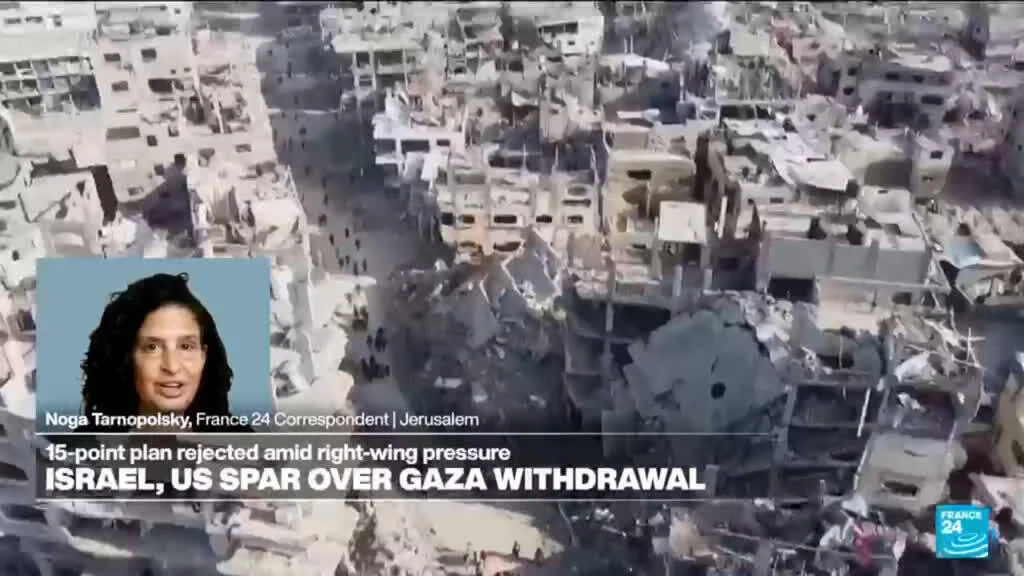
In a significant fracture between the Israeli leadership and the White House, Prime Minister Benjamin Netanyahu has officially rejected the 15-point peace plan promoted by U.S. President Donald Trump. The plan, which envisioned a complete Israeli withdrawal from Gaza in exchange for the disarmament of Hamas, was hailed by Trump as a "monumental step" toward stability. However, Netanyahu clarified on Sunday that the Israeli military would not retreat until Hamas is "genuinely" disarmed, a condition that remains unfulfilled according to Israeli intelligence. This rejection signals a deepening rift in the U.S.-Israel alliance, as the Trump administration seeks a swift exit from the conflict to stabilize global markets.
For the Iranian reader, this deadlock is more than just a regional dispute; it is the primary driver of the current "war premium" on the Toman. As long as the Gaza conflict remains unresolved, the risk of a wider regional conflagration persists, keeping the USD/IRR exchange rate at elevated levels. The lack of a diplomatic breakthrough means that the economic sanctions and military tensions that have suppressed the Iranian economy for years are unlikely to ease in the immediate future. Markets had hoped for a de-escalation via the Trump plan, but Netanyahu’s defiance has effectively killed that optimism for the current cycle.
Hormuz Standoff and the Houthi Strike on Saudi Infrastructure
While the diplomatic front remains frozen, the maritime and energy fronts are heating up. The Islamic Revolutionary Guard Corps (IRGC) announced on Sunday that the Strait of Hormuz, a vital artery for global oil, will not be reopened until the United States accepts Tehran's specific conditions. This maritime blockade has already sent ripples through global energy supply chains, but the situation intensified today as the Tehran-aligned Houthis in Yemen claimed responsibility for a drone strike on a Saudi Arabian oil refinery. This attack comes just two days after Riyadh signed a defense pact with Turkey and Pakistan, a move seen as a counterweight to Iranian influence.
These developments suggest a coordinated regional pressure campaign by Tehran and its allies to force concessions from Washington. By targeting Saudi energy infrastructure and maintaining the Hormuz closure, the regional axis is signaling that the cost of maintaining the status quo is becoming prohibitively expensive for the West. For the domestic market in Iran, this translates to continued volatility. While the USD sell rate remained relatively stable today at 185,950 Toman (a 0.0% change over 24 hours), the underlying tension is preventing any significant recovery for the national currency.

The ‘Wealthy Poor’: Inflation Crushes the Iranian Middle Class
Beyond the headlines of drones and diplomacy, the internal economic reality for Iranians is reaching a breaking point. A recent report highlighting the phenomenon of the "wealthy poor" describes how even middle-class families, who nominally possess assets like homes or cars, are struggling to afford basic nutrition. Food prices have continued to soar, outstripping wage growth and leaving many families in a state of perpetual financial anxiety. The cost of living is being driven by the cumulative effect of the Hormuz blockade and the resulting isolation from global trade networks.
Market data from today reflects this slow-motion crisis. While the Emami coin stayed flat at 186,500,000 Toman, the price of 18k gold rose slightly from 18,758,945 to 18,821,275 Toman (+0.3%). This incremental rise in gold prices, even when the dollar is stagnant, indicates that Iranians are still desperately seeking hedges against future inflation. Meanwhile, on the security front, Army Ground Forces Commander Brigadier General Ali Jahanshahi stated that rapid-response units are being deployed to ensure "sustainable security" at the borders, a move that suggests the government is bracing for potential internal or external unrest as economic conditions worsen.

Global Context: Crypto Shakeout and Market Shifts
In the broader financial world, a massive "dot-com style" shakeout is occurring in the cryptocurrency sector. Over 100 projects have folded in 2026 as investors move away from speculative tokens toward protocols with real cash flow. Bitcoin (BTC) is currently trading at $65,040, heading for a 2% weekly gain as bets on a Federal Reserve rate hike ease. This global shift toward quality assets is a double-edged sword for Iranian investors; while it provides a safer exit from the Toman, the increasing regulatory scrutiny—such as Brazil’s new 24-hour hold on crypto transfers—makes international movement of funds more difficult for those in sanctioned jurisdictions.
The divergence between the average stock beating the S&P 500 for the first time in four years and the localized misery of the Iranian economy highlights the "decoupling" of Iran from global growth. As the rest of the world navigates a transition into an AI-driven economy, Iran remains bogged down in 20th-century geopolitical disputes. For the reader, the message is clear: until the deadlock in Gaza and the Strait of Hormuz is broken, the Toman will remain a hostage to the whims of regional commanders and foreign leaders.
Watch
Israel, US spar over Gaza withdrawal • FRANCE 24 English
FRANCE 24 English
Frequently Asked Questions
Why did Netanyahu reject Donald Trump's 15-point peace plan?
What are Iran's conditions for reopening the Strait of Hormuz?
How is the 'war premium' affecting the Iranian Toman?
The Strategic Chokepoint: Why the Strait of Hormuz Matters
The Strait of Hormuz, a narrow waterway between Oman and Iran, is one of the world’s most vital maritime chokepoints. Roughly 20% of global oil consumption passes through its 21‑nautical‑mile channel each day, making any disruption a direct shock to international energy markets. Because the strait sits at the mouth of the Persian Gulf, it links the oil‑rich fields of Saudi Arabia, Kuwait, the United Arab Emirates and Iraq to the open ocean, so even a brief closure can ripple through gasoline prices, freight rates and currency values far beyond the Middle East.
Geopolitically, the strait’s importance gives the Islamic Revolutionary Guard Corps (IRGC) a potent lever. By threatening to mine the waters or seize passing vessels, Iran can signal displeasure with sanctions, retaliate against perceived aggression, or extract concessions in diplomatic negotiations. The 2026 extension of the IRGC‑led blockade, announced in response to U.S.‑backed plans for a Gaza ceasefire, illustrates how the threat of closing the strait is used as a bargaining chip in broader regional power struggles.
The economic fallout of a Hormuz disruption is immediate. Oil prices spike as traders price in supply uncertainty, which in turn pushes up the cost of imported goods in oil‑importing nations. For countries like Iran, already grappling with a soaring Toman exchange rate and high food inflation, higher global oil prices can paradoxically raise domestic fuel subsidies while worsening the fiscal deficit. Moreover, precious‑metal markets react; gold often rallies as investors seek safe‑haven assets when oil‑driven inflation expectations rise, a pattern seen in August 2026 when the gold price in Iran surged amid Hormuz tensions.
Historically, the strait has been a flashpoint. The 1980s “Tanker War” between Iran and Iraq saw both sides targeting commercial shipping, prompting a massive U.S. naval presence to keep the flow of oil uninterrupted. Modern technology—satellite surveillance, unmanned underwater vehicles, and rapid‑response naval forces—has changed the calculus, but the fundamental risk remains: any sustained closure could force oil‑importing nations to reroute shipments around the Cape of Good Hope, adding weeks and thousands of dollars to freight costs.
Understanding the Strait of Hormuz’s strategic role helps explain why headlines about blockades, refinery strikes, and even gold price spikes are interconnected. It is not merely a regional dispute; it is a global economic lever that can influence everything from exchange rates in Tehran to the price you pay at the pump in New York.
Topics
Related Articles