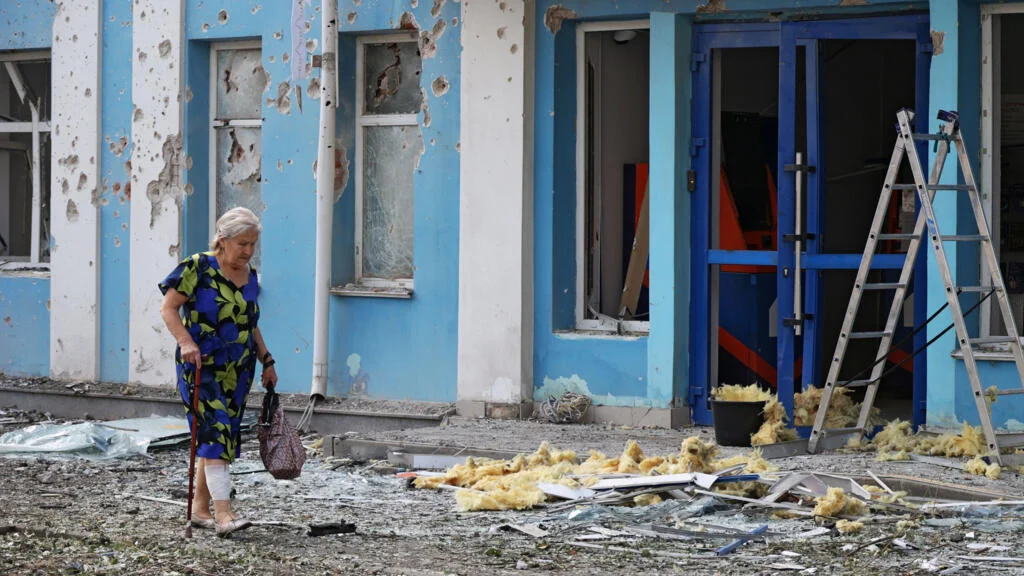
Ukraine Launches Massive 456-Drone Swarm on Russia as Tehran Markets Hold Breath Amid Hormuz Standoff
حمله گسترده ۴۵۶ پهپاد اوکراینی به روسیه؛ آرامش شکننده در بازار ارز تهران با وجود تهدیدات هرمز
Kyiv initiates its largest-ever drone offensive targeting 15 Russian regions, while Tehran's currency markets remain unusually stable despite the ongoing blockade of the Strait of Hormuz. Gold prices edge higher as global investors weigh geopolitical risks against a resilient Bitcoin holding above $65,000.
At time of publishing
USD
185,700
Toman
Gold 18K
18.79M
Toman / gram
Bitcoin
$65,270
US Dollar
Tether
186,909
Toman
The Skies Over Russia Ignite: A New Scale of Drone Warfare
In a dramatic escalation of the conflict, Ukraine launched a record-breaking swarm of 456 drones overnight, targeting approximately 15 regions across Russia and the annexed Crimean peninsula. According to reports from the ground, the strikes reached as far as Tatarstan in central Russia, hitting industrial hubs and civilian infrastructure. This massive operation resulted in at least 12 fatalities and left dozens wounded, marking one of the most sophisticated and wide-reaching aerial offensives since the war began. The sheer volume of the attack suggests a significant leap in Kyiv's domestic production capabilities and a strategic intent to overwhelm Russian air defenses by sheer numbers.

For global markets, this escalation introduces a fresh layer of volatility. While the immediate impact is humanitarian and tactical, the targeting of industrial sites deep within Russian territory threatens to disrupt energy supply chains and manufacturing. Investors are closely watching for Moscow's response, as a further escalation could ripple through commodity markets, particularly if Russian refinery capacity is significantly hampered. This development also complicates the diplomatic landscape, making any talk of a ceasefire or de-escalation seem increasingly remote as both sides lean into high-tech, long-range attrition.
Tehran Markets: A Fragile Stability Amid Maritime Threats
Despite the ongoing rhetoric regarding the closure of the Strait of Hormuz by the Revolutionary Guards, the Iranian Toman has shown surprising resilience in the last 24 hours. The USD sell price remained unchanged at 185,700 Toman, reflecting a market that is currently in a 'wait-and-see' mode. This stability persists even as official statements from Tehran demand an end to US sanctions and compensation for war damages as a prerequisite for reopening the world's most vital energy artery. The market's lack of immediate panic suggests that traders may be skeptical of a long-term blockade or are buoyed by the relatively low-key diplomatic approach currently taken by the Trump administration.

However, the gold market tells a slightly different story of underlying anxiety. The Emami coin rose from 187,000,000 to 187,500,000 Toman (+0.3%), while 18k gold edged up by 0.1% to reach 18,786,647 Toman per gram. This marginal upward movement indicates a persistent flight to safety among local investors who fear that the maritime standoff could eventually trigger a sharper currency devaluation. With the global gold ounce price sitting at a high of $4,354.80, the domestic appetite for bullion remains the primary hedge against geopolitical uncertainty and the potential for renewed inflationary shocks if the Hormuz situation deteriorates further.
Global Regulation: From AI Safety to Consumer Protection
While drones and naval blockades dominate the headlines, a quieter but equally significant shift is occurring in the realm of global governance. In Australia, the South Australian premier has announced a Royal Commission into Artificial Intelligence, a move designed to investigate the ethical and economic implications of rapid AI adoption. Simultaneously, in the UK, Prime Minister Burnham has accelerated a ban on 'subscription traps'—deceptive practices that make it difficult for consumers to cancel recurring payments. These twin developments highlight a growing global trend where governments are no longer content to let the tech industry self-regulate, especially as cost-of-living pressures mount.

For the average consumer and investor, these regulatory moves signal a tightening environment for tech giants. The Australian inquiry could set a precedent for how AI-generated content and automated decision-making are policed, potentially impacting the valuations of global tech firms. Meanwhile, the UK’s crackdown on subscription models is a direct response to the 'cost-of-living crisis,' aimed at putting more disposable income back into the hands of citizens. As Bitcoin holds steady above $65,270, the broader financial ecosystem is increasingly defined by this tension between decentralized innovation and the protective, often restrictive, hand of the state. These policy shifts are not just local news; they represent a fundamental realignment of the relationship between the state, the citizen, and the digital economy.
Watch
Ukraine drone chief calls for faster Western funds to aid battle against Russia in Crimea
Associated Press
Frequently Asked Questions
Why is the USD/IRR price stable despite the threat to close the Strait of Hormuz?
What is the significance of the 456 drones used by Ukraine?
How is the Australian AI Royal Commission expected to impact the tech market?
The Strait of Hormuz: A Global Energy Choke Point
The Strait of Hormuz is one of the world's most critical maritime choke points, a narrow sea lane connecting the Persian Gulf to the Arabian Sea and beyond. For centuries, this strategic waterway, just 21 nautical miles wide at its narrowest point, has been vital for trade. Today, its importance is unparalleled due to the immense volume of oil and liquefied natural gas (LNG) that transits its waters daily, making it a constant focal point of geopolitical tension and global economic concern.
Economically, the Strait of Hormuz is indispensable. An estimated one-fifth of the world's total petroleum consumption and a significant portion of global LNG shipments pass through this strait. Major oil producers like Saudi Arabia, Iran, Iraq, Kuwait, Qatar, and the UAE rely on it to export their energy resources to international markets, particularly in Asia, Europe, and North America. Any disruption, even a temporary one, can send shockwaves through global energy markets, leading to volatile price spikes, supply chain disruptions, and significant economic instability worldwide.
Geopolitically, the Strait is a highly sensitive area, primarily due to its proximity to Iran. Iran has historically asserted its ability to close the Strait, threatening to do so in response to international sanctions or military provocations. Such a move, while potentially devastating for Iran itself, would be seen as an act of war by many nations and would undoubtedly trigger a severe international crisis. The presence of international naval forces, including the U.S. Fifth Fleet, underscores the global commitment to keeping the Strait open for free navigation.
Understanding the Strait of Hormuz is crucial for comprehending global energy security and international relations. Its inherent vulnerability to political disputes and military actions means that tensions in the region, as highlighted by headlines like the "Hormuz Standoff," immediately put global markets on edge. It serves as a stark reminder of how a seemingly small geographical feature can hold immense sway over the world's economy and peace.
Topics
Related Articles