Ukraine Strikes Deep Russian Oil Hub; Netanyahu Rejects Trump-Backed Peace Plan as Hormuz Tensions Flare
حمله پهپادی اوکراین به قلب نفتی روسیه؛ نتانیاهو طرح صلح ترامپ را رد کرد و تنش در هرمز بالا گرفت
A deadly Ukrainian drone strike on Russia's Tatarstan refining hub has sent shockwaves through energy markets, while Benjamin Netanyahu’s rejection of a 15-point Gaza peace plan keeps regional risks at a boiling point.
At time of publishing
USD
185,700
Toman
Gold 18K
18.83M
Toman / gram
Bitcoin
$64,978
US Dollar
Tether
186,050
Toman
Ukraine’s Deep-Strike Strategy Hits Russian Energy Heart
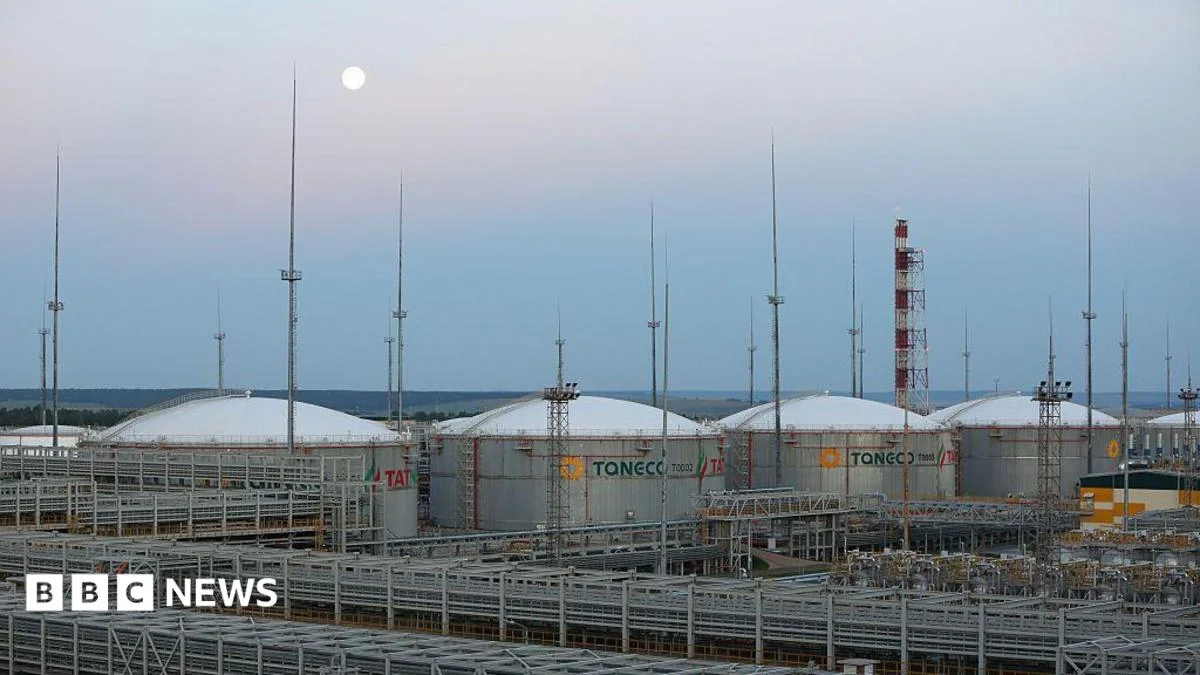
In one of the most daring and geographically expansive operations since the conflict began four and a half years ago, Ukrainian drones have struck an industrial and oil-refining hub in Russia’s Tatarstan region. The attack on the city of Nizhnekamsk, located over 1,200 kilometers from the Ukrainian border, resulted in the deaths of at least 13 people and significant damage to the Taneco refinery, one of Russia's most technologically advanced facilities. This escalation signifies a shift in Kyiv's tactical capabilities, proving it can now consistently threaten Russia’s economic lifelines deep within its sovereign territory, far beyond the immediate front lines.
For global energy markets and regional observers in Tehran, this strike is more than just a military statistic. The disruption of Russian refining capacity often leads to shifts in global crude flows and pricing structures. As Moscow grapples with the domestic fallout of such a high-casualty event on its soil, the pressure on its military-industrial complex—which has significant ties to Iranian hardware—continues to mount. The market is currently pricing in the risk of Russian retaliation, which historically involves intensified missile campaigns that further destabilize Eurasian trade routes.
Netanyahu Rebuffs Trump-Backed Peace Plan Amid Hormuz Blockade
Israeli Prime Minister Benjamin Netanyahu has publicly rejected a 15-point peace plan for Gaza that carried the backing of the United States and was notably associated with Donald Trump’s regional vision. Netanyahu’s insistence on the total disarmament of Hamas before any withdrawal or cessation of hostilities marks a significant diplomatic rift with Washington. This rejection comes at a time when Tehran has hardened its own stance, declaring that the Strait of Hormuz will remain under restrictive conditions until the U.S. "corrects its behavior." The deadlock suggests that the cycle of regional violence is unlikely to de-escalate in the immediate term, keeping the "war premium" firmly embedded in commodity prices.
This geopolitical friction has a direct transmission mechanism to the Iranian economy. The rhetoric regarding the closure or restriction of the Strait of Hormuz, coupled with the UAE reporting missile attacks on its shipping, has created a climate of extreme uncertainty. While the USD/IRR rate has remained remarkably static at 185,700 Toman over the last 24 hours, the underlying pressure is visible in the gold markets. Investors are increasingly viewing the current status quo not as a stabilization, but as a tense pause before potential volatility, leading to a cautious but persistent demand for hard assets.

U.S. Airstrikes in Southern Iran and the Security Outlook
While the northern and central regions of Iran remain relatively disconnected from direct kinetic action, the southern coastline, particularly Qeshm Island, has become a focal point of U.S. military activity. Reports indicate near-constant airstrikes in these areas as the U.S. attempts to degrade capabilities that could threaten international shipping lanes. These strikes have upended local livelihoods and created a localized humanitarian crisis, even as the broader national economy attempts to maintain a veneer of normalcy. The proximity of these strikes to the main arteries of Iranian oil exports serves as a constant reminder of how thin the margin for error has become.
On the diplomatic front, the Iranian Foreign Ministry has turned its attention toward Baghdad. Spokesperson Esmaeil Baqaei stated that Tehran expects the Iraqi government to prevent any misuse of its territory against Iran’s security interests. This claim suggests that Tehran is concerned about the potential for Western or allied forces to use neighboring soil for intelligence or strike operations. For the average Iranian citizen, this multi-front pressure—ranging from direct strikes in the south to diplomatic friction in the west—reinforces the necessity of tracking the USD and gold markets as a barometer for national survival in an increasingly hostile regional environment.
Market Analysis: Gold Edges Higher Amid Geopolitical Stalemate
As of 14:00 Tehran time, the domestic markets reflect the high-stakes poker game being played in the corridors of power. The USD sell rate is holding firm at 185,700 Toman (0.0% change over 24h), suggesting a heavy-handed intervention or a total lack of liquidity as traders wait for the next major headline. However, Gold 18k has moved from 18,763,562 to 18,832,817 Toman, a 0.4% increase that signals a flight to safety. Conversely, the Emami coin saw a slight retreat, moving from 187,000,000 to 186,500,000 Toman (-0.3%), likely due to profit-taking after recent spikes.

In the crypto space, Bitcoin is trading steadily at $64,978, influenced by U.S. inflation data and the overarching "Iran risk" that has become a permanent fixture in global sentiment analysis. For Iranian holders, the stable USDT rate of 186,050 Toman provides a digital exit ramp, but the lack of movement in the official USD/IRR rate suggests that the real market pressure is being bottled up. Should the tensions in the Strait of Hormuz or the strikes in Tatarstan lead to a major kinetic escalation, the current equilibrium in the Toman is expected to break rapidly.
Frequently Asked Questions
Why did Ukraine attack Tatarstan, so far from the border?
How does Netanyahu's rejection of the peace plan affect Iran?
Why is gold rising while the USD/IRR remains flat?
Understanding Maritime Chokepoints: The Strait of Hormuz
The phrase "Hormuz Tensions Flare" in the headline immediately brings to light the critical concept of maritime chokepoints, particularly the Strait of Hormuz. These are narrow sea passages that are essential for global trade, acting as bottlenecks through which a significant portion of the world's commercial shipping, especially oil and natural gas, must pass. Their strategic importance means that any disruption, whether due to conflict, piracy, or political instability, can have profound and immediate global economic and geopolitical consequences.
The Strait of Hormuz, located between Oman and Iran, is arguably the most strategically important oil transit chokepoint in the world. It connects the Persian Gulf to the Arabian Sea and the broader Indian Ocean. Over one-fifth of the world's total petroleum liquids consumption and a substantial portion of liquefied natural gas (LNG) pass through this strait daily. Countries like Saudi Arabia, Iran, Iraq, Kuwait, Qatar, and the UAE rely on it for their energy exports, making its security paramount for both producers and consumers worldwide.
Any threat to navigation in the Strait of Hormuz, such as a blockade or military confrontation, would send immediate shockwaves through global energy markets. Oil prices would likely surge dramatically, impacting economies worldwide through higher fuel costs, increased inflation, and potential supply chain disruptions. Such an event would also escalate geopolitical tensions, potentially drawing in major global powers concerned about their energy security and the stability of international trade routes. Understanding the vulnerability of such chokepoints is crucial for comprehending the fragility of global supply chains and the intricate web of international relations.
Topics
Related Articles