
AI-Driven Chip Cooling Breakthrough and Saylor’s $4.6B Cash Pivot Amid Hormuz Standoff
پیشرفت هوش مصنوعی در خنکسازی تراشهها و چرخش استراتژیک سیلور به نقدینگی در میان تنشهای هرمز
As Discovered Materials leverages AI to hunt for more efficient semiconductors, Michael Saylor’s Strategy shifts toward a massive $4.65 billion cash reserve. Meanwhile, Ukraine’s deep strikes on Russian refineries and Iran’s continued blockade of the Strait of Hormuz keep global energy and local currency markets on edge.
At time of publishing
USD
185,800
Toman
Gold 18K
18.82M
Toman / gram
Bitcoin
$64,980
US Dollar
Tether
185,553
Toman
The AI Hunt for Cooler Chips and Intel’s Strategic Exit
The technological landscape is witnessing a pivotal shift as the race for artificial intelligence moves from software capabilities to hardware efficiency. Discovered Materials has recently secured $9 million in funding to tackle one of the industry's most persistent bottlenecks: heat management. By utilizing AI to play a high-stakes game of "whack-a-mole" with molecular structures, the company aims to identify novel materials that can significantly reduce the thermal output of high-performance chips. This is not merely a technical curiosity; as AI models grow exponentially, the energy cost and heat generation of the hardware running them have become the primary limiting factors for global scaling.
Complementing this trend, Intel has announced plans to sell $15 billion worth of its stock following a staggering 400% rise in its share price over the past year. The company is pivoting heavily toward "Physical AI" and advanced packaging techniques, signaling that the next phase of the semiconductor war will be won by those who can integrate custom silicon into physical environments most effectively. For the average consumer and investor, this means the era of generic processing is ending, replaced by highly specialized, efficient hardware that could eventually lower the operational costs of AI services that have become ubiquitous in daily life.
Geopolitical Fires: Tatarstan Strikes and the Hormuz Standoff
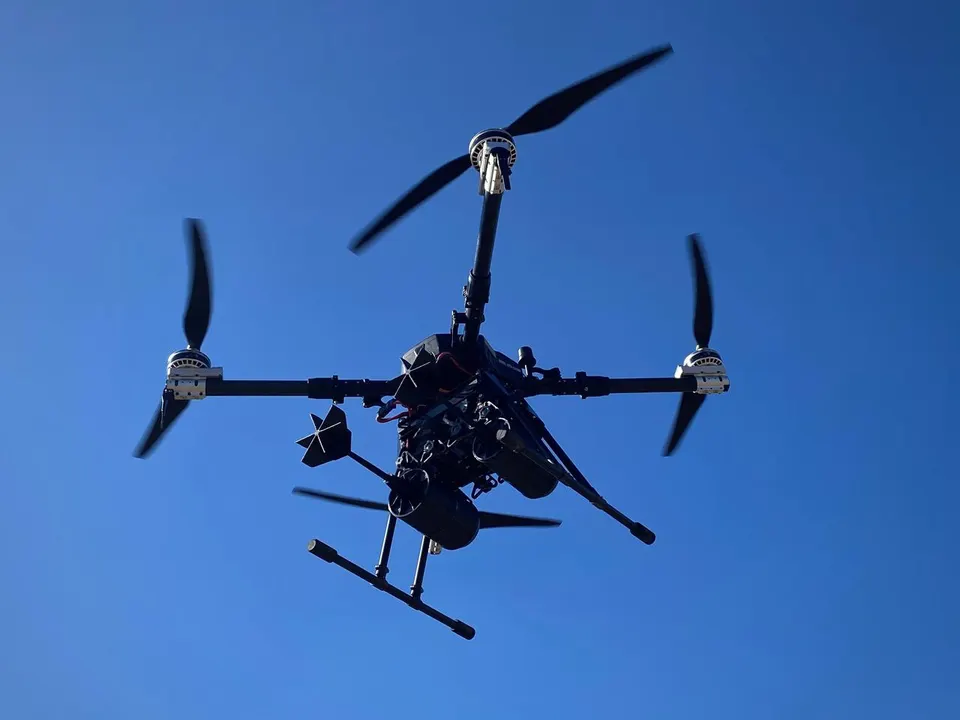
Geopolitical tensions have reached a boiling point this hour as Ukraine confirmed successful drone strikes on an oil refinery in Russia’s Tatarstan region, over 1,300 kilometers from the border. This deep-penetration attack, which resulted in significant fires and at least 13 casualties, represents a strategic shift by Kyiv to cripple Moscow’s energy-derived war chest. By targeting the Tyumen and Tatarstan industrial hubs, Ukraine is forcing a reallocation of Russian air defenses away from the front lines, creating a ripple effect that destabilizes global energy supply expectations and keeps Brent crude prices volatile.
In the Middle East, the Iranian Foreign Ministry has doubled down on its refusal to reopen the Strait of Hormuz, insisting that the waterway will remain restricted until specific demands are met by the Trump administration. While talks with Oman regarding shipping routes are reportedly ongoing, Tehran has been careful to categorize these as separate from the broader political deadlock. This stance has direct consequences for the local Iranian market; the uncertainty has kept the USD/IRR rate hovering at 185,800, a slight 0.1% increase over the last 24 hours. The blockade continues to serve as the primary lever for the establishment to project power, even as it exerts immense pressure on domestic inflation and trade logistics.
Market Realignment: Saylor’s Cash Pile and Gold’s Steady Climb
In a surprising move that has rattled some crypto purists, Michael Saylor’s Strategy has sold another 1,690 BTC, bringing its total cash reserve to a massive $4.65 billion. While the company still holds a dominant 4% of the total Bitcoin supply—worth roughly $55 billion—the shift toward a larger USD reserve suggests a tactical preparation for broader market volatility or potential acquisition opportunities. This "de-risking" by one of Bitcoin's most vocal institutional bulls reflects a broader sentiment shift where liquidity is being prioritized over pure asset accumulation as global interest rate paths remain uncertain.

Domestically, the Iranian gold market is reflecting this global caution. Gold 18k per gram rose by 0.3% to 18,818,966 Toman, while the Emami coin saw a slight correction, dropping 0.3% to 186,500,000 Toman. These movements indicate that while the US dollar remains the primary hedge for many, gold is acting as a secondary stabilizer for those wary of the ongoing Hormuz blockade. With Bitcoin trading at $64,980 and the Tether (USDT) rate at 185,553 Toman, the digital asset market in Iran remains tightly coupled with the informal dollar rate, serving as a vital escape valve for capital looking to bypass traditional banking restrictions amid the current geopolitical stalemate.
Frequently Asked Questions
Why is Michael Saylor's company selling Bitcoin now?
How do the Ukraine strikes on Tatarstan affect the Iranian economy?
What is 'Physical AI' and why is Intel investing $15 billion in it?
Geopolitical Risk and the Strategic Importance of the Strait of Hormuz
Geopolitical risk refers to the potential for political decisions, events, or instability in one region to have widespread economic and financial consequences globally. It encompasses everything from international conflicts and trade disputes to political upheavals and sanctions. Understanding these risks is crucial for investors, policymakers, and indeed, any curious global citizen, as they can significantly impact commodity prices, supply chains, and overall market stability. The recent mention of a 'Hormuz Standoff' in global news headlines immediately brings this concept into sharp focus.
The Strait of Hormuz stands as one of the world's most critical maritime chokepoints, connecting the Persian Gulf to the open ocean. Its strategic importance cannot be overstated: approximately one-fifth of the world's total petroleum consumption, and a significant portion of its liquefied natural gas (LNG), passes through this narrow waterway daily. Major oil-producing nations like Saudi Arabia, Iran, Iraq, Kuwait, Qatar, and the UAE rely on the Strait for their exports, making it an indispensable artery for global energy supply.
Any disruption or threat to shipping in the Strait of Hormuz – whether due to military conflict, political tensions, or blockades – could trigger immediate and severe repercussions across the global economy. Such an event would likely lead to a dramatic surge in crude oil and natural gas prices, fuel inflation worldwide, and disrupt supply chains for countless industries. This volatility, in turn, can prompt significant shifts in investment strategies, as seen with financial figures like Michael Saylor potentially making 'cash pivots' to navigate heightened uncertainty. The economic fallout would extend far beyond energy markets, affecting everything from manufacturing costs to consumer spending and the stability of national currencies, underscoring the interconnectedness of geopolitics and global finance.
While the Strait of Hormuz is a prominent example, similar geopolitical risks manifest in other regions, such as the impact of the Ukraine-Russia conflict on European energy supplies and global food markets. These events collectively highlight how regional political instability can ripple outwards, demanding constant vigilance and strategic foresight from governments and businesses worldwide.
Topics
Related Articles