
UK Political Scandal Erupts Over Neo-Nazi Advisor; Colombia Quake Kills 111 as Toman Holds Steady
جنجال سیاسی در بریتانیا بر سر مشاور نئونازی و زلزله مرگبار در کلمبیا؛ ثبات نسبی تومان در بازار تهران
A major scandal in the UK Conservative party over a neo-Nazi advisor has sparked international outcry, while a devastating 7.4 magnitude earthquake in Colombia has left over 100 dead. In Tehran, the USD/IRR exchange rate saw a slight 0.3% dip as the government consolidates military leadership.
At time of publishing
USD
185,200
Toman
Gold 18K
18.79M
Toman / gram
Bitcoin
$64,000
US Dollar
Tether
186,694
Toman
British Political Crisis: The Badenoch-Berger Confrontation
The British political landscape is currently embroiled in a severe ethical crisis that has reached the House of Lords. Kemi Badenoch, the Conservative leader, is facing intense pressure from Labour peer Luciana Berger to dismiss an advisor with a documented history of neo-Nazi activities. Joshua Bonehill-Paine, who was previously jailed for racially aggravated harassment against Berger, has been given a national advisory role, a move that has sparked outrage across the political spectrum. Critics argue that this appointment signals a dangerous normalization of extremist views within the Tory party, potentially alienating moderate voters and international allies alike.
This internal UK strife is more than just a domestic issue; it reflects a broader shift in Western political alignments that Tehran monitors with keen interest. The ideological tilt of the UK government directly impacts diplomatic engagement, maritime security in the Persian Gulf, and the enforcement of sanctions. As the UK deals with this internal fragmentation, its ability to project a unified foreign policy front may be compromised, providing a window of opportunity for regional actors to recalibrate their own diplomatic strategies. The scandal highlights the growing polarization in Western democracies, a theme that often resonates in Iranian state media's critique of Western social stability.

Natural Disaster in the Andes: Colombia’s Deadly Earthquake
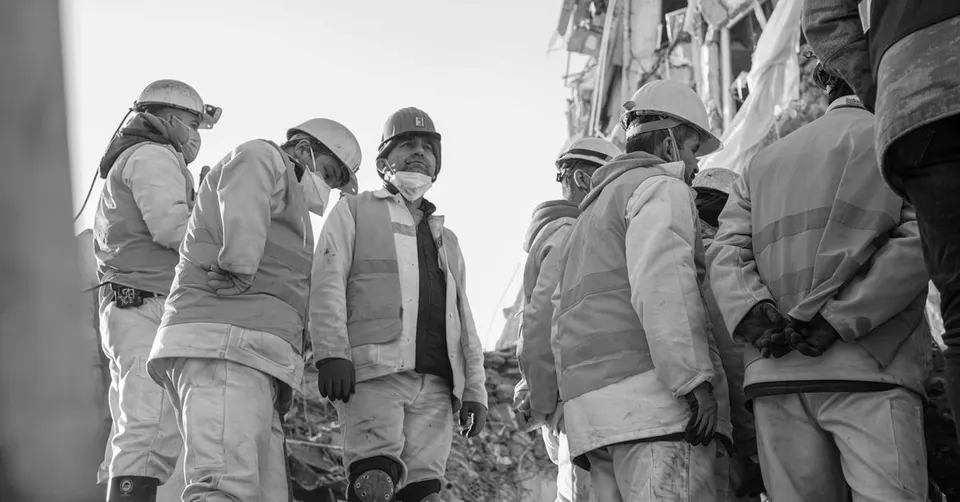
On the other side of the Atlantic, a massive 7.4 magnitude earthquake has devastated Colombia, claiming at least 111 lives according to preliminary reports from the presidency. The tremors were felt strongly in major urban centers including Bogotá, Cali, and Medellín, causing widespread structural failure and panic. Rescue teams are currently working against the clock to locate survivors in the rubble, with the death toll expected to rise significantly as communication is restored with more remote regions. The scale of the destruction has prompted a national emergency declaration, as hospitals in the affected areas struggle to cope with the influx of injured citizens.
For global markets, such a significant natural disaster in a major South American economy can lead to localized volatility, particularly in commodity exports like coffee and oil. While the immediate focus remains humanitarian, the long-term economic reconstruction will likely require significant international aid and fiscal reallocation. The disaster serves as a stark reminder of the vulnerability of infrastructure in seismically active zones, a concern that is shared by urban planners in Tehran and other Iranian cities situated on major fault lines. The geopolitical community is now watching how the Colombian government manages the crisis amidst existing political tensions in the region.
Tehran Market Update and Security Consolidation
In the local markets, the Iranian Toman has shown a degree of resilience despite ongoing regional tensions. The USD/IRR exchange rate moved from 185,700 to 185,200, marking a slight 0.3% appreciation for the Toman over the last 24 hours. Meanwhile, gold prices saw a marginal increase, with 18k gold rising from 18,763,562 to 18,791,264 Toman per gram (+0.1%). Emami coins followed the currency's lead, dropping from 187,000,000 to 186,500,000 Toman (-0.3%). This relative stability suggests that the market has already priced in much of the current geopolitical risk, though traders remain cautious as the Strait of Hormuz situation continues to simmer.
On the political front, President Masoud Pezeshkian has been active in reinforcing the image of national strength. In a recent address, he praised the Armed Forces as the cornerstone of Iran's security and national unity. This rhetoric coincides with a strategic consolidation of power, as IRGC veterans are being tapped for key security roles within the administration. Furthermore, Pezeshkian sought to quell rumors regarding the leadership's stability, stating that the Supreme Leader is in "perfect health" and emphasizing a message of internal cohesion. For the average Iranian citizen, these maneuvers are seen as an attempt to project stability and deter external pressure, even as the economic reality of high prices continues to weigh on households.
Global Markets: Microsoft’s AI Bet and US Debt Concerns
In the technology and financial sectors, Microsoft is making headlines as analysts from Bernstein suggest the stock could rally another 30%. Despite concerns that the tech giant might be overspending on artificial intelligence infrastructure, the prevailing view among institutional investors is that Microsoft is taking a "measured" and strategic approach. This optimism in the AI sector continues to drive global equity markets, even as traditional economic indicators flash warning signs. The decoupling of tech sentiment from broader macro fears is a trend that crypto advocates are also noting, with BlackRock suggesting that Bitcoin is beginning to trade more independently from traditional stock indices.
However, the broader US economic outlook is clouded by concerns over skyrocketing national debt. Fed Chair Kevin Warsh has reiterated a commitment to a 2% inflation target, but many economists argue that the sheer scale of US government borrowing makes this a difficult goal to achieve without significant economic pain. The tension between fiscal policy and monetary goals in the US has global implications, influencing the strength of the dollar and, by extension, the purchasing power of currencies like the Toman. As the US navigates its debt crisis, the demand for alternative assets like gold—which currently sits at $4,389.30 per ounce—remains robust among global investors looking for a hedge against fiat instability.

Frequently Asked Questions
Why is the UK political scandal relevant to Iranian readers?
How did the 7.4 magnitude earthquake affect global markets?
What is driving the current stability of the Toman in Tehran?
Currency Pegs and Their Effects on Inflation: The Iranian Rial Example
A currency peg is a policy in which a country fixes its official exchange rate to another currency, a basket of currencies, or a commodity such as gold. By anchoring the local currency to a more stable reference, governments hope to reduce exchange‑rate volatility, encourage trade, and signal macro‑economic discipline. The most common form is a fixed‑rate peg, where the central bank intervenes in the foreign‑exchange market to buy or sell its own currency whenever the market price drifts away from the official rate.
Iran has operated a de jure peg to the U.S. dollar for much of the past two decades, officially quoting the rial at roughly 42,000 per dollar for years. In practice, the market often diverged sharply, creating a dual‑rate system: an official rate used for government transactions and a much weaker “free‑market” rate that businesses and citizens actually paid. This divergence fuels inflation because imported goods become more expensive in rial terms, while the government’s budget, which is often denominated in dollars, remains constrained.
When a peg is unsustainable, the central bank must either raise interest rates dramatically, impose strict capital controls, or abandon the peg altogether. Iran’s experience shows the costs of each option. Raising rates can choke domestic credit and slow growth, while capital controls can fuel a black‑market premium for foreign currency. Eventually, in 2020‑2021, Iran allowed a modest devaluation, but the rial’s value continued to erode, prompting Iranians to turn to gold as a store of value. Gold prices in Tehran surged, reflecting both the loss of confidence in the rial and the limited availability of foreign currency.
The lesson for policymakers is that a peg can be a useful anchor only if the country has sufficient foreign‑exchange reserves, credible fiscal discipline, and a transparent monetary framework. Without those pillars, the peg becomes a source of distortion, encouraging parallel markets, capital flight, and runaway inflation—phenomena that have repeatedly resurfaced in Iran’s recent economic history.
For anyone watching emerging‑market currencies, the Iranian case illustrates how exchange‑rate policy, inflation dynamics, and alternative assets like gold are tightly interwoven. Understanding these links helps investors anticipate currency risk and policymakers design more resilient exchange‑rate regimes.
Topics
Related Articles