Tehran Invokes Geneva Conventions Amid US Strain; OpenAI Launches 14x Faster 'Ultrafast' GPT
هشدار حقوقی تهران به واشینگتن در سالگرد کنوانسیون ژنو؛ رونمایی OpenAI از حالت فوقسریع GPT
Iran’s Foreign Ministry issues a sharp critique of US military policy on the anniversary of the Geneva Conventions, while OpenAI disrupts the tech sector with a new 14x faster model. Meanwhile, global energy markets face new pressure as Russia's diesel exports hit multi-year lows.
At time of publishing
USD
187,600
Toman
Gold 18K
19.08M
Toman / gram
Bitcoin
$63,354
US Dollar
Tether
187,237
Toman
Tehran’s Legal Salvo: Geneva Conventions and the Cost of Conflict
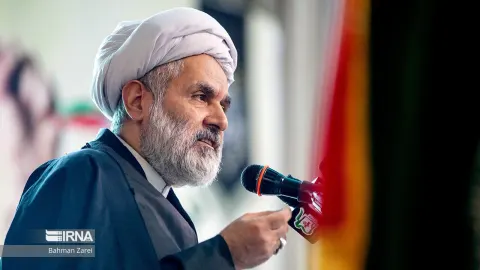
The Iranian Ministry of Foreign Affairs has utilized the anniversary of the 1949 Geneva Conventions to launch a pointed diplomatic offensive against the United States. In a statement carried by the state-run IRNA news agency, the ministry claimed that the US government demonstrates a "systematic disregard" for international humanitarian law. This rhetorical escalation specifically targets high-ranking American officials, including the President and Secretary of State, accusing them of overseeing organized violations of the rules of armed conflict. By framing current regional tensions through the lens of international law, Tehran is attempting to shift the narrative from military confrontation to a legalistic critique of Western interventionism.
For the domestic observer in Iran, these high-stakes diplomatic maneuvers continue to provide the backdrop for a volatile currency market. The USD sell rate edged up slightly from 187,400 to 187,600 Toman (+0.1%) over the last 24 hours. While the percentage increase is marginal, the persistent upward pressure reflects a market that remains deeply sensitive to the lack of diplomatic de-escalation. When the Foreign Ministry uses language involving "war crimes" and "organized violations," it signals to the private sector that the geopolitical risk premium is here to stay, preventing any meaningful recovery for the Toman in the short term.
OpenAI’s ‘Ultrafast’ Shift: The New Speed of Intelligence
OpenAI has officially introduced a preview of its latest breakthrough, a mode dubbed "Ultrafast" for the GPT 5.6 Sol model. This new iteration is designed to operate at a staggering 14 times the speed of its predecessor, specifically targeting enterprise users who require low-latency responses for high-volume tasks. The launch comes alongside a strategic partnership with IBM, which plans to train tens of thousands of consultants on these OpenAI technologies. This move is a clear attempt to cement OpenAI's dominance in the corporate sector as competitors like Anthropic and Google continue to close the gap in model performance.
However, the rapid innovation at OpenAI is occurring against a backdrop of executive instability. Denise Dresser, the Chief Revenue Officer who joined from Slack less than a year ago, has announced her departure. This marks the second high-profile exit from the company this week alone. For the broader tech market and investors, these departures raise questions about the internal governance and long-term stability of the AI giant, even as its product roadmap continues to set the pace for the entire industry. The "Ultrafast" mode represents a pivot toward utility and efficiency, moving beyond the mere "intelligence" of the models to focus on their practical, real-time application in global business workflows.

The Cracks in the Shield: Crisis Aboard the USS Abraham Lincoln
Reports are emerging of deteriorating conditions aboard the USS Abraham Lincoln, which has been deployed in the Middle East for over 250 days without a port call—a record-breaking stint driven by the ongoing standoff with Iran. According to sources cited by the BBC and Al Jazeera, sailors are facing severe food shortages, broken plumbing, and a mounting mental health crisis, with some reportedly considering jumping overboard to escape the strain. US senators are now calling for an urgent inquiry into the Navy's management of the deployment, highlighting the human cost of the "maximum pressure" military posture in the region.
This logistical and humanitarian strain on the US Navy serves as a reminder that the cost of regional containment is not just financial but structural. As the US military stretches its resources to maintain a permanent presence near the Strait of Hormuz, the internal cracks are becoming harder to ignore. For global markets, this suggests that the current level of US naval dominance in the region may be reaching a tipping point of sustainability. If the US is forced to rotate its carriers more frequently or reduce its footprint due to personnel welfare, the resulting power vacuum could lead to increased volatility in oil shipping lanes, directly impacting global energy prices.
Energy Pivots: US Nuclear Bets and Russia’s Diesel Drought
In a major shift toward long-term energy security, the US Department of Energy has committed an additional $1 billion to X-energy for its advanced nuclear reactor project in Texas. This brings the total federal backing for the project to $2.15 billion, signaling that the US is moving beyond experimental demonstrations and toward the commercial deployment of next-generation nuclear power. This investment is part of a broader strategy to decouple the American power grid from the volatility of fossil fuel markets, which have been severely disrupted by the ongoing conflicts involving Russia and Iran.
While the US looks toward the nuclear future, the immediate global energy market is grappling with a severe supply crunch from the East. Russia’s diesel exports crashed to a multi-year low of just 80,000 barrels per day in early August, a fraction of the 1 million bpd seen last year. This collapse is the direct result of successful Ukrainian drone strikes on Russian refineries and Moscow's subsequent export restrictions to stabilize its own domestic fuel crisis. For the Iranian market, where gold prices have dipped slightly (18k gold fell from 19,167,551 to 19,075,211 Toman, a -0.5% drop), these global energy shifts suggest a complex inflationary environment where energy costs remain high even as other assets consolidate.
Frequently Asked Questions
Why is the 14x speed increase in OpenAI's 'Ultrafast' mode significant for businesses?
What does the Iranian Foreign Ministry's statement on the Geneva Conventions signal to markets?
How do the conditions on the USS Abraham Lincoln affect regional security?
Why are Russia's diesel exports falling so drastically in August 2026?
Understanding the Geneva Conventions: Humanity in Conflict
The Geneva Conventions stand as a critical pillar of international humanitarian law, a set of treaties that establish standards for humane treatment in war. Born from centuries of efforts to mitigate the brutality of armed conflict, the most widely recognized versions were adopted in 1949 following the horrors of World War II. Their fundamental purpose is to protect individuals who are not, or are no longer, participating in hostilities – namely, wounded and sick soldiers, prisoners of war, and civilians – ensuring they are treated humanely and with dignity, even amidst the chaos of battle.
These four Conventions, along with their three Additional Protocols, lay down comprehensive rules covering various aspects of warfare. Key provisions include the prohibition of torture, cruel or degrading treatment, and summary executions. They mandate proper care for the wounded and sick, outline the rights and obligations of prisoners of war, and detail protections for civilians in occupied territories, including their right to food, medical care, and freedom from arbitrary detention. The Conventions also establish the emblem of the Red Cross and Red Crescent as a protected symbol for medical and humanitarian personnel and facilities.
Crucially, the Geneva Conventions are universally ratified, meaning virtually every nation in the world has agreed to abide by their principles. When a state, like Iran in the headline, "invokes" the Geneva Conventions, it is often a diplomatic signal, reminding other parties of their legal obligations under international law, particularly concerning the treatment of individuals or the conduct of military operations. While enforcement can be challenging in real-world conflicts, the Conventions provide a crucial legal and moral framework for accountability and serve as a constant reminder that even in war, there are limits to permissible conduct.
Topics
Related Articles