Washington Memorial Vandalized Amid US Unrest; US Navy Rotates Carriers as Crew Fatigue Reaches Breaking Point
هتک حرمت یادبود جنگ جهانی در واشینگتن؛ جابجایی ناوهای آمریکا در پی بحران سلامت روان ملوانان
A symbolic protest at the WWII memorial in DC highlights growing domestic friction, while the US Navy moves to replace the exhausted crew of the USS Abraham Lincoln. Meanwhile, the Toman holds steady at 187,300 despite regional naval shifts.
At time of publishing
USD
187,300
Toman
Gold 18K
19.05M
Toman / gram
Bitcoin
$62,659
US Dollar
Tether
187,415
Toman
Symbolic Unrest: The Vandalism of Washington’s WWII Memorial
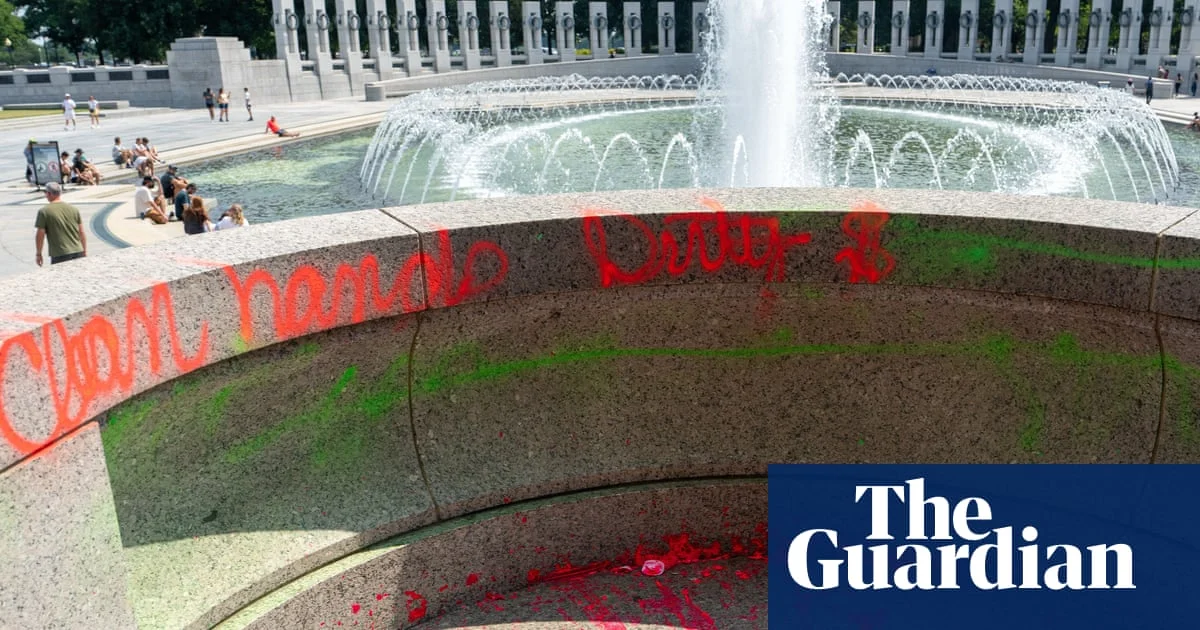
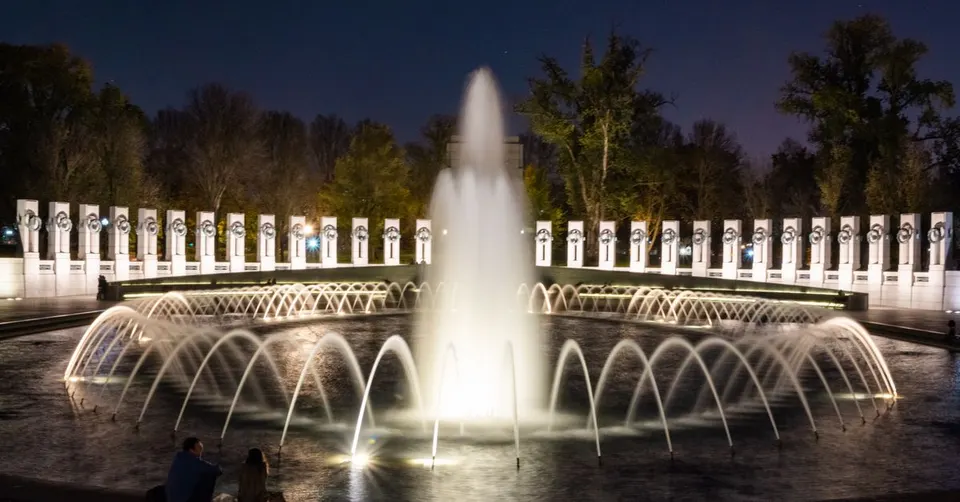
A striking act of vandalism at the World War II Memorial in Washington DC has captured national attention, as the fountain was filled with soap suds and defaced with graffiti reading "Clean hands Dirty $". The incident, described by the Interior Department as an "utter disgrace," saw red and green paint splattered across the historic site, prompting an immediate response from uniformed police and National Guard troops. This protest, occurring in the heart of the American capital, appears to target the intersection of military spending and financial ethics, a theme that has become increasingly volatile in the 2026 political landscape.
For global observers and market participants, such incidents are more than mere property damage; they represent a deepening of the domestic friction within the United States. As the country grapples with internal dissent over its financial and military priorities, the stability of its policy direction remains a point of concern for foreign exchange markets. In Tehran, while the direct impact on the Toman is minimal, traders often view these signs of American social unrest as a barometer for the US government's focus—or lack thereof—on overseas sanctions enforcement and geopolitical pressure campaigns.
Naval Exhaustion: USS George Washington to Relieve the Lincoln
The US Navy is reportedly moving the USS George Washington to the Middle East to relieve the USS Abraham Lincoln, which has been on a grueling, record-breaking deployment of over 200 days. This shift comes amid alarming reports of a mental health crisis among the Lincoln’s crew, including instances of service members attempting to jump overboard and chronic food shortages. The vessel had been redirected to the region specifically to bolster military operations involving Iran, but the human cost of this prolonged posture is now forcing a strategic rotation.
This development is particularly significant for the Iranian market and regional security. The presence of a US carrier strike group is a primary factor in the risk premium priced into the USD/IRR exchange rate. News of crew fatigue and logistical failures on such a high-profile asset suggests that the "maximum presence" strategy may be reaching its physical and psychological limits. If the US Navy struggles to maintain its operational tempo in the Persian Gulf, it could lead to a perceived shift in the regional balance of power, potentially impacting the Toman’s stability in the coming weeks.
Russia’s Recruitment Crisis and the Global Energy Shadow
In the geopolitical arena, Vladimir Putin’s administration is facing a critical crossroads as Russian recruiters scramble to find new soldiers without resorting to a politically risky second mass mobilization. With reports indicating that Russia is losing approximately 30,000 personnel per month in the ongoing conflict in Ukraine, the pressure on regional authorities to feed the "meat-grinder" has reached a fever pitch. Experts suggest that voluntary recruitment is slowing down, leaving the Kremlin with few options as it tries to maintain its offensive capabilities.
This struggle for manpower has indirect but potent consequences for the Iranian economy. As Russia becomes more desperate to maintain its military standing, its reliance on strategic partners like Iran for hardware and diplomatic support may deepen. Furthermore, any sign of Russian military exhaustion could lead to fluctuations in global energy markets, where both nations are major players. For the Iranian reader, the stability of the Putin administration is closely tied to the longevity of current trade corridors and the effectiveness of sanctions-evasion networks that have kept the Toman from even more dramatic devaluations.
Market Snapshots: Gold Windfalls and Toman Stability
While global headlines are dominated by naval movements and political protests, a fascinating discovery in Belgium has reminded the world of the enduring allure of gold. Construction workers unearthing sewage pipes found a stash of gold worth €9 million sealed within the walls of a cellar. This windfall comes at a time when gold prices remain historically high, with the international ounce trading at $4,385.80. In the local Iranian market, the Emami coin has remained flat at 189,500,000 Toman, reflecting a moment of cautious equilibrium despite the surrounding geopolitical noise.

In the currency markets, the USD/IRR pair saw a minor downward adjustment. The USD sell price moved from 187,600 to 187,300, representing a -0.2% decrease over the last 24 hours. This slight cooling of the dollar, combined with a -0.1% dip in 18k gold prices (now at 19,049,817 Toman per gram), suggests that the market has already priced in much of the current regional tension. However, with the Luigi Mangione plea deal and other US legal dramas unfolding, the focus remains on whether American domestic issues will eventually lead to a relaxation of the economic pressure currently felt in the Tehran bazaar.
Frequently Asked Questions
Why is the USS Abraham Lincoln being replaced in the Middle East?
What was the significance of the vandalism at the WWII memorial in Washington?
How is the Russian recruitment struggle affecting the Iranian economy?
The Critical Role of Crew Fatigue in Military Readiness
Military readiness is the cornerstone of any nation's defense, encompassing the ability of its armed forces to deploy, fight, and sustain operations effectively. It's often associated with advanced weaponry and strategic positioning, but at its heart lies the human element: the well-being and operational capacity of its personnel. When headlines highlight issues like "crew fatigue reaching breaking point" or "mental health" concerns aboard vessels like the USS Abraham Lincoln, they underscore a fundamental challenge to this readiness.
Crew fatigue and operational stress are not merely discomforts; they are critical threats that can significantly degrade military effectiveness. Prolonged deployments, high operational tempos, the constant threat of combat, and extended separation from family and normal life all contribute to an accumulation of physical and psychological strain. This sustained pressure can lead to burnout, impaired cognitive function, reduced reaction times, and an increased propensity for errors, which can have catastrophic consequences in high-stakes military environments.
The impact of severe fatigue extends beyond immediate performance, manifesting as long-term mental health challenges such as anxiety, depression, and Post-Traumatic Stress Disorder (PTSD). These conditions not only affect individual service members but also erode unit cohesion, morale, and the overall capacity of a force to execute complex missions. Recognizing this, modern military strategies increasingly incorporate policies for managing fatigue, including mandatory rest periods, psychological support services, and strategic rotation of personnel and assets to mitigate the human cost of sustained operations and maintain peak readiness.
Topics
Related Articles