
Justice Delayed: The 30-Year Tupac Trial Begins as US Naval Shifts Stir Tehran Markets
محاکمه قاتل توپاک پس از ۳۰ سال؛ تلاطم در بازارهای تهران با جابهجایی ناوهای آمریکا
The trial of Duane 'Keffe D' Davis for the 1996 murder of Tupac Shakur finally begins in Las Vegas, marking a historic moment for global culture. Meanwhile, the replacement of the USS Lincoln by the USS Washington in the Middle East keeps the Tehran currency market on edge as the dollar edges higher.
At time of publishing
USD
186,900
Toman
Gold 18K
19.06M
Toman / gram
Bitcoin
$62,990
US Dollar
Tether
187,050
Toman
The Long Road to Justice: Tupac’s Murder Trial Begins
Thirty years after the drive-by shooting that claimed the life of hip-hop icon Tupac Shakur, the wheels of justice are finally turning in a Las Vegas courtroom. Duane “Keffe D” Davis, the only living person allegedly present in the car from which the shots were fired, faces trial this Monday. For decades, the case remained a symbol of law enforcement failure and a breeding ground for conspiracy theories. The trial represents more than just a legal proceeding; it is a cultural reckoning for a generation that grew up under the shadow of the East Coast-West Coast rivalry and the unsolved mysteries of the 1990s.
The prosecution is expected to rely heavily on Davis’s own public admissions made in memoirs and interviews over the years, where he detailed his involvement in the events of September 1996. While he has previously claimed to be a mere witness, the legal threshold for conspiracy and 'aid and abet' in Nevada could see him face life in prison. For the global audience, including a significant following in Iran where Tupac’s music remains a staple of underground culture, this trial offers a rare glimpse into the persistence of the American legal system in closing cold cases that have haunted the public consciousness for three decades.

Naval Rotations and the 187,000 Toman Threshold
Geopolitical tensions are manifesting directly in the Tehran markets this evening as reports emerge that the USS Washington is moving to relieve the USS Lincoln in the Middle East. The transition comes amid reports of challenging conditions aboard the Lincoln, which has been on an extended deployment. In the hyper-sensitive environment of the Persian Gulf, any movement of U.S. carrier strike groups is interpreted by traders as a signal of either escalation or strategic repositioning. This uncertainty has provided just enough upward pressure to nudge the greenback higher in the local market.
In the last 24 hours, the USD in Tehran moved from 186,700 to 186,900 Toman (+0.1%). While the percentage increase is modest, the psychological weight of the 187,000 Toman level remains a critical barrier for local traders. Meanwhile, the gold market showed a slight cooling trend; Gold 18k per gram dropped from 19,130,615 to 19,063,668 Toman (-0.3%), and the Emami coin followed suit, slipping from 189,500,000 to 189,000,000 Toman (-0.3%). This divergence suggests that while geopolitical fears are supporting the dollar, a lack of immediate domestic liquidity is preventing a broader rally in precious metals.

Migration Pressures and the Ceuta Crisis
On the edge of the European Union, Moroccan authorities have arrested over 100 individuals attempting to storm the border into the Spanish territory of Ceuta. This follows a period of intense social media activity calling for mass crossings, a tactic that has increasingly strained the diplomatic relationship between Rabat and Madrid. The humanitarian cost remains staggering; recent reports indicate that nearly 100 people have lost their lives in similar attempts over the past two weeks. For global markets, these migration surges are often precursors to heightened political instability within the EU, fueling the rise of far-right movements that advocate for protectionist trade policies.
This crisis in Ceuta is a microcosm of a larger global trend where economic disparity and conflict drive mass movement, which in turn triggers nationalistic policy shifts in developed economies. As Spain and Morocco tighten security, the ripple effects are felt in the halls of the European Parliament, where debates over border funding and migrant quotas continue to polarize member states. For the investor, this translates into long-term Euro volatility and potential shifts in labor market regulations across the continent.
Beating the Index: The Rise of the 800-Stock Fund
In the world of finance, the traditional wisdom of low-cost index tracking is being challenged by an unconventional giant. An active fund holding approximately 800 individual stocks is currently outperforming major market benchmarks, proving that massive diversification does not necessarily lead to mediocre returns. By employing sophisticated AI-driven selection processes and sector-specific weighting, the fund has managed to capture the upside of the tech boom while hedging against the recent volatility in the energy sector. This development is significant for Iranian investors looking for global models of wealth preservation amid high domestic inflation.
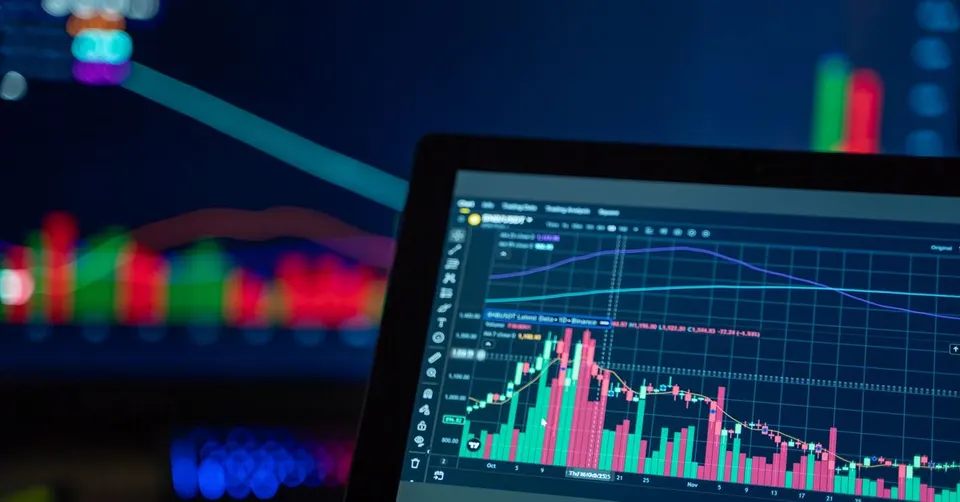
The success of such a broad active fund suggests a shift in market dynamics where "stock picking" at scale is becoming more viable than simple passive indexing. As the global economy enters a period of fragmented growth, the ability to pivot between 800 different entities allows fund managers to avoid the concentration risks associated with the 'Magnificent Seven' or other top-heavy index components. For those watching the markets from Tehran, it serves as a reminder that diversification remains the only 'free lunch' in investing, especially when navigating a world defined by unpredictable geopolitical shocks.
Frequently Asked Questions
Why is the Tupac murder trial happening 30 years later?
How does the U.S. aircraft carrier rotation affect the Iranian Toman?
What is the significance of the 800-stock active fund mentioned?
What are the legal implications for Duane Davis in Nevada?
Geopolitical Risk and its Ripple Effect on Financial Markets
Geopolitical risk refers to the potential for political instability, conflicts, or significant shifts in international relations to disrupt economic activity and financial markets. These risks encompass everything from wars and sanctions to diplomatic tensions and military posturing. When headlines speak of "US Naval Shifts" stirring "Tehran Markets," it highlights a direct manifestation of such risk. The deployment or redeployment of significant military assets, particularly in sensitive regions, can be interpreted by investors and traders as a signal of heightened tension or potential conflict, leading to immediate market reactions.
For economies like Iran, which are often subject to international sanctions and political isolation, geopolitical risks have an amplified effect. The mere perception of increased regional instability can trigger a flight from the local currency (e.g., the Iranian Rial, IRR) towards more stable assets like the US Dollar (USD) or physical commodities such as gold. This increased demand for foreign currency or gold can cause the local currency to depreciate sharply and the price of gold (like the Emami coin) to surge, as investors seek to preserve their wealth against potential economic shocks or inflation.
The "stirring" of markets in response to naval shifts is thus a direct reflection of how quickly perceived geopolitical threats translate into tangible economic consequences. Investors, both domestic and international, factor these risks into their decisions, leading to rapid capital movements, increased volatility, and often, a weakening of local asset values. Understanding this dynamic is crucial for anyone trying to decipher why seemingly distant political or military events can have such immediate and profound impacts on everyday prices and market stability.
Topics
Related Articles