Kyiv Market Blaze Following Russian Strikes; Six Iranian Universities Enter Shanghai Global Top 1,000
آتشسوزی در بازار کییف پس از حملات موشکی روسیه؛ صعود ۶ دانشگاه ایران در رتبهبندی جهانی شانگهای
Aerial attacks intensify in Ukraine as a major fire breaks out at a Kyiv market, while Iranian academia celebrates a milestone with six universities making the 2026 Shanghai Ranking. Meanwhile, Tehran and Dushanbe move to accelerate strategic transport and energy cooperation.
At time of publishing
USD
186,500
Toman
Gold 18K
19.00M
Toman / gram
Bitcoin
$63,019
US Dollar
Tether
186,189
Toman
Aerial Escalation in Kyiv Amid Regional Instability
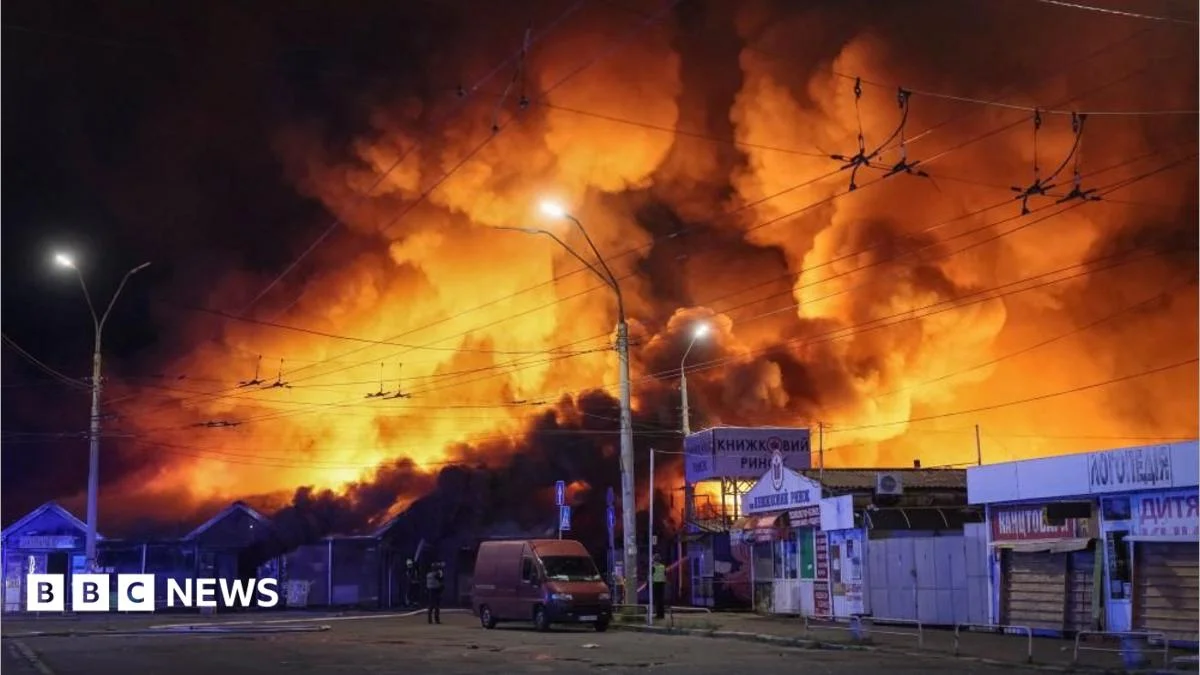
Russia has launched a fresh wave of aerial bombardments across Ukraine, marking a significant escalation in the ongoing conflict as we move into late August 2026. Reports from Kyiv indicate that emergency services are currently battling a massive blaze at a local market following a direct hit. Local officials have confirmed at least three fatalities, while Moscow claims its strikes successfully targeted a strategic warehouse. This surge in violence coincides with a tense incident on NATO’s doorstep, where a Spanish fighter jet reportedly downed a drone that breached Romanian airspace near the border with Ukraine and Moldova.
The intensification of these strikes serves as a reminder of the persistent volatility in the Black Sea region, which continues to exert pressure on global energy and commodity markets. For Iranian observers, these developments often correlate with shifts in risk appetite within the domestic gold and currency markets. Although the immediate market reaction today has been relatively muted, with gold prices seeing a minor correction, the threat of a wider regional spillover involving NATO members remains a primary driver of long-term safe-haven demand.

Iranian Academia Breaks into Shanghai Global Rankings
In a significant milestone for the country’s higher education sector, six Iranian universities have officially secured spots within the top 1,000 of the prestigious 2026 Shanghai Ranking. According to the head of the Islamic World Science and Technology Monitoring and Citation Institute (ISC), this inclusion highlights a resilient trend in Iranian research output and academic citations despite years of international isolation and economic sanctions. The universities, led by institutions such as the University of Tehran and Shiraz University, have demonstrated particular strength in engineering and physical sciences, which are critical for the nation's industrial self-sufficiency goals.
This academic achievement provides a rare piece of positive news for the Iranian middle class, many of whom view educational prestige as a vital pathway for the next generation. However, the gap between academic excellence and the domestic labor market remains a point of concern. While these institutions are producing world-class research, the broader economy continues to struggle with the brain drain phenomenon, as many top graduates seek opportunities abroad due to the lack of high-tech infrastructure and competitive salaries within the country.

Strengthening the 'Look East' Strategy: Iran and Tajikistan
Tehran and Dushanbe are accelerating their efforts to integrate regional logistics and energy grids, as evidenced by the latest high-level meetings between Iranian and Tajik officials. The two nations have committed to speeding up bilateral cooperation in rail, road, and air transport, with a specific focus on developing port and logistics sectors that could bypass traditional Western-aligned trade routes. Furthermore, Iran has expressed its readiness to provide technical assistance to modernize Tajikistan’s power grid, leveraging its expertise in water and electricity infrastructure.
This deepening relationship is a cornerstone of Iran's broader strategy to mitigate the impact of sanctions through regional integration. By positioning itself as a transit hub for Central Asian states, Iran aims to secure long-term economic dependencies that are less susceptible to US-led financial pressure. For the average Iranian citizen, these deals represent a slow but steady shift toward a more regionalized economy, though the tangible impact on household inflation and the cost of living remains to be seen as major infrastructure projects typically take years to yield results.
Market Snapshot: USD and Gold Soften Slightly
Domestic markets in Iran have opened the day with a slight downward correction across major assets. The US Dollar (USD) sell rate moved from 186,900 to 186,500 Toman, representing a marginal decrease of 0.2% over the last 24 hours. This slight cooling of the greenback suggests a temporary stabilization in demand, although the buy-sell spread remains tight. Meanwhile, Gold 18k per gram also saw a decline, falling from 19,063,668 to 18,996,721 Toman (-0.4%), tracking the broader trend of profit-taking after recent highs.
In the coin market, the Emami coin remained perfectly flat at 189,000,000 Toman, showing no change from the previous day’s close. In the digital asset space, Bitcoin continues to trade in a sideways range around $63,019, failing to break out of its current 'chop zone.' Investors are currently weighing the risks of the escalating Ukraine conflict against a relatively stable domestic liquidity environment, leading to a cautious trading atmosphere in the Tehran bazaar this afternoon.
Frequently Asked Questions
Which Iranian universities made the 2026 Shanghai Ranking?
How did the recent Kyiv attacks affect the Iranian gold market?
What are the key areas of cooperation between Iran and Tajikistan?
Understanding Global University Rankings: The Shanghai Ranking and Beyond
Global university rankings, such as the Academic Ranking of World Universities (ARWU), commonly known as the Shanghai Ranking, the QS World University Rankings, and the Times Higher Education (THE) World University Rankings, have become influential benchmarks for assessing the quality and prestige of higher education institutions worldwide. These rankings aim to provide a comparative analysis of universities based on a diverse set of criteria, offering insights into their academic performance, research output, and international standing. The recent entry of six Iranian universities into the Shanghai Global Top 1,000 highlights the growing significance of these metrics for national educational systems.
Each ranking system employs its own unique methodology and weighting of indicators. For instance, the Shanghai Ranking heavily emphasizes research output, including the number of alumni and staff winning Nobel Prizes and Field Medals, highly cited researchers, articles published in Nature and Science, articles indexed in major citation databases, and per capita academic performance. Other rankings, like QS and THE, incorporate additional factors such as academic reputation (based on surveys), employer reputation, faculty-student ratio, international faculty and student ratios, and even industry income. Understanding these distinct methodologies is crucial, as a university might perform differently across various rankings depending on their specific strengths.
The importance of global university rankings extends beyond mere comparison; they serve as critical tools for various stakeholders. For prospective students, especially those considering international education, these rankings offer guidance in selecting institutions that align with their academic aspirations. For governments and policymakers, high rankings can enhance national prestige and 'soft power' on the global stage, influencing funding decisions and strategic investments in higher education. They also play a role in attracting international talent, fostering research collaborations, and potentially mitigating 'brain drain' by showcasing domestic academic excellence.
However, it's also important to acknowledge the limitations and criticisms of these ranking systems. Critics often point to potential biases, such as an overemphasis on English-language publications, a strong focus on STEM fields over humanities, and a preference for large, research-intensive universities. They may not fully capture the quality of teaching, student experience, or a university's local community impact. Despite these caveats, global university rankings remain a powerful, albeit imperfect, mechanism for evaluating and understanding the dynamic landscape of higher education worldwide.
Topics
Related Articles