Iran Reports $15B Export Milestone as Oil Hits $91 Amid Escalating Regional Tensions
گزارش صادرات ۱۵ میلیارد دلاری ایران همزمان با نفت ۹۱ دلاری و اوجگیری تنشهای منطقهای
Iran's non-oil exports have reportedly hit $15 billion for the first half of 2026, even as the Toman faces continued pressure. Meanwhile, global markets are bracing for impact as Brent crude surges to $91 and US Treasury yields reach levels not seen since 2007.
At time of publishing
USD
187,600
Toman
Gold 18K
19.23M
Toman / gram
Bitcoin
$64,156
US Dollar
Tether
187,451.608
Toman
Iran’s Non-Oil Trade Hits $15 Billion Amid Currency Volatility
The Islamic Republic of Iran Customs Administration (IRICA) has announced that the country’s non-oil exports reached a significant milestone of $15 billion by mid-2026. According to official reports, this surge represents a strategic pivot toward regional trade partners and a concerted effort to bypass traditional Western financial channels. While the government frames this as a victory for the "resistance economy," the domestic currency market tells a more complex story. The US Dollar (USD) in Tehran’s open market moved from 186,950 to 187,600 Toman in the last 24 hours, a 0.3% increase that suggests inflationary pressures remain high despite the reported trade surplus.
For the average Iranian citizen, these export figures often feel disconnected from daily reality. While the state celebrates the inflow of foreign currency, the cost of living continues to climb. Gold prices have mirrored this anxiety; 18k gold rose from 19,183,711 to 19,229,881 Toman (+0.2%), and the Emami coin saw a sharper jump of 0.8%, reaching 192,000,000 Toman. The discrepancy between rising exports and a weakening Toman suggests that much of the trade revenue may be stuck in clearing accounts or consumed by the high costs of sanction-circumvention logistics, leaving little room for domestic price stabilization.
Global Markets Tremble: $91 Oil and the Treasury Yield Spike
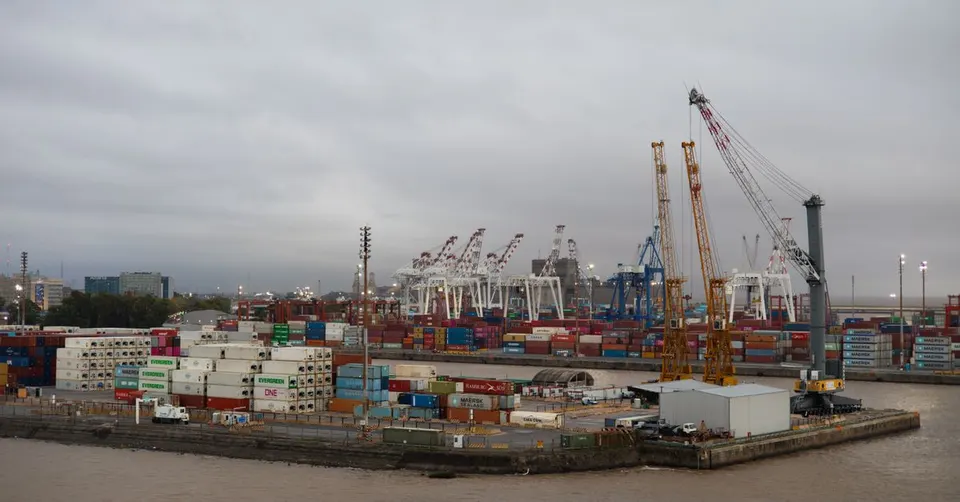
Global financial markets are currently caught in a pincer movement between soaring energy costs and a massive sell-off in the bond market. Brent crude oil has surged to $91 per barrel, driven by the intensifying conflict between the United States and Iran. This escalation has drained risk appetite across the board, pushing investors toward safe havens. Simultaneously, the 30-year US Treasury yield has hit its highest point since 2007, a development that traditionally spells trouble for high-growth assets. This spike in yields makes borrowing significantly more expensive and exerts downward pressure on global equity markets, which are already struggling to price in the possibility of a wider regional war.
Bitcoin has shown surprising resilience in this environment, currently holding steady at $64,156. While it has not escaped the general volatility, it appears to be consolidating within the $63,000 to $65,500 range. For Iranian crypto traders, the stability of Bitcoin in USD terms is offset by the rising price of Tether (USDT), which is currently trading at 187,452 Toman. This means that even when the global crypto market is flat, the cost of entry for Iranians continues to rise alongside the dollar, making digital assets an increasingly expensive hedge against local inflation.
AI Education in a Time of Conflict: The 4 Million Student Claim
In a move that blends technological ambition with wartime rhetoric, Iran’s Education Minister Alireza Kazemi claimed that the state has provided artificial intelligence (AI) training to approximately 4 million students. Interestingly, the minister explicitly noted that these programs were conducted under "difficult wartime conditions," referencing the ongoing geopolitical friction and the aftermath of high-level assassinations. This push for AI literacy is part of a broader state strategy to achieve "technological sovereignty," aiming to build a workforce capable of maintaining the country’s digital infrastructure under total isolation.
However, the reality of such a massive educational rollout remains under scrutiny. Independent analysts point out that Iran’s persistent internet censorship and the filtering of major global AI platforms make genuine innovation difficult for the youth. While the government may be teaching the basics of AI logic, the lack of access to high-end hardware due to sanctions and the "brain drain" of top tech talent to the West and GCC countries remain significant hurdles. For the students involved, these courses represent a potential lifeline to the global economy, but without a change in the broader political and digital environment, the gap between state propaganda and actual economic opportunity remains wide.

Geopolitical Shifts: From Zambia’s Democracy to Russia’s Warnings
While the Middle East remains the focal point of global tension, significant shifts are occurring elsewhere. In Africa, Hakainde Hichilema has secured a second term as Zambia’s president with 60% of the vote, a rare sign of democratic stability in a region often plagued by unrest. This victory is being watched closely by global markets as Zambia is a key copper producer; stability there is vital for the global green energy transition. On the other flank of the geopolitical map, Russia has issued stern warnings to the United Kingdom over reports that British-made drones are being used by Ukraine to strike targets deep inside Russian territory. This heightens the risk of a direct confrontation between NATO members and Moscow, further complicating the global security architecture.
These seemingly disparate events—a copper-rich nation stabilizing and a nuclear power threatening a European capital—all feed back into the same global risk model. For the Iranian reader, this means that the current pressure on the Toman and the high price of gold are not just local issues but part of a fragmented world order. As international alliances harden, trade routes become more expensive to secure, and the "risk premium" on everything from oil to bread continues to rise, ensuring that the economic outlook for the remainder of 2026 remains highly uncertain.
Frequently Asked Questions
Why is Brent crude oil rising despite global economic cooling?
How does the 30-year US Treasury yield impact Iranian investors?
Is the $15 billion non-oil export figure a sign of a recovering economy?
Understanding the Geopolitical Risk Premium in Oil Prices
The news headline highlights oil prices hitting $91 amidst escalating regional tensions, bringing into focus a critical concept in commodity markets: the geopolitical risk premium. This premium is an additional cost embedded in the price of a commodity, particularly crude oil, that reflects the market's perception of potential supply disruptions due to political instability, conflicts, or policy shifts in key producing or transit regions. It's not based on current supply-demand fundamentals alone, but on the fear or anticipation of future disruptions.
When tensions rise in a region vital for global oil supply, such as the Middle East, traders and investors factor in the possibility of reduced output, blocked shipping lanes, or even direct attacks on infrastructure. This uncertainty leads to a surge in speculative buying as market participants seek to hedge against potential shortages, pushing prices higher than they would otherwise be. The geopolitical risk premium acts as an insurance policy for the market, reflecting the perceived likelihood and severity of future supply shocks.
For an oil-exporting nation like Iran, higher oil prices driven by a geopolitical risk premium can appear beneficial, boosting state revenues and foreign currency reserves. However, this comes with significant caveats. Such price surges are often accompanied by increased regional instability, which can deter foreign investment, disrupt trade routes, and escalate security concerns. Furthermore, reliance on a geopolitically inflated oil price can mask underlying economic vulnerabilities and make a nation's budget highly susceptible to sudden shifts in global political climates or the easing of tensions.
Ultimately, while a geopolitical risk premium might offer short-term financial gains for some producers, it signals broader global instability. It translates into higher energy costs for consumers and businesses worldwide, potentially fueling inflation and slowing economic growth. Central banks often monitor this premium closely as it can influence monetary policy decisions, highlighting its far-reaching implications beyond just the oil market.
Topics
Related Articles