Trump Claims Strait of Hormuz as 'US Territory' While Tanker Rates Explode and Qatar Rebuffs Tehran
ادعای جنجالی ترامپ درباره حاکمیت بر تنگه هرمز؛ افزایش بیسابقه هزینه نفتکشها و تنش دیپلماتیک با قطر
Donald Trump has sparked international outrage by claiming the Strait of Hormuz should be declared US territory, as shipping costs for Persian Gulf oil hit multi-month highs. Meanwhile, Qatar has dismissed Iranian claims regarding missing pilots as a 'media ploy,' adding to regional instability.
At time of publishing
USD
188,300
Toman
Gold 18K
19.32M
Toman / gram
Bitcoin
$64,038
US Dollar
Tether
187,165
Toman
Trump’s 'New US Territory' Claim Sparks Regional Outrage
In a move that has stunned diplomatic circles and sent ripples through energy markets, Donald Trump has utilized his Truth Social platform to post a map of the Strait of Hormuz with a circle around the vital waterway, labeling it as "New US Territory." This digital provocation follows a recent speech where Trump asserted that after "defeating" Iran, he would formally declare the strait a territory of the United States. He justified this by citing the current naval blockade, claiming that since no ships pass without US permission, the area essentially belongs to Washington. The rhetoric marks a significant escalation in Trump’s transactional approach to geopolitics, treating international maritime lanes as spoils of war.
Tehran’s response was swift and dismissive. Kazem Gharibabadi, Iran’s Deputy Foreign Minister for Legal and International Affairs, characterized Trump’s statements as "delusions" and promised that Iran would "correct" these fantasies. Beyond the war of words, the impact is being felt in the real economy. The Baltic Exchange reported that chartering rates for supertankers (VLCCs) moving crude from the Persian Gulf to China have surged to $510,000 per day. This spike reflects a desperate scramble by Asian buyers to secure tonnage as the security backdrop in the world's most critical oil chokepoint deteriorates rapidly.
Qatar Rebuffs Iran’s 'Media Ploy' Over Missing Pilots
Diplomatic relations between Tehran and Doha have hit a sudden rough patch as Qatar officially rejected Iranian claims that it is holding several missing aircrew members. Majed al-Ansari, a spokesperson for the Qatari government, labeled the Iranian narrative a "media ploy" and stated that no such pilots are in Qatari custody. This denial follows allegations from Iranian state-linked outlets suggesting that Doha was withholding information about personnel from planes that supposedly violated Qatari sovereignty. The Qatari side maintained that while they deal with all airspace violations according to international law, the specific claims made by Tehran lack any factual basis.
This friction is particularly notable given Qatar's traditional role as a mediator between Iran and the West. If Doha is now moving toward a more confrontational stance—or at least a less accommodating one—it suggests a shift in the regional balance of power. For Iranian observers, this dispute adds a layer of uncertainty to regional security cooperation. The rejection of Tehran's claims by a neighbor that usually seeks de-escalation indicates that the Iranian government's narrative is finding fewer buyers even among its supposed partners in the Gulf.
Market Analysis: Toman Weakens as Global Investors Stay Bullish
On the domestic front, the Iranian Toman continues its downward trajectory against major currencies. In the last 24 hours, the USD rose from 186,950 to 188,300, a 0.7% increase that reflects growing anxiety over the Hormuz rhetoric and regional isolation. Gold followed suit, with 18k gold per gram moving from 19,183,711 to 19,322,221 (+0.7%), and the Emami coin rising from 190,500,000 to 191,500,000 (+0.5%). These moves demonstrate that local capital is seeking refuge in hard assets as the threat of maritime blockades and diplomatic spats with neighbors like Qatar intensify.
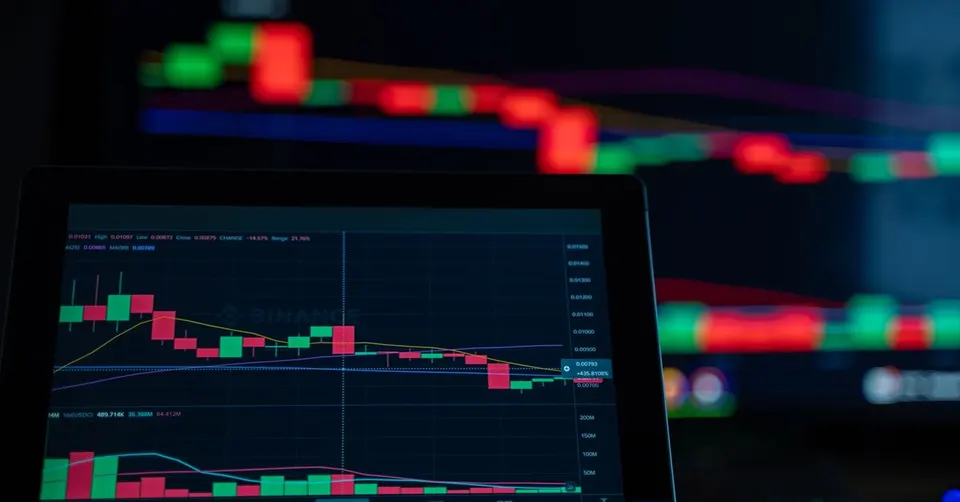
Globally, however, the mood is surprisingly different. A Bank of America survey reveals that global fund managers are at their most bullish in months, largely shrugging off rising US Treasury yields and political instability. While the 10-year Treasury yield continues to climb, strategists suggest that equity markets will not feel the burn until yields reach even higher levels. This disconnect between a booming global sentiment and a distressed local Iranian market highlights the "sanctioned island" effect, where global optimism fails to penetrate the Iranian economy due to systemic risks and geopolitical friction. For the average Iranian, this means the cost of imports will continue to rise even if the rest of the world enjoys a market rally.
UK-Russia Drone Escalation and the Global Defense Shift
Geopolitical tensions are not limited to the Middle East. The UK government has reaffirmed its "100% support" for Ukraine following reports that British-made drones have been used to strike targets deep inside Russian territory. Moscow has threatened the UK with "consequences," accusing London of direct involvement in the escalation. This development coincides with the West Midlands in the UK taking public control of its bus network—a massive domestic policy shift—but the international focus remains on the lethal effectiveness of drone technology. In Ukraine, units like "Magyar’s Birds" continue to release footage of kamikaze drones, turning the conflict into a highly visible, digital war of attrition.
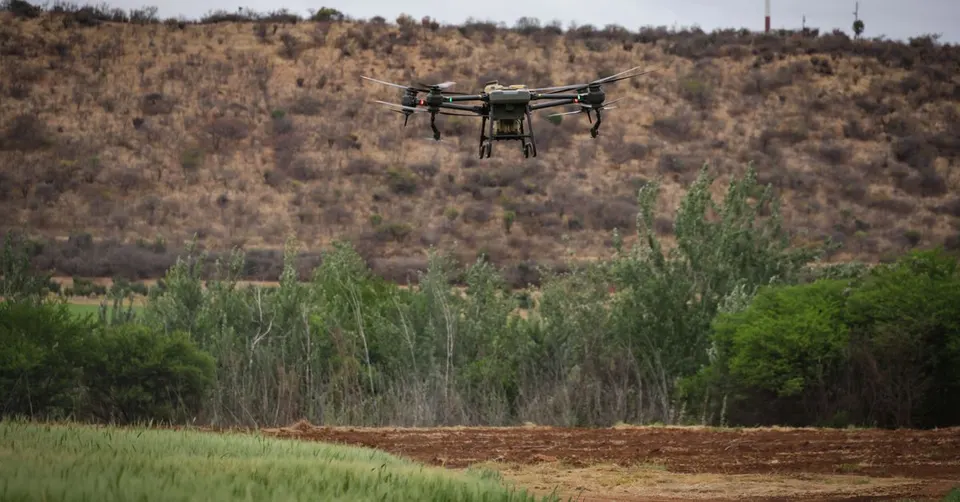
This shift toward unmanned systems and deep-strike capabilities is redefining global defense spending. For Iran, which has its own extensive drone program, the evolution of the Ukraine conflict serves as both a testing ground and a warning. As the UK and other Western powers become more comfortable with their technology being used on Russian soil, the threshold for similar interventions in other theaters—including the Middle East—may be lowering. This global trend toward automated warfare, combined with Trump's territorial claims, suggests a future where traditional borders are increasingly challenged by both technology and aggressive political rhetoric.
Frequently Asked Questions
What is the legal basis for Trump's claim over the Strait of Hormuz?
Why are supertanker rates hitting $510,000 per day?
How has the USD/IRR exchange rate reacted to these headlines?
What is the dispute between Iran and Qatar regarding pilots?
Understanding Transit Passage in International Straits
The headline's provocative claim regarding the Strait of Hormuz as 'US Territory' immediately brings to the forefront a critical concept in international maritime law: Transit Passage. The Strait of Hormuz is one of the world's most vital chokepoints, through which a significant portion of global oil and liquefied natural gas (LNG) transits daily. Its strategic importance makes the legal framework governing navigation through it a matter of global security and economic stability.
Transit Passage is a legal right recognized under the 1982 United Nations Convention on the Law of the Sea (UNCLOS). It grants all ships and aircraft, including warships and military aircraft, the right to unimpeded and continuous passage through international straits that are used for international navigation between one part of the high seas or an exclusive economic zone and another part of the high seas or an exclusive economic zone. This right is stronger than "innocent passage," which applies in territorial waters and allows coastal states to regulate passage more strictly, including requiring submarines to surface and prohibiting military exercises.
The essence of Transit Passage is to ensure freedom of navigation through critical maritime arteries, preventing coastal states from unilaterally closing or unduly restricting passage through straits essential for international commerce and military mobility. For a strait like Hormuz, bordered by Iran and Oman, this means that despite these nations having territorial waters extending into the strait, all vessels and aircraft have the right to pass through without hindrance, provided they proceed without delay and refrain from any threat or use of force against the sovereignty, territorial integrity, or political independence of the states bordering the strait.
Challenging the principle of Transit Passage, whether through territorial claims or threats to shipping, directly impacts global trade, energy security, and international relations. Such actions introduce significant geopolitical risk, which can manifest as increased insurance premiums, higher shipping costs (like the "exploding tanker rates" mentioned), and heightened military tensions. Understanding Transit Passage is key to grasping the legal underpinnings of maritime disputes and their far-reaching economic and security consequences in crucial regions like the Persian Gulf.
Topics
Related Articles