Global Flight Shift: Seoul Overtakes Dubai as War Redraws Aviation Maps; Bitcoin Nears $72,000
تغییر نقشه پروازی جهان؛ سئول جایگزین دبی میشود و بیتکوین به مرز ۷۲ هزار دلار رسید
The ongoing regional conflict has turned Middle Eastern airspace into a transit desert, forcing long-haul travelers toward Asian hubs like Seoul. Meanwhile, a massive $3 billion short squeeze has propelled Bitcoin toward $72,000, as Iranian gold prices see a daily uptick.
At time of publishing
USD
190,300
Toman
Gold 18K
19.85M
Toman / gram
Bitcoin
$72,252
US Dollar
Tether
189,432
Toman
The Great Aviation Pivot: Why Seoul is the New Dubai
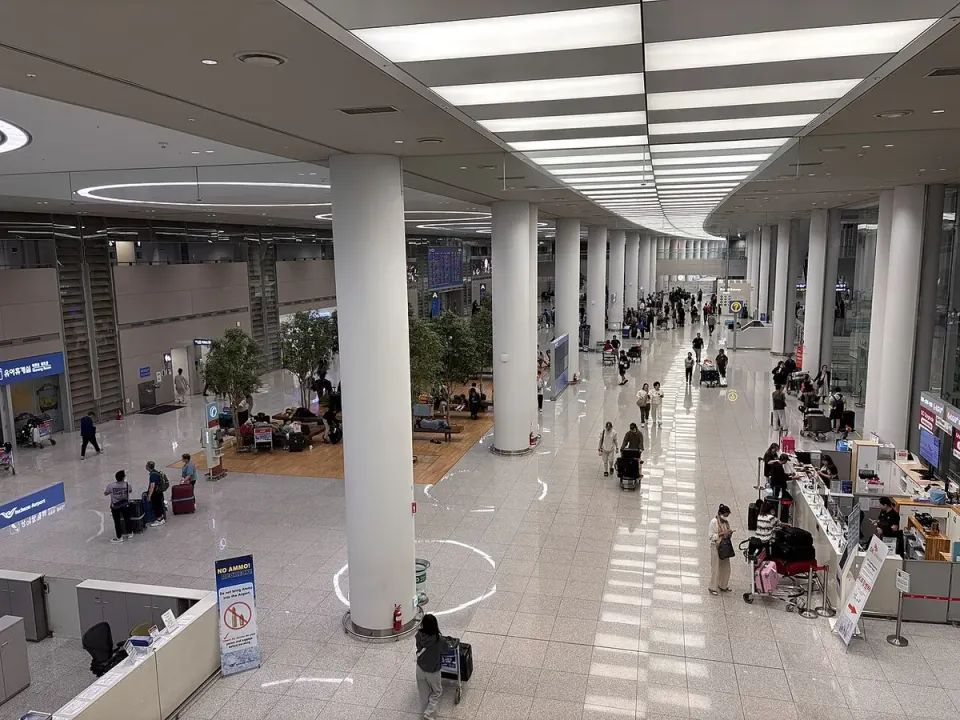
The geography of global travel is undergoing a radical transformation as the protracted conflict involving Iran and regional powers effectively closes the traditional 'Middle East corridor.' For decades, Dubai, Doha, and Abu Dhabi served as the indispensable bridges between East and West. However, recent data suggests that the 'Iran war' has slashed transit traffic at these hubs so severely that international carriers and passengers are seeking safer, more predictable alternatives. Seoul’s Incheon International Airport has emerged as the primary beneficiary, capturing a significant portion of the long-haul layover market that once belonged to the Emirates.
This shift is not merely a matter of convenience but a necessity driven by soaring insurance premiums and the risk of sudden airspace closures. While Middle Eastern airports remain architectural marvels, their strategic utility is being undermined by the geopolitical instability radiating from Tehran. For Iranian citizens, this means further isolation; as major international airlines reroute toward Central Asia and the Far East, the cost of connecting to the rest of the world from within the plateau has reached prohibitive levels, effectively turning a regional conflict into a logistical blockade.
Education and the Rise of the 'Unicorn' Generation
In the United Kingdom, the release of GCSE results today has sparked a broader conversation about the future of the global workforce. While girls continue to outperform boys in overall grades, the gender gap is narrowing in critical subjects like mathematics. More importantly, Myles McGinley of the Cambridge OCR exam board noted a staggering 33% increase in business studies entries over the last five years. He described this cohort as the most 'entrepreneurial' yet, suggesting that the founders of the next generation of billion-dollar 'unicorn' companies are sitting in these classrooms today.
This trend reflects a global shift in mindset where traditional career paths are being eschewed in favor of self-starting and digital entrepreneurship. For a global economy currently battered by inflation and war, this surge in business literacy among youth provides a rare glimmer of long-term optimism. Even in countries under heavy sanctions, the 'entrepreneurial itch' is often the only way for young people to bypass stagnant state economies and connect with the global digital marketplace.
A Climate of Impunity: The ICC and Global Justice
The International Criminal Court (ICC) is currently facing what it calls a 'flagrant attack' on its independence after the United States slapped sanctions on its President, Tomoko Akane. The move comes as the court attempts to navigate highly sensitive investigations into war crimes across various theaters, including Gaza. Simultaneously, the Israeli military has finally admitted that its soldiers opened fire on a car carrying five-year-old Hind Rajab in 2024, an incident that became a global symbol of civilian suffering. While the IDF has ordered a criminal investigation, critics point to a 'pervasive climate of impunity' where official inquiries rarely lead to actual accountability.

These developments highlight a deepening fracture in the international legal order. When major powers like the U.S. use economic sanctions to target the leaders of international courts, the very concept of universal justice is called into question. For observers in the Middle East, these legal battles are seen as a litmus test for whether international law applies equally to all, or if it remains a tool of geopolitical leverage. As Australia also calls for sanctions against Israel over the killing of aid workers, the diplomatic pressure on all sides is reaching a breaking point.
Market Watch: Bitcoin Short Squeeze and Toman Stability
In the financial markets, Bitcoin has staged a dramatic recovery, surging toward the $72,252 mark. This move was fueled by a massive short squeeze that saw over $3.1 billion in liquidations within 24 hours. The rally, which has seen Bitcoin gain roughly 15% since Monday, is being driven by a combination of falling U.S. yields and renewed political rhetoric surrounding crypto as a strategic reserve. Investors who bet against the 'digital gold' have been caught in a classic trap, forced to buy back their positions and further driving the price upward.

Back in the local Iranian market, the currency has remained remarkably flat despite the external volatility. The USD/IRR sell rate held steady at 190,300 Toman (+0.0%), suggesting a temporary equilibrium or heavy intervention. However, gold and coin markets showed more life. The 18k gold gram rose from 19,760,838 to 19,853,178 Toman (+0.5%), while the Emami coin jumped from 198,000,000 to 199,500,000 Toman (+0.8%). This upward tick in gold prices reflects a persistent desire among local investors to hedge against the looming 'Economic D-Day' threatened by shifting U.S. policies.
Frequently Asked Questions
Why is Seoul becoming a transit hub for travelers who usually go through Dubai?
What caused the sudden spike in Bitcoin's price to $72,000?
Why are gold prices in Iran rising while the USD remains stable?
Geopolitics and the Shifting Skies: How Conflicts Redraw Global Aviation Maps
The headline about Seoul overtaking Dubai as a major aviation hub due to war highlights a crucial concept: the profound impact of geopolitics on global aviation logistics. Air corridors, which appear as fixed lines on a map, are in reality dynamic pathways constantly subject to political stability, security concerns, and international relations. When conflicts erupt or political tensions escalate, governments can declare no-fly zones, close airspace, or issue advisories that compel airlines to reroute flights, sometimes drastically altering established routes.
This rerouting is not merely an inconvenience; it carries significant operational and economic consequences. Airlines forced to avoid conflict zones must often fly longer distances, consuming more fuel, increasing flight times, and incurring higher operational costs, including insurance premiums. For passengers, this means longer journeys and potentially higher ticket prices. For cargo, it translates to delayed deliveries and increased shipping expenses, disrupting global supply chains that rely on timely air freight.
Historically, cities like Dubai leveraged their strategic geographical location to become crucial transit points between East and West. However, persistent instability or conflicts in their broader region can diminish this advantage. As airlines seek safer, more predictable routes, alternative hubs in politically stable regions, such as Seoul Incheon, can rise in prominence. This shift illustrates how geopolitical events can redistribute economic activity and influence across the globe, transforming the competitive landscape for international airports and the nations that host them.
Ultimately, understanding this dynamic reveals that global connectivity is fragile and deeply intertwined with international security. Airlines and logistics companies must build resilience into their networks, constantly monitoring geopolitical developments and adapting their strategies to navigate an ever-changing global political landscape. This continuous adaptation ensures the flow of people and goods, even as the 'maps' of global aviation are perpetually redrawn by world events.
Topics
Related Articles