Meta’s Design on Trial as US Threatens Economic ‘Collapse’ and Bitcoin Hits $72,500
محاکمه زیرساختهای متا همزمان با تهدید آمریکا به «فروپاشی» اقتصاد ایران؛ بیتکوین در ایستگاه ۷۲ هزار دلار
A landmark case against Meta shifts the legal battle from content to addictive infrastructure, while the US Treasury issues a 'with us or against us' ultimatum regarding Iranian sanctions. Meanwhile, Bitcoin rallies past $72,500 as US national debt hits a staggering $40 trillion.
At time of publishing
USD
190,700
Toman
Gold 18K
19.95M
Toman / gram
Bitcoin
$72,551
US Dollar
Tether
188,800
Toman
Meta’s Infrastructure on Trial: Moving Beyond Content Regulation
The legal battlefield for social media giants is undergoing a seismic shift. A landmark case against Meta, led by experts like Leïla Mörch of Geminy, is moving the conversation away from what users post and toward how the platforms are built. For decades, Section 230 in the United States has shielded companies from liability for user-generated content. However, this new legal strategy targets the very 'architecture of addiction'—features like infinite scroll, recommendation algorithms, and push notifications designed to maximize engagement at the cost of mental health.
This shift is significant because it treats social media features not as a neutral stage for speech, but as a product with inherent design flaws. If successful, this approach could force a total redesign of platforms like Instagram and Facebook, moving them away from attention-maximizing loops. For the global audience, including users in the Middle East who are among the most active on these platforms, this could mean a future with less algorithmic manipulation and more intentional digital environments. It also sets a precedent for regulators worldwide to demand transparency in how algorithms prioritize information.

US Sanctions Escalation: The 'Collapse' Rhetoric and Market Reaction
At the 23:00 Tehran hour, the geopolitical temperature has reached a boiling point following statements from the US Treasury. Secretary Janet Yellen has signaled a more aggressive enforcement phase, suggesting that allies must decide whether they are 'with us or against us' regarding the tightening blockade on the Iranian economy. The stated goal—to 'squash' the economy and force a 'collapse'—has been met with predictable defiance from Tehran. The Iranian Ministry of Foreign Affairs characterized these moves as 'economic terrorism' and 'crimes against humanity,' arguing that the destiny of the region will not be written in Western capitals.
In the local markets, the impact of this rhetoric is palpable. The USD/IRR exchange rate moved from 190,300 to 190,700 (+0.2%) over the last 24 hours, reflecting a cautious but persistent upward pressure on the dollar. Gold 18k followed suit, rising from 19,760,838 to 19,954,753 Toman per gram, a 1.0% increase. While the government claims these sanctions will not dictate Iran's future, the reality for the average citizen is a continued erosion of purchasing power and a search for alternative stores of value, as evidenced by the rising demand for hard currency and gold coins.

Bitcoin as a Hedge: $40 Trillion US Debt and Market Bubbles
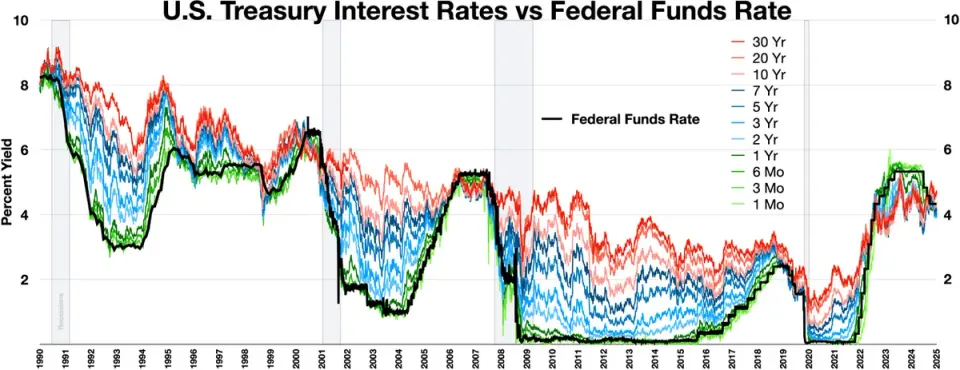
As the US national debt officially crosses the $40 trillion milestone, the narrative surrounding Bitcoin as 'digital gold' is gaining renewed momentum. Bitcoin (BTC) is currently trading at $72,551, as investors look for an escape hatch from potential long-term dollar debasement. Analysts warn that the bond market is currently a 'ticking time bomb' that could burst the stock market bubble. When Treasury yields rise to attract buyers for this massive debt, it often sucks liquidity out of riskier assets, yet Bitcoin seems to be decoupling from traditional equities as it absorbs capital from those fearing a systemic fiat crisis.
For Iranian investors, this global volatility creates a complex backdrop. While the Toman weakens, the double-whammy of a rising USD and a surging Bitcoin has made crypto-assets an increasingly attractive, albeit volatile, hedge. However, the 'Clarity Act' or lack thereof in the US remains a wildcard. CFTC Chairman Mike Selig has warned that his agency will move to create its own crypto regulations if Congress fails to act, which could introduce sudden volatility into the market. For now, the sentiment remains cautiously bullish, though prediction market traders remain split on whether this $72k level is a sustainable floor or a temporary peak before a correction.
Biotech Hype and Political Scrutiny in Washington
Beyond the financial and geopolitical spheres, the medical world is buzzing with Moderna’s latest personalized mRNA cancer vaccine. While some doctors hail it as a revolutionary breakthrough in the fight against melanoma, market analysts are sounding the alarm on 'overhyped' expectations. The stock market's reaction to such biotech news is increasingly sensitive, as investors look for the next 'Nvidia-level' growth story in a market otherwise dominated by debt concerns.
Simultaneously, the White House is facing internal scrutiny over the influence of top Trump aide Natalie Harp. Recent FBI activity, including the seizure of devices from former representatives, highlights a period of intense political friction in Washington. This domestic instability in the US often translates into unpredictable foreign policy, which is particularly relevant for the Middle East as the 2026 election cycle approaches. Any shift in the administrative power balance could lead to sudden changes in sanction enforcement or diplomatic backchannels, adding another layer of uncertainty to the global economic outlook.
Frequently Asked Questions
Why is the lawsuit against Meta focusing on 'design' instead of 'content'?
How did the Toman react to the latest US Treasury statements?
What does the $40 trillion US debt milestone mean for crypto?
Is the Moderna mRNA cancer vaccine a guaranteed success for investors?
Understanding Economic Sanctions: A Tool of Geopolitical Pressure
Economic sanctions are powerful foreign policy tools used by countries or international bodies to pressure other nations, entities, or individuals to change their behavior. Far from mere economic measures, they represent a strategic attempt to achieve political, security, or human rights objectives through financial and trade restrictions. These measures can range from comprehensive embargoes on all trade to targeted restrictions on specific sectors, individuals, or types of transactions, such as asset freezes, travel bans, arms embargoes, or limitations on access to international financial systems.
The mechanism behind sanctions is to inflict economic pain, thereby compelling the target to comply with demands. For instance, financial sanctions can cut off a country's access to global banking networks, making international trade and investment exceedingly difficult. Trade sanctions might restrict imports or exports of critical goods, impacting industries and the daily lives of citizens. The "US Iran sanctions 2026" mentioned in the keywords are a prominent example of such measures, aiming to curb Iran's nuclear program and regional activities by severely limiting its ability to engage with the global economy, directly affecting its currency's exchange rate (USD IRR) and domestic prices like gold.
While intended to exert pressure, sanctions often carry significant and complex consequences. In the target country, they can lead to currency depreciation, hyperinflation, shortages of essential goods, and a decline in living standards, as seen with the impact on the "USD IRR exchange rate" and the "Gold price Tehran," where gold often serves as a hedge against currency instability. However, sanctions can also have unintended effects, such as fostering illicit trade, encouraging the development of alternative financial systems (like the rise of Bitcoin as a potential means to bypass traditional banking), or even strengthening the resolve of the targeted regime. Understanding economic sanctions is crucial for comprehending global geopolitical dynamics and their tangible impact on economies and societies worldwide.
Topics
Related Articles