Trump’s '51st State' Jibe Deepens Canada Trade War as Tehran Gold Hits New Peaks
کنایه جنجالی ترامپ به کانادا در اوج جنگ تجاری؛ رکوردشکنی بیسابقه قیمت سکه در بازار تهران
Donald Trump has escalated his rhetoric against Canada, suggesting the nation wants the benefits of US statehood without the obligations, following a collapse in trade talks. Meanwhile, Tehran's markets are reacting to global instability, with Emami coins surging over 3% in a single day.
At time of publishing
USD
196,400
Toman
Gold 18K
21.78M
Toman / gram
Bitcoin
$76,222
US Dollar
Tether
195,307
Toman
The '51st State' Rhetoric: US-Canada Relations Hit Rock Bottom
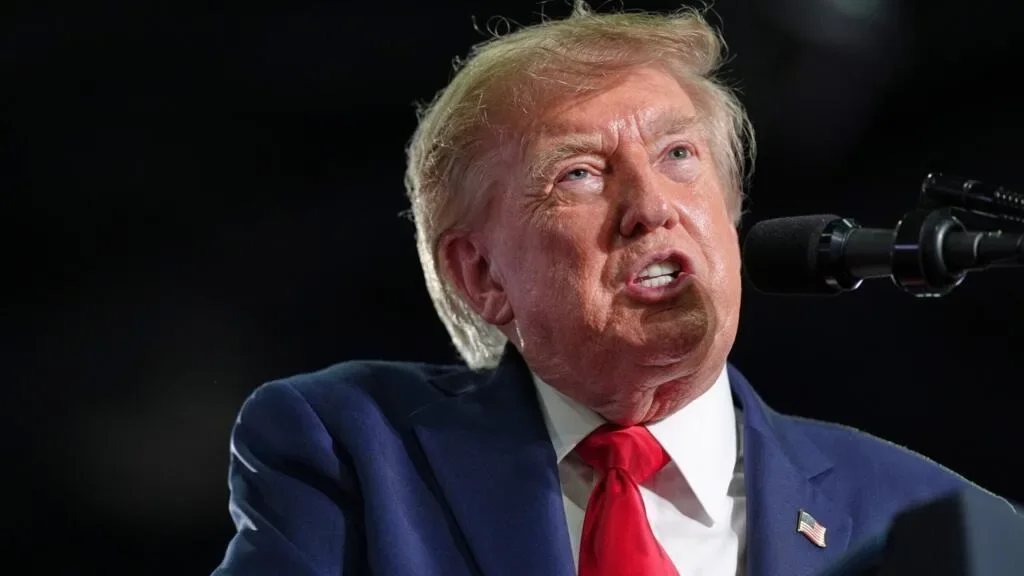
Donald Trump has significantly escalated the ongoing trade conflict with Canada, using his latest public platform to claim that America’s northern neighbor wants the "benefits of being a State, without being one." This provocative statement follows the total collapse of high-level trade negotiations between the two nations. In response, Canadian Prime Minister Mark Carney has "reluctantly" announced a sweeping package of retaliatory tariffs, accusing the Trump administration of initiating an unprovoked trade war that threatens the economic stability of the entire North American continent.
The rhetoric represents a shift from purely economic disputes over lumber and dairy to a more fundamental questioning of Canadian sovereignty and its relationship with the United States. For market observers, this is a nightmare scenario; the US and Canada share the largest bilateral trade relationship in the world. If these tariffs are fully implemented, they will disrupt integrated supply chains in the automotive, energy, and agricultural sectors, likely driving up inflation in both countries and forcing the Federal Reserve and the Bank of Canada into difficult policy corners.

Tehran Markets: Gold Surges as Geopolitical Risk Peaks
While the North American trade war dominates global headlines, the ripple effects are being felt acutely in the Tehran markets. As of 12:00 PM Sunday, the USD sell rate in the open market rose from 195,400 to 196,400 Toman, marking a 0.5% increase in 24 hours. However, the real story lies in the gold market, which has become the primary hedge for Iranians fearing further global instability. Gold 18k per gram climbed from 21,429,890 to 21,780,783 Toman (+1.6%), while the benchmark Emami coin witnessed a massive 3.3% jump, moving from 209,000,000 to 216,000,000 Toman.
This aggressive move into gold, even as Bitcoin remains relatively stable around the $76,222 mark, suggests that local investors are prioritizing physical assets over digital ones during this period of heightened geopolitical friction. The international price of gold, currently sitting at a staggering $4,604.40 per ounce, provides a strong global tailwind for these domestic price hikes. For the average Iranian household, this volatility complicates long-term savings plans and fuels expectations of a renewed inflationary cycle as the cost of imports and hard assets continues to climb.
Internal Cracks in Ukraine: Corruption Allegations and Political Pressure
In a development that could reshape Western support for the war effort, a recently sacked Ukrainian minister told the BBC that President Volodymyr Zelensky has "questions to answer" regarding systemic corruption within his administration. The former official also took the bold step of calling for immediate elections, a move that Zelensky has resisted citing the ongoing state of martial law. These allegations go to the heart of the debate in Washington and Brussels over the accountability of the billions of dollars in military and financial aid being sent to Kyiv.
The timing of these revelations is particularly damaging. With the US administration already focused on domestic trade wars and isolationist policies, any evidence of mismanagement in Ukraine provides political ammunition for those looking to scale back foreign aid. If the internal political consensus in Ukraine fractures, it could weaken the country’s position on the battlefield and its leverage in any future peace negotiations. This story serves as a reminder that the greatest threat to Ukraine may not only be external aggression but internal institutional decay.
Iran’s Domestic Narrative: Unity Amidst Economic Strain
Inside Iran, President Masoud Pezeshkian has spent the morning attempting to project a sense of national resilience. During a speech in Tehran, he praised the Iranian people for maintaining "unity" in the face of what he described as an unequal military, economic, and security confrontation. Pezeshkian claimed that Iran’s ability to withstand international pressure has "surprised the world" and frustrated the plans of its adversaries. This narrative of defiance is a hallmark of the administration’s attempt to manage public expectations as the rial continues to lose ground against the dollar.
Further reinforcing this geopolitical alignment, Russia’s Grand Mufti, Ravil Gaynutdin, recently praised Tehran’s efforts to strengthen Islamic unity during a visit to Moscow. While these diplomatic gestures are intended to show that Iran is not isolated, the economic reality remains challenging. The administration’s focus on "ideals" and "unity" often clashes with the day-to-day struggles of a population facing 216-million-Toman gold coins and a stagnant manufacturing sector. As the Trump-led trade wars shift global alliances, Tehran is clearly looking to solidify its ties with the East while managing a volatile domestic economy.
Watch
Carney says Canada will make its own decisions on who to trade with #shorts #foxnews #fox #news
Fox News
Frequently Asked Questions
Why is the US-Canada trade war impacting the price of gold in Iran?
What did Donald Trump mean by saying Canada wants the benefits of being a 'State'?
Is the corruption allegation in Ukraine likely to stop Western aid?
Gold as a Safe Haven Asset
Gold has long captivated humanity, not just for its beauty but for its enduring economic role, particularly as a "safe haven asset." This concept refers to an investment that is expected to retain or increase in value during times of market turbulence, economic uncertainty, or geopolitical instability. While various assets can act as safe havens, gold stands out due to its historical reputation as a reliable store of value, its tangible nature, and its lack of reliance on any single government or corporation.
When economic forecasts are bleak, inflation fears loom, or geopolitical tensions rise, investors often flock to gold, driving up its price. This surge reflects a collective desire to preserve wealth against the erosion of purchasing power or the potential collapse of other asset classes. Unlike fiat currencies, which can be devalued by government policy, or stocks, which are subject to corporate performance and market sentiment, gold's value is perceived as intrinsic and universal, making it a preferred refuge during crises.
The phenomenon of "Tehran Gold Hits New Peaks," as mentioned in the headline, perfectly illustrates gold's safe haven appeal, especially in economies facing significant currency depreciation or high inflation. For investors in Iran, where the local currency (Iranian Rial) has experienced considerable volatility against major international currencies like the U.S. Dollar, holding gold (such as Emami coins) serves as a critical hedge. It allows them to protect their savings from losing value, effectively maintaining their purchasing power in real terms even as the national currency weakens.
Globally, gold's price movements are influenced by a complex interplay of supply and demand, interest rates, and investor sentiment. However, its fundamental role as a safe haven asset remains a constant. Whether it's a global financial crisis, a regional conflict, or domestic economic instability, gold often becomes the asset of choice for those seeking stability and security for their wealth, underscoring its timeless appeal in an ever-changing world.
Topics
Related Articles