MBS in Paris: France-Saudi Energy Pacts Target Hormuz Bypass as Toman Breaches 203k
سفر بنسلمان به پاریس برای دور زدن هرمز؛ جهش دلار به کانال ۲۰۳ هزار تومان در سایه تحریمهای جدید
Saudi Crown Prince Mohammed bin Salman's visit to Paris signals a strategic shift to bypass the Strait of Hormuz, while the Iranian Toman faces intense pressure, surging past 203,000 per USD amid news of impending U.S. sanctions.
At time of publishing
USD
203,500
Toman
Gold 18K
22.25M
Toman / gram
Bitcoin
$77,865
US Dollar
Tether
201,420
Toman
The Paris Summit: Bypassing the Strait of Hormuz
Saudi Crown Prince Mohammed bin Salman (MBS) has arrived in Paris for a high-stakes two-day official visit with French President Emmanuel Macron. While the public appearance at the closing ceremony of the Esports World Cup provided a modern backdrop, the core of the discussions focuses on a strategic realignment of energy security in the Middle East. According to reports from France 24, the two leaders are exploring new energy routes designed to bypass the Strait of Hormuz. This move is a direct response to the persistent volatility in the Persian Gulf and represents a long-term effort to reduce the global economy's vulnerability to Iranian threats of closing the vital waterway. For Tehran, this diplomatic maneuvering signifies a potential erosion of its primary geopolitical leverage, as its neighbors and European partners seek to insulate themselves from regional tensions.
The timing of the visit is particularly sensitive as diplomatic relations between Paris and Tehran continue to sour. Iran recently labeled France's decision to expel two Iranian diplomats as "illegal," a move that followed Tehran’s refusal to allow two French diplomats to return to their posts. This tit-for-tat diplomatic war, combined with the Saudi-French talks on energy independence from the Strait, suggests a tightening circle around Iran’s regional influence. By funding and hosting major international events like the Esports World Cup and securing high-level European defense and energy cooperation, Riyadh is positioning itself as the stable alternative to Iran’s isolation. For the Iranian reader, this means a future where the country’s traditional geographic advantages are being systematically neutralized by technological and diplomatic alternatives.

Toman in Freefall: Sanction Fears and the 203k Milestone
The Iranian currency market has entered a state of high anxiety this Monday. The USD sell rate has jumped from 199,200 to 203,500 Toman, marking a sharp 2.2% depreciation in just 24 hours. This breach of the psychological 200,000 barrier has sent shockwaves through the domestic economy, with gold prices following suit. Gold 18k per gram rose from 21,688,443 to 22,254,028 Toman (+2.6%), while the Emami coin surged to 223 million Toman. The primary driver behind this sudden volatility is the anticipation of a new round of U.S. sanctions. Yahoo Finance reports that global oil prices have actually dipped in expectation of these sanctions, as traders weigh the impact of further restricted Iranian supply against a cooling global demand outlook.
This currency spike is not merely a numerical change; it reflects a deep-seated lack of confidence in the government's ability to manage the economy under renewed pressure. While state-affiliated media often attempts to downplay these fluctuations as temporary or driven by "psychological warfare," the reality on the ground is one of rapidly diminishing purchasing power. The cost of hedging against inflation has never been higher, and the 2.3% jump in coin prices suggests that even at these record highs, investors prefer the safety of hard assets over the local currency. As the U.S. prepares its formal announcement, the market is bracing for further volatility, suggesting that the current peak may only be a stepping stone to higher levels.

Military Pivots and the "Iran War Demands"
In a move that underscores the seriousness of the current geopolitical climate, the U.S. Marines have reportedly canceled a high-profile joint military drill with South Korea. The reason cited, according to a New York Times report, is the increasing "demands" of potential conflict with Iran. This decision, which was communicated as early as June but is only now being fully realized, highlights a significant shift in American military logistics. By pulling resources away from the Pacific theater to focus on Middle Eastern contingencies, the Pentagon is signaling that it views the threat of escalation in the Persian Gulf as a more immediate priority than its traditional deterrence posture in East Asia.
This shift carries immense weight for the regional balance of power. It suggests that the U.S. military is preparing for a sustained presence or a specific operation that requires maximum readiness. For Iran, this means that the window for diplomatic maneuvering is closing as military posturing takes center stage. The cancellation of the South Korean drills is a rare logistical admission that U.S. resources are being stretched and prioritized toward the Iranian theater. This development, coupled with the French-Saudi cooperation on bypassing the Strait of Hormuz, paints a picture of a coordinated international effort to contain and prepare for any aggressive moves from Tehran, significantly raising the stakes for the Iranian leadership.
Global Macro: The End of the Post-WWII Market Era
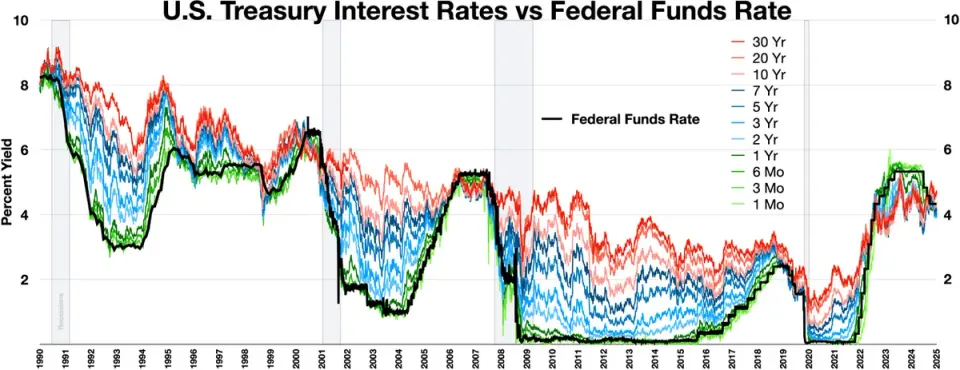
Beyond the immediate regional tensions, the global financial landscape is undergoing a fundamental shift that will eventually impact every Iranian household. Morgan Stanley has issued a stark warning that the post-World War II market era is effectively over. The U.S. Treasury market is currently in a state of significant distress; despite Treasury Secretary Scott Bessent’s attempts to stabilize the market by ramping up bond purchases, yields have remained stubbornly high. The 10-year and 30-year bond yields are hovering near 20-year highs, signaling that the era of cheap money and the U.S. as an absolute "safe haven" is being questioned by global investors.
What this means for the average person is a period of sustained high interest rates and global liquidity tightening. As the U.S. government struggles to control its debt costs, the dollar's strength—while currently high against the Toman—may face long-term structural challenges. For Iranians using Bitcoin or gold as a hedge, the news is mixed. While Bitcoin has shown strength, hitting $77,865, the broader volatility in the bond market suggests that traditional financial rules are being rewritten. If the U.S. cannot stabilize its own bond yields, the resulting global economic turbulence will make emerging and sanctioned markets like Iran even more susceptible to sudden, violent capital outflows and inflationary spikes.
Watch
France and Saudi Arabia hold talks ranging from Middle East to esports • FRANCE 24 English
FRANCE 24 English
Frequently Asked Questions
Why is Saudi Arabia discussing bypassing the Strait of Hormuz with France?
What caused the Toman to breach the 200,000 mark today?
Why did the U.S. Marines cancel drills in South Korea?
How does the U.S. bond market crisis affect the Iranian economy?
The Strategic Significance of the Strait of Hormuz
The Strait of Hormuz is one of the world's most critical maritime choke points, a narrow waterway connecting the Persian Gulf to the Arabian Sea and beyond. Situated between Oman and Iran, it is the sole sea passage from the Persian Gulf to the open ocean for vast quantities of crude oil and liquefied natural gas (LNG) produced by major Middle Eastern exporters like Saudi Arabia, Iran, UAE, Kuwait, and Iraq. Its strategic importance cannot be overstated, as it serves as the arterial route for a significant portion of global energy supplies.
Each day, an estimated 20-30% of the world's seaborne crude oil, along with substantial volumes of refined petroleum products and LNG, transits through this 21-mile wide channel at its narrowest point. This makes any disruption to its passage a potential catastrophe for global energy markets, leading to soaring oil prices and severe economic instability worldwide. The continuous flow of energy through Hormuz is thus vital not just for the exporting nations but for major importers across Asia, Europe, and North America.
Given its critical role, the Strait of Hormuz has long been a focal point of geopolitical tension and international concern. Iran, which borders the northern side of the Strait, has historically threatened to close the waterway in response to international pressure or sanctions, raising fears of supply disruptions. This vulnerability has spurred efforts by Gulf states, often in partnership with international allies like France, to explore and develop alternative energy export routes, such as pipelines bypassing the Strait. These "Hormuz bypass" projects aim to enhance energy security, reduce reliance on the Strait, and mitigate the risks associated with its potential closure or instability.
Topics
Related Articles